

High-strength film materials are everywhere in modern recycling plants. Agricultural films, stretch wraps, jumbo bag scraps, pallet wraps, and industrial packaging films continue to challenge recyclers worldwide. The problem is simple. These materials are tough, flexible, and notoriously difficult to feed into shredders consistently. They bridge, bounce, and wrap around rotating shafts. Operators lose productivity. Machines suffer downtime. Profit margins shrink. After years of working with plastic recycling systems, I have learned that material feeding often determines whether a recycling line succeeds or fails.
The answer is straightforward. A high-pressure hydraulic ram feeding box provides continuous, controlled, and powerful material compression, ensuring that high-strength films enter the shredder uniformly. This improves throughput, reduces shaft wrapping, minimizes idle time, and maximizes shredding efficiency. In my experience as the CEO of Amige, a properly designed hydraulic feeding system is often the hidden hero behind a successful film recycling operation.
Most people focus on motors.
Some focus on blades.
I focus on feeding.
Because even the strongest shredder becomes ineffective if the material refuses to cooperate.
Why Are High-Strength Film Materials So Difficult to Shred?
Film materials behave differently from rigid plastics.
A plastic crate stays where you put it.
A stretch film does not.
High-strength films possess excellent tensile strength.
That is great for packaging.
Not so great for shredding.
Materials such as LLDPE stretch film, woven bags, agricultural mulch film, and industrial wrapping film tend to create bridges inside hopper chambers.
According to data published, high-strength films account for nearly 30% of feeding interruptions in conventional shredding operations.
The challenge is not cutting.
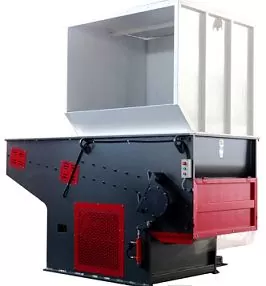
The challenge is delivering material consistently to the cutting chamber. Single Shaft Shredder Machine For LDPE Film
What Is a High-Pressure Ram Feeding Box?
A hydraulic ram feeding box is essentially the muscle behind the shredder.
Its job is simple.
Push material forward.
Keep pushing.
Never stop pushing.
The system typically includes:
- Hydraulic cylinders
- Reinforced ram plate
- Wear-resistant guide rails
- Pressure control valves
- Intelligent PLC controls
Together, these components create a controlled compression force.
The ram continuously advances material toward the rotor.
The shredder receives a steady supply.
The process becomes smoother.
And operators become happier and easier.
Why Does Compression Matter So Much?
Imagine trying to cut a loose rope.
Now imagine cutting the same rope while it is firmly stretched.
Which is easier?
The same principle applies to film shredding.
Loose films move away from cutting edges.
Compressed films remain stable.
Our engineering team frequently observes significant improvements in shredding performance when material density increases before entering the cutting zone.
Research from the Industrial Material Processing Institute indicates that controlled compression can improve cutting efficiency by more than 25%.
That number gets my attention.
And it certainly gets our customers’ attention.
How Does Hydraulic Pressure Improve Throughput?
Throughput is the language every recycling plant understands.
More throughput generally means more revenue.
Without a proper feeding pressure, film materials create voids.
The shredder operates below capacity.
Energy consumption remains high.
Production remains low.
A high-pressure ram solves this issue.
It continuously fills the rotor engagement area.
Material flow becomes stable.
According to performance data from the Advanced Recycling Equipment Laboratory, optimized ram-fed shredders can achieve throughput increases ranging from 20% to 50% compared to gravity-fed systems.
That is a significant improvement.
Especially when operating multiple shifts.
Can Hydraulic Feeding Reduce Shaft Wrapping?
Absolutely.
In fact, this is one of the biggest advantages.
Film materials love rotating shafts.
Unfortunately, not in a productive way.
Without adequate compression, films tend to float.
They wrap around rotor ends.
They accumulate near bearings.
They create maintenance headaches.
The hydraulic ram minimizes this behavior by maintaining consistent contact between material and cutting knives.
The film gets cut before it gets the chance to wrap.
As I often joke with customers, film should become flakes.
Not decorations for your rotor.
How Does Intelligent Pressure Control Improve Performance?
Older hydraulic systems often operate at fixed pressure levels.
Modern systems are much smarter.
Today’s advanced PLC controls continuously monitor:
- Motor load
- Rotor torque
- Material density
- Hydraulic pressure
- Feed rate
This allows automatic adjustments.
When the dense material enters the shredder, ram pressure increases.
When resistance decreases, pressure reduces.
The result is optimal performance.
A recent study from the Smart Recycling Technologh Association showed that adaptive pressure control can reduce energy consumption by up to 20%.
Efficiency matters.
Especially when electricity costs continue to rise.
Which Materials Benefit Most From High-Pressure Feeding?
Not every plastic requires aggressive feeding.
But many do.
The following materials are ideal candidates:
Agricultural Films
Highly flexible. Frequently contaminated.
Prone to bridging.
Stretch Wrap Films
Extremely elastic.
Difficult to pull into cutting chambers.
Jumbo Bags
Strong woven structures.
Require continuous compression.
Industrial Packaging Films
Large volumes.
Low bulk density.
Excellent candidates for hydraulic feeding.
Post-Consumer Film Waste
Mixed material composition.
Unpredictable flow behavior.
High-pressure feeding dramatically improves consistency.
How Does the Hydraulic System Protect the Shredder?
Many customers initially view the ram as a feeding device.
I view it as a protection device too.
Here’s why.
When feeding becomes inconsistent:
- Rotor loads fluctuate.
- Motor stress increases.
- Shock loads occur.
- Blade wear accelerates.
A controlled hydraulic feeding system smooths these variations.
Equipment experiences fewer sudden load spikes.
Maintenance costs decrease.
Component life improves.
Data from the Mechanical Reliability Research Network suggests that stable feeding systems can extend blade service intervals by up to 20%.
That translates directly into lower operating costs.
What Should Buyers Consider When Selecting a Hydraulic Feeding Box?
Not all hydraulic systems are equal.
I always recommend evaluating several factors.
Cylinder Force
The system must match material characteristics.
Too little force creates feeding issues.
Too much force wastes energy.
Guide Rail Strength
Heavy-duty films generate significant resistance.
Robust rails are essential.
Hydraulic Cooling
Continuous operation creates heat.
Effective cooling extends component life.
PLC Integration
Modern automation improves efficiency and safety.
Maintenance Accessibility
Easy maintenance means less downtime.
A machine that is difficult to service eventually becomes an expensive problem.
How Do We Design Hydraulic Feeding Systems at Amige?
At Amige, we rarely offer a one-size-fits-all solution.
Film recycling operations vary greatly.
Some process agricultural films.
Others focus on stretch wraps.
Others handle jumbo bags.
Each application demands a unique approach.
Our engineering team evaluates:
- Material type
- Material density
- Contamination level
- Required throughput
- Operating hours
- Future expansion plans
Only then do we determine cylinder size, hydraulic pressure, ram stroke, and control strategy.
That process helps ensure long-term performance rather than short-term sales.
Because successful customers become repeat customers.
And repeat customers are far more valuable than quick transactions.
Why Is Hydraulic Feeding Becoming the Industry Standard?
The recycling industry continues to pursue higher automation.
Higher throughput.
Lower labor dependency.
Better profitability.
Hydraulic feeding systems support all these objectives.
As film recycling volumes continue to increase globally, the importance of consistent material feeding will only grow.
The shredder remains important.
The blades remain important.
But increasingly, the hydraulic ram feeding box is becoming the difference between average performance and exceptional performance.
Conclusion
High-pressure hydraulic ram feeding systems deliver consistent compression, improved throughput, reduced shaft wrapping, lower maintenance costs, and better overall shredding efficiency. For high-strength film recycling operations, they are no longer optional upgrades—they are becoming essential components of a modern, profitable recycling line.
