

Plastic recycling is no longer just about reducing waste. It has become an essential part of the global transition toward a circular economy and carbon neutrality. Governments are introducing stricter environmental regulations. Manufacturers are setting ambitious ESG goals. Consumers expect more sustainable products than ever before. Yet none of these objectives can be achieved without efficient material recovery. In my experience, every successful recycling process begins with one critical step—size reduction. That is why I believe plastic shredding technology has evolved from a simple mechanical process into a strategic contributor to sustainable manufacturing. At AMIGE, we see every shredder not only as a machine, but as a tool that helps transform plastic waste into valuable resources.
Plastic shredding technology plays a fundamental role in the circular economy by preparing waste plastics for mechanical recycling, chemical recycling, washing, sorting, and pelletizing. Efficient shredding improves material recovery, reduces energy waste throughout downstream processes, supports higher recycling rates, and helps manufacturers reduce their overall carbon footprint. As the recycling industry advances toward carbon neutrality, intelligent shredding systems have become one of the most important foundations of sustainable plastic resource management.
Carbon neutrality starts long before a product reaches the recycling plant.
It starts with designing better recycling processes.
And every efficient recycling process begins with proper shredding.
Why Has the Circular Economy Become a Global Priority?
For decades, the traditional economic model followed a simple pattern.
Produce.
Use.
Dispose.
That approach is no longer sustainable.
The circular economy promotes a different philosophy:
- Reduce resource consumption.
- Extend product life.
- Recover valuable materials.
- Reuse recycled resources.
- Minimize landfill waste.
According to the Global Circular Economy Development Report, increasing recycling efficiency is one of the most effective strategies for reducing industrial carbon emissions.
Waste is not always waste.
Very often, it is simply misplaced raw material.
Why Is Plastic Shredding the First Step Toward Carbon Neutrality?
Before plastic can be washed, sorted, pelletized, or chemically recycled, it must first be prepared.
Shredding provides that preparation.
Proper size reduction improves:
- Material handling
- Sorting efficiency
- Washing performance
- Drying efficiency
- Pelletizing consistency
- Chemical recycling feedstock quality
The International Recycling Technology Institute identifies shredding as one of the key pretreatment technologies supporting resource recovery and emission reduction.
Better preparation creates better recycling.
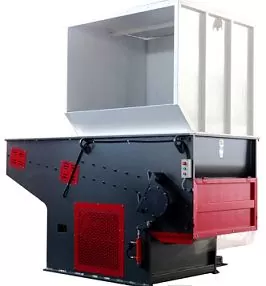
Better recycling reduces environmental impact.Single Shaft Shredder Machine For HDPE Pipes
How Does Efficient Shredding Reduce Carbon Emissions?
Many people assume shredders consume energy without contributing to sustainability.
The reality is more interesting.
Modern shredders reduce emissions by:
- Improving downstream process efficiency.
- Reducing unnecessary material transport.
- Increasing recycling yield.
- Lowering equipment downtime.
- Supporting higher recycled content.
When downstream equipment operates more efficiently, overall energy consumption across the recycling line decreases.
Small efficiency improvements multiply throughout the production process.
Why Does Material Recovery Matter So Much?
Every kilogram of plastic successfully recycled reduces demand for virgin raw materials.
Higher recovery rates create:
- Lower resource extraction
- Reduced manufacturing emissions
- Less landfill waste
- Improved resource utilization
According to the Global Sustainable Materials Observatory, improving material recovery remains one of the most effective methods for strengthening the circular economy.
The cleanest raw material is often the one we already have.
How Does Shredding Improve Mechanical Recycling?
Mechanical recycling depends heavily on consistent feedstock.
A properly designed shredder produces:
- Uniform particle size
- Stable feeding
- Better washing performance
- Lower contamination
- Higher pellet quality
Modern rotor design, optimized blade geometry, and intelligent control systems all contribute to higher recycling efficiency.
Consistency creates quality.
Quality creates market value.
Why Is Shredding Also Important for Chemical Recycling?
Chemical recycling technologies such as pyrolysis and depolymerization require consistent feedstock.
Proper shredding improves:
- Material homogeneity
- Reactor feeding
- Heat transfer
- Process stability
The Advanced Chemical Recycling Research Center highlights feedstock preparation as a major factor influencing chemical recycling performance.
Chemistry performs best when engineering prepares the material correctly.
How Does Intelligent Automation Support Sustainability?
Today’s shredders are becoming smarter.
Modern PLC systems help optimize:
- Rotor loading
- Feeding speed
- Automatic reverse
- Energy management
- Predictive maintenance
Automation minimizes unnecessary energy consumption while improving production stability.
The Smart Manufacturing Innovation Institute reports that intelligent control systems significantly improve equipment efficiency and operational reliability.
Smart machines create smarter factories.
Can Energy-Efficient Shredders Support ESG Goals?
Many global manufacturers now publish Environmental, Social, and Governance (ESG) reports.
Energy-efficient shredders contribute by helping companies:
- Reduce electricity consumption.
- Improve recycling efficiency.
- Lower operational emissions.
- Increase recycled material utilization.
Sustainability is no longer only an environmental objective.
It has become a business requirement.
Why Is Equipment Reliability Also Part of Carbon Reduction?
Unexpected downtime creates waste.
Restarting production consumes additional energy.
Emergency repairs require additional resources.
Reliable shredders help reduce:
- Production interruptions
- Spare parts consumption
- Maintenance frequency
- Material loss
The longer equipment operates efficiently, the lower its overall environmental impact.
Reliability supports sustainability.
How Is AMIGE Contributing to the Circular Economy?
At AMIGE, we continuously improve our recycling technologies through:
- High-efficiency rotor design
- Energy-saving drive systems
- Intelligent PLC controls
- Optimized blade geometry
- Heavy-duty shredding solutions
- Complete recycling systems
Our objective extends beyond manufacturing machinery.
We help customers recover more materials with greater efficiency and lower operating costs.
Every engineering improvement supports a more sustainable recycling industry.
What Does the Future of Plastic Recycling Look Like?
The next generation of recycling plants will combine:
- Intelligent automation
- Digital monitoring
- Energy-efficient equipment
- Chemical and mechanical recycling integration
- Higher material recovery rates
Plastic shredders will continue evolving from simple size-reduction machines into intelligent pretreatment systems that optimize the entire recycling process.
The future of recycling belongs to efficiency.
Efficiency supports sustainability.
Sustainability creates long-term value.
Conclusion
Plastic shredding technology plays a vital role in building a circular economy and supporting carbon neutrality. By improving material recovery, optimizing downstream recycling processes, reducing energy consumption, and increasing overall recycling efficiency, modern shredders contribute far beyond size reduction. At AMIGE, we believe every piece of recycled plastic represents not only recovered material, but also a meaningful step toward a cleaner and more sustainable future.
#CircularEconomy
#CarbonNeutrality
#PlasticRecycling
#PlasticShredder
#PlasticCrusher
#RecyclingEquipment
#SustainableManufacturing
#WastePlasticRecycling
#GreenTechnology
#AMIGE
