

Running a plastic recycling plant has never been easy. Raw material prices fluctuate. Electricity costs continue to rise. Labor becomes more expensive every year. Customers demand higher-quality recycled plastics while expecting lower prices. In this increasingly competitive environment, profit margins are under constant pressure. Many recycling businesses focus on buying cheaper equipment to reduce investment costs. However, after years of working with recycling plants around the world, I have learned one important lesson: long-term profitability depends far more on production efficiency than on the initial purchase price of a machine. At AMIGE, we believe the plastic shredder is not simply the first machine in the recycling line—it is the foundation of the entire operation.
A high-efficiency plastic shredder increases profitability by improving throughput, reducing electricity consumption, minimizing downtime, extending blade life, lowering maintenance costs, and providing consistent feedstock for downstream equipment. During discussions with recycling plant owners and industry experts, one conclusion became increasingly clear: the shredder is no longer just a size-reduction machine. It has become one of the most important competitive advantages in modern plastic recycling.
Every kilogram of plastic begins its journey in the shredder.
If the first step is efficient, every step afterward becomes easier.
Efficiency spreads throughout the entire production line.
Why Has Profitability Become More Challenging for Recycling Plants?
The recycling industry is changing rapidly.
Operators face increasing pressure from multiple directions.
These include:
- Rising electricity costs
- Higher labor expenses
- More complex waste streams
- Increasing environmental regulations
- Growing customer quality expectations
According to the Global Recycling Industry Performance Report, operating costs have become one of the primary concerns for recycling businesses worldwide.
Profit is no longer determined only by selling recycled materials.
It is increasingly determined by controlling production costs.
Why Is the Shredder the First Profit Center?
Many people think the shredder is simply the first machine.
I see it differently.
The shredder determines:
- Material flow
- Production stability
- Energy consumption
- Maintenance frequency
- Feedstock consistency
A poorly performing shredder creates problems throughout the entire recycling line.
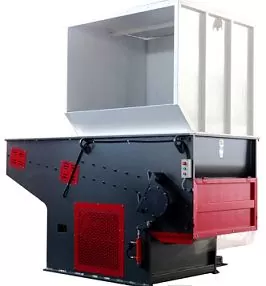
A high-performance shredder creates opportunities. Single Shaft Shredder Machine For LDPE Film
How Does Higher Throughput Increase Profit?
Production capacity directly influences revenue.
Higher throughput allows recycling plants to:
- Process more material daily
- Reduce production bottlenecks
- Increase equipment utilization
- Accept larger customer orders
Modern rotor design, optimized cutting geometry, and intelligent feeding systems all contribute to stable production.
According to the Industrial Size Reduction Technology Institute, optimized shredding systems improve overall line efficiency by delivering more consistent material flow.
More output does not always require a larger machine.
Sometimes it requires a smarter one.
Why Does Energy Efficiency Matter So Much?
Electricity is a recurring expense.
Every operating hour matters.
A high-efficiency shredder reduces unnecessary power consumption through:
- Optimized rotor design
- Precision blade geometry
- Intelligent PLC control
- Stable hydraulic feeding
- Reduced idle running
The Global Industrial Energy Efficiency Center reports that equipment optimization significantly lowers long-term operating costs.
Customers buy equipment once.
They pay electricity bills every month.
How Can Lower Downtime Improve Profitability?
Unexpected downtime is expensive.
Production stops.
Orders are delayed.
Labor costs continue.
Modern shredders reduce downtime through:
- Automatic overload protection
- Intelligent reverse systems
- Reliable hydraulic feeding
- Easy maintenance access
- Predictive monitoring
Preventive engineering is always less expensive than emergency repairs.
Every hour saved creates value.
Why Does Blade Life Affect Operating Costs?
Blades are wear parts.
But replacing them too frequently increases costs.
Optimized cutting systems help:
- Extend blade service life
- Reduce maintenance frequency
- Lower spare parts costs
- Maintain cutting efficiency
The Advanced Cutting Technology Laboratory identifies blade geometry and material preparation as key factors influencing tool lifespan.
A longer-lasting blade saves more than replacement costs.
It also protects production schedules.
How Does Better Material Quality Increase Revenue?
Consistent shredded material improves downstream processing.
Benefits include:
- Better washing efficiency
- Stable feeding into crushers
- Improved pellet quality
- Reduced contamination
- Higher product value
Uniform feedstock allows every subsequent machine to perform more efficiently.
Quality begins at the first stage.
Not the last.
Why Is Automation Becoming a Competitive Advantage?
Modern recycling plants increasingly rely on intelligent control systems.
Automation improves:
- Feeding consistency
- Production monitoring
- Fault diagnosis
- Remote maintenance
- Energy management
The Smart Recycling Technology Forum highlights automation as one of the fastest-growing investments in industrial recycling.
Smart machines support smart management.
That combination improves profitability.
How Does Reliability Build Customer Confidence?
Reliable production creates reliable delivery.
Customers appreciate:
- Stable product quality
- Consistent delivery schedules
- Long-term supply capability
Equipment reliability directly supports business reputation.
A recycling plant that consistently delivers quality materials earns repeat business.
Repeat business is one of the most valuable forms of profit.
Why Should Total Cost of Ownership Matter More Than Purchase Price?
Some buyers compare only the initial quotation.
I encourage them to calculate:
- Electricity costs
- Maintenance expenses
- Blade replacement
- Downtime losses
- Spare parts
- Equipment lifespan
The Industrial Equipment Lifecycle Association reports that lifetime operating expenses often exceed the original purchase price of industrial machinery.
The cheapest machine may become the most expensive investment.
The best value comes from long-term efficiency.
How Is AMIGE Helping Customers Improve Profit Margins?
At AMIGE, our engineering philosophy focuses on total operational performance.
We continuously improve:
- High-efficiency rotor design
- Precision blade systems
- Intelligent PLC controls
- Hydraulic feeding technology
- Energy-saving drive systems
- Easy maintenance structures
We do not simply manufacture shredders.
We help customers build more profitable recycling businesses.
Every engineering improvement has one objective.
Increase customer return on investment.
What Will Define the Next Generation of Recycling Plants?
The future belongs to recycling companies that combine:
- High productivity
- Low energy consumption
- Intelligent automation
- Stable quality
- Reliable equipment
Competition will not disappear.
Efficiency will determine who succeeds.
Technology creates opportunities.
Execution creates profits.
Conclusion
A high-efficiency plastic shredder is far more than the first machine in a recycling line. It influences throughput, energy consumption, maintenance costs, material quality, and overall profitability. At AMIGE, we believe that investing in efficient shredding technology is investing in the long-term competitiveness and sustainable growth of every recycling plant.
#PlasticShredder #PlasticRecycling #IndustrialShredder #PlasticCrusher #RecyclingEquipment
#PlasticRecycling #Machine #EnergySaving #WastePlasticRecycling #CircularEconomy #AMIGE
