

Buying a plastic shredder in Uruguay can become expensive surprisingly quickly. The machine looks powerful in the quotation. The price appears attractive. Then the equipment arrives and cannot process the buyer’s actual material. Output falls, blades wear rapidly, and spare parts take months to arrive. A poor purchasing decision does not merely waste money. It can interrupt the entire recycling operation and weaken customer confidence.
The practical answer is to evaluate manufacturers according to material testing, machine design, operating cost, service capability, and experience with imported equipment. Uruguay has a relatively limited number of domestic plastic shredder manufacturers. Therefore, this list covers reputable international manufacturers and suppliers that Uruguayan buyers can consider. The best choice is not automatically the biggest brand. It is the company that can provide the correct machine for the buyer’s material, capacity, plant layout, and budget.
I have worked with plastic size-reduction equipment for many years. One lesson remains unchanged: steel is important, but correct engineering is worth more than steel.
Is Uruguay a Promising Market for Plastic Shredders?
Uruguay is not South America’s largest plastics market. However, it has a stable industrial environment and a growing interest in waste recovery, resource efficiency, and the circular economy. Packaging waste, agricultural film, containers, pipes, pallets, drums, production scrap, and discarded consumer products all create potential demand for recycling machinery.
Investment can come from plastic processors, waste-management companies, municipal contractors, agricultural businesses, and independent recycling plants. Buyers may require compact machines for factory scrap or complete systems covering shredding, crushing, washing, drying, and pelletizing. Market figures should be checked against current Uruguay plastic recycling statistics and regional waste-management data.
Because domestic manufacturing options are limited, imported machinery plays an important role. A buyer may source equipment from China, Germany, Austria, Italy, or another regional market. This broadens the choice, but it also increases the need to examine freight, import documentation, voltage, installation, remote support, and spare-parts availability.
The following ranking is my practical procurement shortlist rather than an official government ranking. Availability, local representation, prices, and delivery conditions can change. Every buyer should verify these details directly before signing a contract.
Who Are the Top 10 Plastic Shredder Manufacturers Serving Uruguay?
- AMIGE Machinery
I naturally begin with AMIGE because this is the field in which my team and I work every day. We manufacture single-shaft shredders, double-shaft shredders, heavy-duty plastic crushers, washing systems, and pelletizing lines.
Our advantage is application-based configuration. We do not recommend the same rotor for PET straps, LDPE film, HDPE drums, thick plastic lumps, and PP woven bags. That would be convenient for the salesperson but inconvenient for the customer.
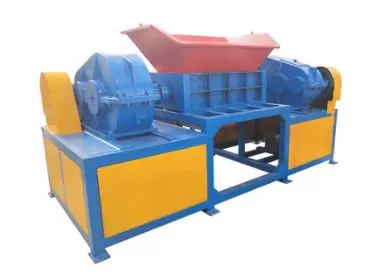
For Uruguayan projects, we can prepare the machine according to local power conditions, raw-material characteristics, requested output, and downstream process. Video testing, sample trials, layout design, operating manuals, spare-parts packages, and remote commissioning can be included. Double Shaft Shredder For Metal Drum
- Vecoplan
Vecoplan is a well-known German manufacturer of industrial shredding and material-processing systems. Its machines are used for plastics, wood, paper, alternative fuels, and various industrial wastes.
The company is especially strong in engineered installations that require reliable feeding, controlled output, and continuous operation. Vecoplan should be considered by larger Uruguayan recyclers with demanding applications and sufficient capital budgets.
Premium engineering normally brings a premium price. Buyers should therefore calculate the complete project return rather than comparing only the purchase price. Useful reference information may be placed under industrial shredder operating-cost comparisons.
- WEIMA
WEIMA is another established German manufacturer. Its portfolio includes single-shaft and multi-shaft shredders, briquetting presses, and related recycling equipment.
Its single-shaft machines are widely associated with plastics, wood, paper, and production waste. Different rotor, screen, drive, and hopper configurations allow the machines to serve varied applications.
For a Uruguayan customer, the important questions are local technical support, lead time for wear parts, and the cost of European components. A robust machine is excellent. A robust machine waiting for one unavailable sensor is less impressive.
- UNTHA
UNTHA is an Austrian manufacturer with extensive experience in industrial shredding. The company supplies equipment for plastics, waste, wood, confidential materials, and alternative-fuel production.
UNTHA is worth considering when a project involves difficult materials, high operating hours, or strict output requirements. Its engineering approach is particularly relevant to professional recyclers that regard the shredder as a core production asset rather than an occasional auxiliary machine.
Uruguayan buyers should request a detailed lifecycle-cost calculation. Energy use, knife replacement, maintenance access, and expected annual availability matter more than the brochure’s largest throughput number.
- Lindner Recyclingtech
Lindner is an Austrian recycling-machinery manufacturer known for shredding systems and complete processing solutions. Its equipment is often applied to post-consumer plastics, industrial waste, refuse-derived fuel, and demanding recycling operations.
The company is suitable for medium and large projects where stable feeding and integration with downstream systems are essential. Its solutions may be particularly relevant to mixed-plastic and high-volume recycling facilities.
Before selecting Lindner, the buyer should confirm whether the proposed machine is intended for clean production waste, dirty post-consumer material, films, rigid plastics, or mixed municipal waste. These applications may look similar from the office. Inside the cutting chamber, they are very different.
- ZERMA
ZERMA has a broad portfolio covering shredders, granulators, pulverizers, and size-reduction systems for plastics. This combination makes the company relevant when a buyer needs both primary shredding and secondary granulation.
Its equipment can serve film, pipes, hollow products, profiles, bottles, lumps, and general plastic-production scrap. The final configuration still depends on material geometry, contamination, bulk density, and required particle size.
For Uruguay, ZERMA may offer a balance between standardized machine platforms and application-specific choices. Buyers should ask whether the quotation includes the correct screen, rotor design, hydraulic pusher, metal protection, and discharge system.
- Genox Recycling Technology
Genox is a Chinese manufacturer of shredding, crushing, washing, and recycling systems. Its product range includes single-shaft shredders, double-shaft shredders, granulators, washing lines, and other material-recovery equipment.
Genox can be attractive to buyers seeking a broader recycling solution rather than an isolated machine. As with any international supplier, customers should investigate the precise scope of supply, component brands, warranty procedures, commissioning arrangements, and references for similar materials.
A familiar logo is helpful. A successful test using the customer’s own dirty agricultural film is much more helpful.
- CMG Granulators
CMG is an Italian manufacturer specializing in granulators and size-reduction equipment for plastics. The company serves injection moulding, blow moulding, extrusion, thermoforming, and recycling applications.
CMG may be appropriate for controlled factory scrap, bottles, profiles, and applications requiring consistent granulation. Buyers should distinguish carefully between a granulator and a low-speed, high-torque shredder.
A granulator cuts material at higher speed and normally produces smaller particles. A shredder performs primary size reduction and handles larger or more difficult objects. Buying one when the process needs the other is a classic—and expensive—mistake.
- FOR REC
FOR REC is an Italian manufacturer of industrial recycling machinery. Its solutions include shredders, granulators, separators, conveyors, and systems for plastics, tyres, cables, metals, and general waste.
The company deserves attention when the project requires multiple processing stages. It can be relevant to Uruguayan businesses handling mixed industrial materials rather than one clean plastic stream.
The buyer should request a clear mass-flow diagram. Each machine must have a defined purpose, capacity, and discharge specification. Otherwise, a “complete line” can become a collection of machines politely waiting for one another.
- GEP ECOTECH
GEP ECOTECH manufactures industrial shredders and waste-processing equipment for plastics, tyres, municipal waste, biomass, electronic waste, and other materials. It offers single-shaft, double-shaft, and multi-stage size-reduction solutions.
The company may be considered for general waste and large-volume applications. Uruguayan customers should verify specific references, material-test results, electrical standards, control-system language, and parts-delivery procedures.
This completes my shortlist. It does not mean that manufacturer number one fits every buyer or that number ten is inferior. The correct ranking changes with the material and the project.
Which Type of Plastic Shredder Should You Buy?
A single-shaft shredder is generally suitable when controlled particle size is important. A hydraulic pusher moves the material toward a rotor fitted with replaceable knives. A screen controls the approximate discharge size. Common applications include plastic lumps, pipes, pallets, drums, films, woven bags, and production scrap.
A double-shaft shredder uses two low-speed, high-torque shafts. It is useful for bulky, thick, contaminated, or irregular items. Typical applications include large drums, mixed waste, heavy plastic products, tyres, wooden pallets, and electronic waste.
A plastic crusher or granulator is usually installed when smaller, more uniform flakes are required. In many projects, the sensible arrangement is shredder first and crusher second. The shredder reduces bulky items. The crusher then produces a controlled size for washing or extrusion.
The decision should be based on the complete process. Buyers can consult a sample plastic shredder selection guide and shredder-versus-granulator comparison, but actual material testing remains essential.
What Information Should You Give the Manufacturer?
Never begin with only one sentence: “Please quote a plastic shredder.” That is like asking a tailor for a suit without providing your measurements.
Provide clear information about the material:
Plastic type: PE, PP, PET, PVC, ABS, PA, PC, or mixed material.
Material form: film, woven bag, bottle, drum, pallet, pipe, lump, strap, or profile.
Maximum dimensions and wall thickness.
Contamination level and possible metal content.
Required throughput in kilograms per hour.
Required final particle size.
Daily operating hours.
Available voltage, frequency, and plant power.
Available installation space.
Downstream washing, drying, or pelletizing equipment.
Photographs are useful. Videos are better. Sending material samples for a factory test is best. During the test, ask the manufacturer to show the feeding condition, motor current, output stability, discharge size, dust level, and blade condition.
A convincing test should use your material or a genuinely comparable material. A machine smoothly shredding clean bottles does not prove that it can process muddy agricultural film.
How Can You Compare Plastic Shredder Quotations?
First, compare technical scope rather than total price. Check the rotor diameter, working width, motor power, gearbox, blade material, number of knives, screen size, hydraulic system, control components, hopper dimensions, and discharge method.
Second, identify exclusions. Does the price include the feeding conveyor, magnetic separator, discharge conveyor, spare blades, screens, electrical cabinet, installation, freight, insurance, and commissioning? Low prices sometimes become very energetic after these items are added.
Third, calculate operating cost. Electricity, knife sharpening, knife replacement, screens, bearings, hydraulic seals, labour, and downtime should be estimated. A sample worksheet can be found through this plastic shredder lifecycle-cost calculator.
Finally, compare usable output. A machine advertised at 1,000 kg/h may produce much less with light film or bulky hollow products. Capacity should always be connected to a defined material and feeding method.
How Should a Uruguayan Buyer Evaluate Service and Spare Parts?
Ask the supplier to provide a recommended spare-parts list for two years of operation. At minimum, evaluate rotor knives, fixed knives, screens, bearings, seals, hydraulic components, sensors, and electrical parts.
Confirm where the parts are stored and how quickly they can reach Uruguay. Also confirm whether standard components can be purchased locally. Using internationally recognized motors, gearboxes, PLCs, and electrical components can reduce long-term risk.
Remote support is particularly important for imported machinery. The manufacturer should be able to examine alarms, guide maintenance, supply electrical drawings, and communicate in an agreed language.
A good supplier discusses possible failures before receiving the order. A weak supplier discusses only how quickly the deposit can be paid.
What Import and Installation Issues Matter in Uruguay?
Before shipment, the buyer should confirm Uruguay’s current import procedures with a licensed customs broker. Industrial machinery may require technical documents, correct tariff classification, a commercial invoice, packing list, certificate of origin, bill of lading, and other supporting documents. Requirements should be checked through an updated Uruguay industrial machinery import guide.
Electrical specifications must be confirmed in writing. Voltage, frequency, phase, control voltage, motor efficiency, cable standards, and safety devices should match the installation site. Never assume the factory standard is suitable simply because the plug looks confident.
The buyer should also prepare the foundation, cables, water, compressed air, lifting equipment, and access route before the machine arrives. Large shredders are not famous for squeezing politely through narrow workshop doors.
A proper factory-acceptance document should record machine configuration, no-load testing, safety checks, material-test results, spare parts, drawings, manuals, and packing details.
What Warning Signs Should You Avoid?
Be cautious if a supplier guarantees capacity without requesting material information. Be equally cautious if it refuses a video call, cannot explain the rotor structure, or provides no examples of similar applications.
Other warning signs include unclear company identity, inconsistent bank information, copied photographs, unrealistic delivery promises, missing technical drawings, and a warranty that excludes almost everything capable of failing.
Do not select a manufacturer solely because it claims to be “number one.” The recycling-machinery world has more number-one companies than there are numbers.
Instead, ask for evidence: factory videos, customer references, material tests, inspection records, component lists, operating manuals, and written service commitments.
What Is My Final Purchasing Checklist?
Before placing an order, I recommend confirming ten points:
The supplier has tested your actual material.
The proposed shredder type matches the application.
Capacity is guaranteed under defined test conditions.
Discharge size and screen specifications are written clearly.
Motor, gearbox, blades, bearings, and controls are identified.
Safety protection complies with the project’s requirements.
Spare parts and wear-part prices are included.
Installation and commissioning responsibilities are defined.
Import documents and electrical standards are confirmed.
Payment terms are linked to inspection and delivery milestones.
Conclusion
Uruguayan buyers have access to several capable international shredder manufacturers. The safest decision comes from material testing, transparent specifications, lifecycle-cost analysis, and dependable service. Choose the machine that fits the process—not the brochure that shines brightest.
#Plastic Shredder #Industrial Plastic Shredder #Plastic Recycling Machine #Uruguay Recycling Equipment #Waste Plastic Recycling #Plastic Crusher Machine #Recycling Machinery Supplier #Single Shaft Shredder #Plastic Waste Management #AMIGE Machinery
