

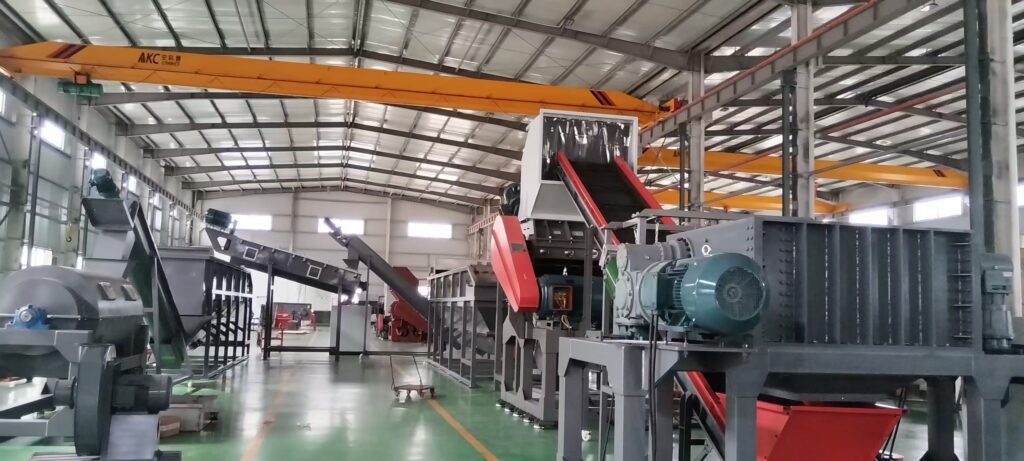
recyclers, commissioning day is more than a project milestone—it is the moment where engineering meets reality. Every conveyor starts moving. Every shredder begins cutting. Every washing tank starts cleaning. Every kilogram of waste film begins its transformation into valuable recycled material. At AMIGE, we recently celebrated another exciting achievement as our 50-ton-per-day plastic film shredding and washing line officially entered commercial operation in Mexico. This project demonstrates not only the growing demand for high-capacity recycling systems across Latin America but also our commitment to helping customers improve productivity, reduce operating costs, and support the circular economy.
The successful commissioning of our 50 TPD film shredding and washing line marks another important milestone for AMIGE’s global expansion. Designed for processing post-consumer PE and PP films, agricultural films, stretch films, and packaging waste, the system integrates intelligent shredding, efficient washing, contamination removal, dewatering, and drying technologies. The result is higher material recovery, stable production, lower energy consumption, and premium-quality recycled flakes ready for pelletizing.
A successful project does not begin on commissioning day.
It begins months earlier with careful engineering, detailed planning, and close cooperation.
Today, we are proud to see those efforts become reality.
Why Is Mexico Becoming an Important Plastic Recycling Market?
Mexico’s manufacturing industry continues to expand.
So does plastic consumption.
As packaging, agriculture, logistics, and industrial production grow, larger volumes of plastic waste require efficient recycling solutions.
Government sustainability initiatives and increasing recycled-content demand are also encouraging investment in modern recycling facilities.
According to the Latin America Recycling Market Outlook, Mexico remains one of the fastest-growing plastic recycling markets in the Americas.
Growth creates opportunity.
Opportunity requires reliable recycling technology.
Why Did the Customer Choose a 50-Ton-Per-Day Solution?
The customer needed more than additional capacity.
They required:
- Stable continuous production
- High washing efficiency
- Low operating costs
- Reliable equipment
- Future expansion capability
After evaluating multiple solutions, they selected an integrated AMIGE recycling system designed specifically for large-scale film recycling.
Capacity alone does not create value.
Efficiency does. Rigid PE/PP Containers Recycling Washing Line
What Materials Can This Recycling Line Process?
The production line is designed to process a wide variety of flexible plastic materials, including:
- LDPE agricultural film
- LLDPE stretch film
- PE packaging film
- PP woven bags
- Shopping bags
- Industrial film scrap
- Post-consumer mixed films
Flexible configuration allows customers to adapt production to changing market demands.
Versatility is becoming one of the most valuable competitive advantages in today’s recycling industry.
According to the Global Flexible Plastic Recycling Institute, diversified material capability improves plant utilization and long-term profitability.
What Are the Core Components of the Recycling Line?
The project integrates several key processing stages into one coordinated system.
Major equipment includes:
- Heavy-duty film shredder
- Belt conveyor system
- Friction washer
- Floating washing tank
- High-speed dewatering machine
- Hot-air drying system
- Material storage silo
- Intelligent PLC control system
Each component performs an important task.
Together, they create an efficient production process.
Why Is Efficient Shredding So Important?
Film materials present unique challenges.
They are lightweight.
They wrap easily.
They often contain contaminants.
Our heavy-duty shredder produces uniform particle sizes that improve downstream performance by:
- Increasing washing efficiency
- Improving material transport
- Reducing equipment blockage
- Supporting stable drying
- Preparing material for pelletizing
The International Size Reduction Engineering Center identifies proper shredding as one of the most critical stages in film recycling.
A consistent feed creates a consistent process.
How Does the Washing System Improve Recycled Material Quality?
Cleaning determines product value.
Our washing section combines multiple technologies to remove:
- Soil
- Sand
- Labels
- Organic residues
- Dust
- Packaging contamination
Efficient washing improves:
- Flake purity
- Pellet quality
- Product consistency
- Customer acceptance
Clean materials create premium recycled products.
How Does Automation Increase Production Efficiency?
Modern recycling plants require more than mechanical equipment.
They require intelligent control.
The PLC system monitors:
- Material feeding
- Motor operation
- Water circulation
- Equipment protection
- Production status
- Alarm management
According to the Industrial Automation Research Alliance, intelligent automation significantly improves production stability while reducing labor requirements.
Automation makes complex systems easier to manage.
It also makes production more predictable.
What Challenges Did Our Engineering Team Overcome?
Every international project presents unique challenges.
For this installation, our engineers worked closely with the customer to optimize:
- Plant layout
- Equipment installation
- Utility connections
- Commissioning schedule
- Operator training
- Production parameter adjustment
Success was achieved through preparation rather than improvisation.
Engineering is about solving problems before they appear.
How Does This Project Improve Customer Profitability?
Higher-quality equipment creates measurable business value.
The customer can now benefit from:
- Higher production throughput
- Lower electricity consumption
- Reduced maintenance frequency
- Improved material recovery
- Higher-value recycled flakes
- Stable long-term operation
According to the Global Plastic Recycling Performance Index, integrated recycling systems consistently outperform fragmented processing lines in productivity and operating efficiency.
Efficiency is one of the strongest drivers of profitability.
What Does This Project Mean for AMIGE’s Global Growth?
For me, every successful project represents more than another machine installation.
It represents trust.
It represents partnership.
It represents shared success.
The Mexico project demonstrates our ability to deliver complete recycling solutions for customers worldwide, from engineering design to commissioning and long-term technical support.
Our mission remains unchanged.
Help customers recycle more.
Operate more efficiently.
Grow more profitably.
What Comes Next?
The successful startup of this 50-ton-per-day recycling line is only the beginning.
We will continue supporting the customer through:
- Preventive maintenance
- Remote technical assistance
- Spare parts supply
- Process optimization
- Operator training
- Future capacity upgrades
At AMIGE, delivery is never the finish line.
It is the beginning of a long-term partnership.
Conclusion
The successful commissioning of our 50-ton-per-day film shredding and washing line in Mexico demonstrates AMIGE’s commitment to engineering excellence, reliable equipment, and long-term customer success. By combining high-capacity shredding, efficient washing, intelligent automation, and comprehensive technical support, we help recycling plants increase productivity, improve material quality, and build a more sustainable future.
#PlasticFilmRecycling
#PlasticShredder
#PlasticWashingLine
#PlasticRecycling
#RecyclingEquipment
#IndustrialShredder
#PlasticMachinery
#FilmRecycling
#MexicoRecycling
#AMIGE
