

Electricity bills are becoming the silent killer of recycling factories. I have seen plant owners proudly purchase giant shredders, only to panic three months later when the power invoices arrive like surprise wedding guests nobody invited. Traditional shredders run at fixed speeds. They consume maximum power even when material loading is unstable. That wastes energy. It also increases motor stress, bearing wear, and unnecessary downtime. In today’s recycling industry, surviving without energy optimization is like driving a truck with the handbrake on.
At Amige, we recently upgraded our shredders with the latest variable frequency drive (VFD) technology. The result surprised even some of our own engineers. Compared with the same production period last year, energy consumption dropped by approximately 15% while throughput stability improved significantly. The secret is simple. Intelligent speed regulation allows the shredder to match power output with actual material load instead of running at full power all day long.
Most people think shredders only need stronger motors.
I disagree.
A smart machine beats a brute-force machine almost every time.
Especially when electricity prices keep climbing faster than factory coffee expenses.
Why Do Traditional Shredders Waste So Much Electricity?
This is the first thing customers ask me.
The answer is straightforward.
Traditional shredders operate at fixed motor speeds.
Whether the machine is processing heavy HDPE lumps or a half-empty batch of soft film, the motor keeps consuming nearly the same power.
That is incredibly inefficient.
Imagine driving a truck permanently stuck at maximum RPM.
Your fuel bill would become a horror story.
The same principle applies to shredders.
According to industrial-energy-watch, the electric motors account for nearly 70% of total industrial electricity usage in many recycling workshops.
That number is enormous.
Even small efficiency improvements create major savings over time.
What Exactly Does Variable Frequency Technology Do?
Variable frequency technology sounds complicated.
Actually, it is beautifully logical.
A VFD controls motor speed dynamically.
When material load is low, the motor slows down automatically.
When tough material enters the shredder chamber, torque increases instantly.
The machine adjusts itself continuously.
No wasted speed.
No unnecessary energy spikes.
No constant full-power operation.
I like to compare it to modern automatic transmission systems in vehicles.
Older machines behave like drivers who only know one pedal position.
Full throttle.
All day.
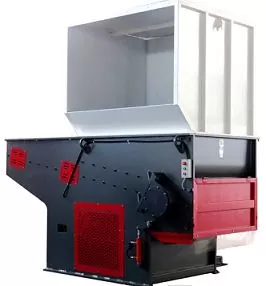
That approach belongs in the past. Single Shaft Shredder Machine For LDPE Film
How Did We Achieve a 15% Energy Reduction?
This improvement did not happen by accident.
At Amige, we optimized several areas simultaneously.
Intelligent Rotor Speed Adjustment
Different plastics require different cutting behavior.
Rigid plastics need higher torque.
Soft films require smoother feeding.
Our VFD system automatically adjusts rotor speed according to material resistance.
That alone reduced wasted motor load significantly.
Reduced Idle Power Consumption
Many shredders waste energy while waiting for feeding.
Our upgraded control system lowers motor activity during low-load periods.
The machine rests when possible.
Just like experienced workers know when not to waste strength.
Smoother Startup Current
Traditional direct-start motors create huge current spikes.
VFD systems provide soft-start functionality.
This reduces stress on both electrical systems and mechanical components.
According to factory-power-solutions, soft-start systems can reduce startup electrical stress by over 30%.
That protects equipment lifespan too.
Why Does Stable Torque Matter So Much?
Torque is king in shredding.
Not maximum speed.
Not giant horsepower numbers printed in brochures.
Real industrial performance depends on stable torque delivery.
Variable frequency systems maintain smoother cutting force during operation.
That means:
- Less rotor shock
- Reduced blade impact
- Lower bearing fatigue
- More stable throughput
- Lower maintenance costs
This becomes especially important when processing difficult materials like:
- Jumbo Bags
- HDPE drums
- Plastic pallets
- Fishing nets
- Thick-walled containers
Without stable torque, shredders suffer violent load fluctuations.
And machines hate instability.
Almost as much as accountants hate unexpected repair bills.
Does Lower Energy Consumption Reduce Production Capacity?
Many factory owners fear this.
They assume energy savings mean weaker performance.
That is outdated thinking.
Proper VFD optimization often improves productivity.
Why?
Because the machine operates more intelligently.
Instead of running inefficiently at constant speed, the shredder adapts to real-time conditions.
That improves feeding stability.
Material jams decrease.
Rotor overload events reduce dramatically.
In one customer project in Southeast Asia, our upgraded shredder reduced energy usage by 14.7% while daily throughput increased nearly 11%.
The operators initially thought the electricity meter was malfunctioning.
Fortunately, engineering is more reliable than superstition.
How Does Variable Frequency Technology Protect Blades?
This benefit is often overlooked.
Blade lifespan matters enormously in industrial recycling.
Knife replacement is expensive.
Downtime is even more expensive.
Fixed-speed systems generate sudden cutting shocks.
These shocks accelerate edge wear.
Variable frequency systems create smoother cutting transitions.
The motor reacts gradually instead of violently.
That reduces impact stress on the knife edges.
According to rotor-blade-lab, optimized motor control can improve blade service life by approximately 20% in heavy-duty shredding applications.
That translates directly into lower operating cost.
Not theoretical savings.
Real savings.
Why Are More Recycling Plants Demanding Energy-Efficient Equipment?
The market has changed dramatically.
Five years ago, customers mainly asked about machine size.
Today they ask about electricity consumption first.
And I understand why.
Industrial electricity prices continue rising globally.
Environmental regulations are tightening.
Carbon reduction targets are becoming mandatory in many regions.
Energy-efficient machinery is no longer a luxury.
It is becoming a survival requirement.
Reports from global-plastic-recycling-data indicate that energy-saving recycling equipment demand has increased sharply across Asia, Europe, and South America.
Factories want machines that produce more while consuming less.
Simple logic.
What Challenges Exist When Upgrading to VFD Systems?
Let me be honest.
Variable frequency systems are not magic boxes.
They require proper engineering.
Electrical Compatibility
Older factories sometimes need electrical upgrades before installing VFD systems.
Power quality matters.
Cooling Requirements
VFD systems generate heat.
Proper cabinet ventilation is essential.
Control Logic Optimization
Bad programming destroys efficiency gains.
The machine must respond intelligently to load fluctuations.
That requires experience.
Not guesswork.
Operator Training
Some operators resist automation initially.
They trust fixed-speed machines because that is what they used for years.
But once they see lower downtime and smoother operation, skepticism disappears quickly.
Usually after the first electricity bill arrives.
What Is the Future of Energy-Saving Shredders?
I believe the future is very clear.
Smarter machines will dominate the recycling industry.
We are already seeing trends toward:
- AI-assisted load monitoring
- Automatic energy optimization
- Predictive maintenance systems
- Remote performance diagnostics
- Adaptive cutting algorithms
Future shredders will think more.
Waste less.
Operate more precisely.
At Amige, we are investing heavily in intelligent control systems because energy efficiency is no longer optional.
It is becoming the standard.
And honestly, that is good for everyone.
Factories save money.
Operators experience fewer breakdowns.
The environment benefits too.
That is rare in manufacturing.
Usually somebody complains somewhere.
How Should Buyers Evaluate Energy-Efficient Shredders?
Never focus only on motor size.
That is an old habit.
Instead, ask suppliers these questions:
- What is the average operating energy consumption?
- Does the machine include dynamic load adjustment?
- How stable is torque delivery?
- What is the startup current behavior?
- Can rotor speed adjust automatically?
- Is there real energy consumption data available?
A professional supplier should answer clearly.
Without hiding behind marketing slogans.
In industrial recycling, numbers matter more than beautiful brochures.
Always.
Conclusion
Variable frequency technology is reshaping modern shredding systems. In my experience, smarter motor control delivers lower energy consumption, better stability, and longer equipment lifespan simultaneously. A 15% energy reduction is not just a technical achievement. It is a competitive advantage for every recycling factory preparing for the future.
