

Choosing a shredder sounds simple until reality arrives. Many recycling companies compare motor power, ask for a price, and place an order. A few months later, throughput falls short, blades wear too quickly, or the machine struggles with their actual materials. I have seen expensive shredders become costly lessons because critical technical parameters were ignored. The problem is not the machine itself. The problem is often that buyers focus on the wrong specifications and overlook the data that truly determines performance.
Before ordering a shredder, buyers should carefully verify five critical technical parameters: material characteristics, throughput capacity, rotor configuration, blade material, and discharge particle size requirements. These factors directly influence productivity, operating costs, maintenance frequency, and return on investment. At AMIGE, we always evaluate these parameters before recommending any shredder model because the best shredder is not the biggest one. It is the one that matches the application perfectly.
Many customers ask me the same question.
“What is your most popular shredder?”
I usually answer with another question.
“What exactly are you trying to shred?”
That answer tells me far more than any catalog number ever will.
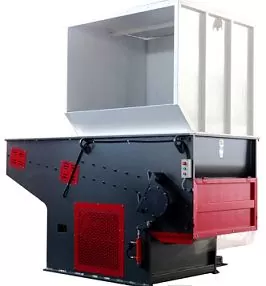
Why Must Material Characteristics Be Confirmed First?
Material is king.
Everything starts here.
A shredder designed for plastic film will behave very differently from one designed for thick HDPE pallets or industrial drums.
Before selecting a machine, I always ask customers for:
- Material type
- Material dimensions
- Material density
- Wall thickness
- Moisture content
- Contamination level
For example, soft LDPE film behaves differently than rigid PVC pipe.
A woven bag reacts differently than an injection-molded bumper.
According to the Global Recycling Material Database, material characteristics account for over 60% of shredder performance variation in industrial recycling applications.
The machine cannot change physics.
But it can be designed to work with it.
How Much Throughput Capacity Do You Actually Need?
This is where many buyers make costly mistakes.
They either underestimate future production.
Or they buy excessive capacity they never use.
Neither option is ideal.
A proper capacity assessment should consider:
- Current production volume
- Future expansion plans
- Daily operating hours
- Peak production periods
- Material feeding method
For example:
A plant processing 500 kg/hour today may require 1,000 kg/hour within two years.
Planning ahead often saves money.
Replacing undersized equipment rarely does.
The Industrial Recycling Capacity Report highlights that capacity mismatches remain one of the most common causes of premature equipment replacement.Single Shaft Shredder Machine For LDPE Film
Why Is Rotor Design More Important Than Motor Power?
Motor power gets all the attention.
Rotor design does all the work.
I often joke that a shredder rotor is like a chef’s knife.
The chef matters.
The knife matters.
But the shape of the blade often determines the result.
Rotor design affects:
- Material gripping
- Cutting efficiency
- Energy consumption
- Throughput stability
- Wear resistance
Different applications require different rotor configurations.
Examples include:
- Smooth rotors for film materials
- Aggressive rotors for thick plastics
- Large-diameter rotors for bulky products
- High-inertia rotors for dense materials
According to the Advanced Shredding Technology Institute, optimized rotor geometry can increase processing efficiency by more than 20% under certain operating conditions.
That is often a bigger gain than increasing motor power.
What Blade Material Should You Choose?
Blades are where profit meets reality.
Every shredded kilogram passes through them.
Every maintenance shutdown depends on them.
The correct blade material varies according to application.
Common options include:
- D2 tool steel
- DC53 alloy steel
- SKD11 steel
- Customized wear-resistant alloys
For abrasive materials such as agricultural film contaminated with sand, blade wear becomes a major cost factor.
For thick engineering plastics, impact resistance becomes equally important.
The Wear Resistance Engineering Center reports that blade selection can significantly affect maintenance intervals and operating costs.
At AMIGE, we often recommend different blade materials for different industries.
One blade does not fit all.
Just like one pair of shoes does not fit every marathon runner.
Why Must You Define the Required Output Size?
Many buyers focus on feeding.
Few focus on discharge.
That is a mistake.
The desired output particle size influences:
- Screen selection
- Rotor speed
- Energy consumption
- Downstream processing efficiency
A shredder producing 40mm flakes operates differently from one targeting 100mm output.
If the shredded material feeds directly into a crusher or washing line, the output specification becomes even more important.
The Polymer Size Reduction Research Group found that consistent particle sizing improves downstream processing efficiency and reduces equipment wear.
Always start with the final product requirement.
Then work backward.
That approach rarely fails.
Should You Consider Automation and Control Systems?
Absolutely.
Modern shredders are becoming smarter.
And smarter equipment often delivers better returns.
Today’s advanced systems may include:
- PLC controls
- Touchscreen interfaces
- Automatic reverse functions
- Overload protection
- Remote diagnostics
- Predictive maintenance monitoring
These technologies reduce downtime.
They improve safety.
They simplify operation.
The Smart Manufacturing Equipment Council indicates that automated monitoring systems can significantly improve equipment utilization rates.
A shredder that thinks a little can save operators a lot.
What Information Should You Provide to a Shredder Manufacturer?
The fastest way to receive an accurate quotation is to provide detailed information.
I always recommend sending:
- Material photos
- Material videos
- Material dimensions
- Material weight
- Required output size
- Desired capacity
- Operating hours
- Existing process layout
The more information we receive, the more accurate our recommendation becomes.
Guessing is expensive.
Data is profitable.
That principle applies to both machinery and business.
Why Are Sample Material Tests Worth Considering?
Whenever possible, test first.
Buy second.
Material testing helps verify:
- Throughput
- Output size
- Blade wear
- Energy consumption
- Overall suitability
Many reputable manufacturers offer sample testing.
We do this frequently at AMIGE.
Real-world testing often reveals details that specifications cannot.
A spreadsheet may look perfect.
A real machine tells the truth.
How Can Buyers Avoid Common Shredder Purchasing Mistakes?
Most purchasing mistakes fall into three categories:
Buying Based Only on Price
The cheapest machine often becomes the most expensive machine.
Ignoring Future Expansion
Today’s capacity requirement may not be tomorrow’s requirement.
Providing Incomplete Material Information
Poor input leads to poor recommendations.
Good technical communication reduces risk significantly.
Successful projects begin with accurate data.
Not assumptions.
Conclusion
Before ordering any shredder, focus on five essential parameters: material characteristics, throughput capacity, rotor design, blade material, and required output size. Verify these carefully, and your investment will deliver long-term value. In shredding, informed decisions are always cheaper than corrective actions.
#PlasticShredder #IndustrialShredder #PlasticRecycling #RecyclingEquipment #WastePlasticRecycling
#PlasticMachinery #SingleShaftShredder #DoubleShaftShredder #RecyclingIndustry #AMIGE
