

The recycling industry is evolving faster than ever. Customers are no longer satisfied with simply reading product catalogs or watching promotional videos. They want to walk through production workshops, inspect manufacturing processes, discuss technical details face-to-face, and understand how equipment is built before making investment decisions. Recently, we had the pleasure of welcoming representatives from a European recycling association to our manufacturing facility in Taizhou. The visit was more than a factory tour—it became an open technical exchange where ideas, experience, and innovation flowed in both directions.
During the visit, the delegation explored AMIGE’s production workshops, quality control systems, equipment testing procedures, and complete plastic recycling solutions. Together, we discussed industry trends, energy-efficient shredding technologies, intelligent automation, and the future of plastic recycling. The exchange reinforced an important belief that successful partnerships are built through transparency, technical communication, and continuous innovation.
Factory visits reveal more than machines.
They reveal people.
Processes.
And most importantly, trust.
Why Are Factory Visits Becoming More Important?
Today’s buyers make decisions differently.
Before placing orders, many customers prefer to verify:
- Manufacturing capability
- Production capacity
- Quality control
- Engineering expertise
- Service capability
Factory visits remain one of the most effective methods for evaluating industrial equipment suppliers.
Machines can be photographed.
Manufacturing capability must be experienced.
What Did the European Delegation Want to Learn?
The visiting experts focused on several technical topics.
These included:
- Plastic shredding technology
- Crushing efficiency
- Energy consumption
- Automation systems
- Equipment reliability
- Preventive maintenance
Many questions centered on practical production challenges rather than theoretical specifications.
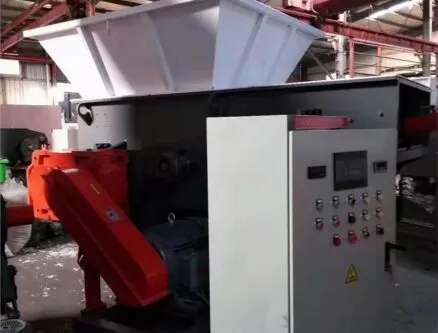
That made the discussions especially valuable. Single Shaft Shredder Machine For Cable
Which Production Areas Did the Visitors Tour?
Our guests visited multiple departments throughout the factory.
These included:
Manufacturing Workshop
Precision machining and fabrication.
Rotor Assembly Area
Heavy-duty rotor balancing and assembly.
Blade Processing Center
Knife manufacturing and inspection.
Electrical Assembly Department
PLC integration and control systems.
Equipment Testing Area
Full-load performance testing before shipment.
Visitors appreciated seeing every production stage.
Transparency builds confidence.
How Does AMIGE Control Product Quality?
Quality control is never limited to final inspection.
It begins with raw materials.
Our inspection process includes:
- Material verification
- Precision machining inspection
- Rotor balance testing
- Electrical testing
- Hydraulic system verification
- Trial operation testing
Process-based quality management produces more reliable industrial equipment than final inspection alone.
Quality is built.
Not inspected into existence.
What Technical Topics Generated the Most Discussion?
Several technologies attracted considerable attention.
These included:
Intelligent PLC Control
Improving automation and operational stability.
High-Efficiency Rotor Design
Reducing energy consumption while maintaining throughput.
Hydraulic Feeding Systems
Ensuring stable material processing.
Quick Blade Replacement Design
Reducing maintenance downtime.
The visitors shared valuable experiences from European recycling facilities.
We shared practical engineering solutions developed through years of manufacturing.
Knowledge travels both directions.
Why Did Energy Efficiency Receive Special Attention?
Energy costs remain a major concern for recycling companies worldwide.
During discussions, we reviewed:
- Motor selection
- Rotor optimization
- Blade geometry
- Hydraulic efficiency
- Intelligent load control
The reports that optimized machine design significantly reduces long-term operating costs.
Customers purchase machines once.
They pay electricity bills every month.
How Important Was Equipment Testing?
Before every shipment, equipment undergoes comprehensive testing.
Testing includes:
- No-load operation
- Full-load simulation
- Safety verification
- Hydraulic pressure testing
- Electrical system inspection
- Emergency stop testing
Visitors observed several testing procedures firsthand.
Seeing a machine operate under real conditions provides confidence that brochures alone cannot deliver.
Performance speaks louder than specifications.
What Industry Trends Were Discussed?
The technical exchange also covered future developments.
Major topics included:
- Chemical recycling pretreatment
- AI-assisted monitoring
- Predictive maintenance
- Carbon reduction strategies
- Intelligent recycling plants
The predicts increasing investment in smart recycling technologies throughout Europe and Asia.
Innovation never stands still.
Neither should equipment manufacturers.
Why Is International Technical Exchange So Valuable?
One of my favorite parts of the visit occurred during open discussions.
European recyclers described operational challenges.
Our engineers proposed engineering solutions.
Sometimes they improved our thinking.
Sometimes we improved theirs.
That is exactly how innovation happens.
No single company possesses every answer.
Collaboration creates better technology.
How Does AMIGE Benefit from These Visits?
Every factory visit teaches us something valuable.
Customer feedback helps us improve:
- Equipment design
- Maintenance procedures
- Automation features
- Safety systems
- Service support
Continuous improvement is not a slogan.
It is a daily engineering process.
The best ideas often come directly from customers.
What Does This Visit Mean for Future Cooperation?
This visit strengthened more than business relationships.
It strengthened technical partnerships.
Moving forward, we hope to expand cooperation through:
- Joint technical seminars
- Equipment demonstrations
- Technology sharing
- Product development
- Industry research
The recycling industry faces global challenges.
Global cooperation offers the best solutions.
Why Does Trust Remain the Most Important Product?
Machines matter.
Technology matters.
Service matters.
But trust remains the foundation of every successful partnership.
A factory visit allows customers to see exactly who builds their equipment.
They meet engineers.
Inspect production.
Ask difficult questions.
We welcome every one of them.
Because transparency creates confidence.
Confidence creates partnerships.
Conclusion
Welcoming the European recycling association to our Taizhou factory was an excellent opportunity to exchange technical knowledge, strengthen international cooperation, and demonstrate our commitment to quality manufacturing. At AMIGE, we believe that every factory visit builds stronger partnerships, inspires better engineering, and contributes to a more sustainable future for the global plastics recycling industry.
#PlasticRecycling #FactoryVisit #PlasticShredder #PlasticCrusher
#RecyclingEquipment #PlasticMachinery #CircularEconomy #Manufacturing
#IndustrialRecycling #AMIGE