

Industrial plastic grinding is the controlled size reduction of plastic scrap into regrind or flakes that can be washed, separated, blended, sold or returned to production. The process normally includes sorting, metal removal, suitable feeding, cutting through rotor and fixed knives, screen sizing and safe material collection.
Good plastic grinding is not simply putting scrap into the fastest machine. The grinder, rotor, knives, screen, feed opening and downstream handling must match the polymer, part geometry, wall thickness, contamination and required output.
I’m Jacky, CEO of AMIGE. When buyers describe a grinding problem, I ask for the material and feed form first. Film, bottles, pipes, thick purgings and reinforced plastic do not belong in one standard configuration.
What Is Plastic Grinding?
Plastic grinding reduces larger scrap into a controlled particle size by cutting and shearing. In recycling plants, the terms grinder, crusher and granulator are often used differently by region. The important details are the cutting chamber, rotor design, knife arrangement, screen and feeding method.
This page focuses on the process of preparing and grinding plastic. For the internal working principle, read how a plastic grinder works.
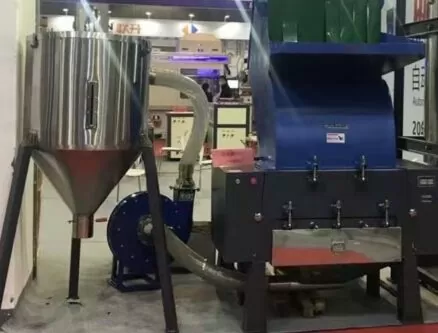
Industrial Plastic Grinding Process
- Identify and sort the material. Separate incompatible polymers, colors and contaminants according to the required end use.
- Remove metal and hazardous contamination. Inspect feed and use suitable separation or detection before material reaches the cutting chamber.
- Prepare oversized parts. Bulky or thick items may require sawing, guillotine cutting or pre-shredding.
- Feed at a controlled rate. Avoid bridging, uncontrolled surges and overloading. Conveyors, hoppers or hydraulic pushers may be required.
- Cut through rotor and fixed knives. Knife geometry, rotor speed and clearance affect power demand, heat, fines and particle shape.
- Size through the screen. Material remains in the chamber until it passes the selected openings.
- Collect and inspect the regrind. Control dust, remove residual metal and check particle distribution before washing, blending or storage.
Which Plastics Can Be Ground?
| Feed type | Typical challenge | Machine-selection focus |
|---|---|---|
| Bottles and hollow containers | Bouncing, labels, caps and mixed shapes | Feed opening, rotor grip, screen and optional wet grinding |
| Sheets and edge trim | Wide or flexible feed | Infeed control, anti-wrapping rotor and low-noise options |
| Film and bags | Low bulk density and wrapping | Rotor design, forced feeding and downstream washing |
| Pipes and profiles | Long feed and thick walls | Long-feed hopper, rotor torque and staged reduction |
| Thick purgings and lumps | High impact load and slow cutting | Pre-shredding, robust chamber and controlled feed |
| Reinforced or abrasive plastic | Accelerated knife and screen wear | Material testing, wear protection and maintenance plan |
Thermosets, composites, materials containing fibers or minerals, and contaminated waste require a specific review. Do not assume that all material sold as “plastic” will produce clean reusable regrind.
Grinding Chemical Drums and Rigid Containers
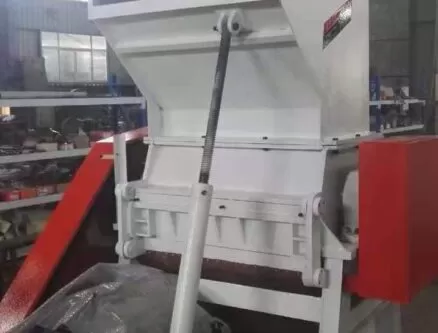
Drums and rigid containers require verification of previous contents, cleaning status, residual metal and dimensions. Large parts may need a shredder before granulation. The correct route depends on wall thickness, material, required capacity and downstream washing.
Grinding Film Without Excessive Wrapping
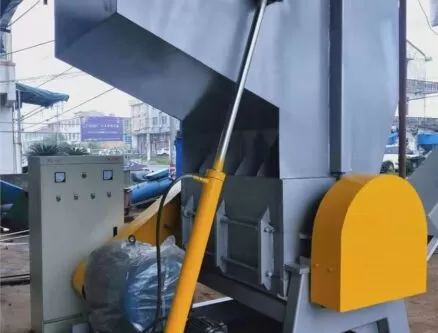
Film and bags have low bulk density and can wrap around rotating parts. A line may need forced feeding, wet grinding, washing, dewatering and drying. Dirty agricultural film should not be evaluated from clean film test data.
Grinding Plastic Pipes and Profiles
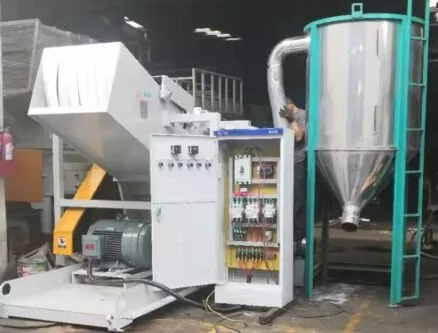
Long pipes need a safe and stable feeding arrangement. Large-diameter or thick-wall pipe may require pre-shredding or a specialized crusher. Provide maximum diameter, wall thickness, length and hourly volume when requesting a proposal.
How to Choose Rotor, Knives and Screen
The rotor must grip the feed without causing uncontrolled impact or wrapping. Knife material and geometry are selected for the polymer, contamination and wear conditions. Correct knife clearance supports clean cutting and limits heat and fines.
The screen controls the maximum discharge opening, but a smaller screen does not guarantee better economics. It increases residence time and can reduce throughput or raise heat and fines. Review our guide to grinder screen replacement and selection.
Grinder, Shredder, Granulator or Pulverizer?
| Equipment | Best fit | Typical output role |
|---|---|---|
| Shredder | Bulky, irregular, thick or difficult-to-feed scrap | Coarse first-stage reduction |
| Crusher or granulator | Bottles, molded parts, sheets, film and prepared scrap | Screen-controlled flakes or regrind |
| Pulverizer | Selected clean, prepared materials requiring powder | Fine powder after suitable pre-sizing |
A multi-stage system may be more stable than forcing one machine to perform every reduction step. Compare the plastic granulator process and plastic pulverizer applications before choosing.
How to Reduce Heat, Fines and Uneven Output
- Maintain correct knife sharpness and clearance.
- Use a rotor and speed appropriate for the feed.
- Avoid overfeeding and unstable surges.
- Select a screen that balances output size and throughput.
- Remove metal and abrasive contamination before grinding.
- Keep air and material discharge paths clear.
- Inspect bearings, fasteners, rotor condition and screens on schedule.
When regrind quality changes, record material, amperage, feed rate, knife condition, screen, temperature and output distribution. This evidence is more useful than changing several machine settings at once.
Safety and Dust Control
Grinding equipment should be installed and operated under the manufacturer’s instructions and the site’s risk assessment. Guarding, interlocks, emergency stops, lockout procedures, metal removal, dust collection, fire controls, ventilation and hearing protection must match the material and local requirements.
Never reach into a hopper or cutting chamber, and never open or service the machine until all hazardous energy is isolated and rotating parts have stopped. Unknown drums, batteries, pressurized containers and incompatible contaminants require separate handling procedures.
Information Required to Select a Plastic Grinding Machine
- Polymer, additives and contamination
- Part type, dimensions, wall thickness and bulk density
- Photos or representative samples
- Required input rate and operating hours
- Target particle size and acceptable fines
- Wet or dry process and downstream equipment
- Voltage, frequency, space, noise and dust constraints
- Required conveying, collection and automation
Review AMIGE plastic crusher configurations, then send the project details through the machine inquiry form for a material-based discussion.
Frequently Asked Questions
What machine is used for grinding plastic?
A screen-controlled plastic crusher or granulator is common for bottles, molded parts and prepared scrap. Bulky material may require pre-shredding, while fine powder applications may require a pulverizer.
Should plastic be washed before or after grinding?
The sequence depends on the material and contamination. Some lines pre-wash before size reduction; others use wet grinding followed by intensive washing. The full process must be selected as one system.
What controls the size of plastic regrind?
The screen opening controls the maximum discharge path, while rotor design, knife condition, clearance, feed and material behavior influence the actual particle distribution and fines.
Why does plastic melt or smear during grinding?
Possible causes include dull knives, incorrect clearance, excessive residence time, overfeeding, unsuitable rotor speed or a material that softens under the process conditions. Diagnose the feed and operating data before changing the machine.
What details are needed for a grinder quotation?
Provide polymer, feed form, dimensions, wall thickness, contamination, capacity, target output size, operating hours, downstream process, voltage and site constraints.
