

A typical manual or small metal can crusher is not designed to process plastic bottles efficiently. Aluminum cans deform under compression, while PET and HDPE bottles can spring back, flatten unevenly, or pass through without controlled size reduction.
For recycling plants, plastic bottles are normally processed by a knife-based bottle crusher or granulator. If both cans and bottles are present, sorting them before size reduction usually improves safety, equipment life, and downstream material quality.
I’m Jacky, CEO of AMIGE. Buyers often use the word “crusher” for several different machines. I first confirm whether the goal is simple volume reduction, controlled PET flakes, beverage-container sorting, or preparation for washing and separation.
Can a can crusher crush plastic bottles?
It may flatten some bottles, but that does not mean it is suitable for continuous plastic recycling. A can crusher is generally designed around the predictable deformation of thin metal containers. Plastic bottles vary in polymer, wall thickness, shape, cap, label, and resilience.
An industrial combination system is possible, but it requires controlled feed, separation, guarding, and downstream equipment. Do not assume that a machine designed for aluminum cans can accept PET bottles without engineering review.
How does a can crusher work?
A can crusher normally compresses the container between plates, a lever mechanism, rollers, or a powered ram. The objective is to reduce volume for storage, transport, or baling. The result is a flattened can rather than clean, controlled-size recycling flakes.
Industrial metal-container systems may use compactors, shredders, or balers depending on the material and downstream buyer. Metal contamination must be kept away from plastic knife equipment unless the line is designed to remove it.
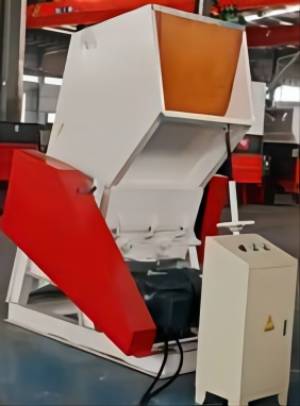
How does a plastic bottle crusher work?
A plastic bottle crusher uses rotating rotor knives and fixed knives to shear bottles. A perforated screen retains oversized pieces until they are small enough to leave the cutting chamber. The flakes can then move to air separation, washing, float-sink separation, drying, or another recycling stage.
| Machine | Main action | Typical output | Best fit |
|---|---|---|---|
| Can crusher | Compression | Flattened cans | Metal-container volume reduction |
| Plastic bottle compactor | Compression or densification | Flattened or compacted bottles | Storage and transport reduction |
| PET bottle crusher | Knife cutting with screen | Controlled plastic flakes | Washing and recycling lines |
| Shredder | Low-speed tearing | Coarse pieces | Bulky, baled, or difficult feed |
Why should cans and plastic bottles be sorted?
- Metal can damage or rapidly dull plastic-crusher knives.
- Different materials require different cutting or compression forces.
- Mixed output has lower value and complicates downstream separation.
- Caps, rings, labels, liquids, and dirt affect washing requirements.
- Sorted feed makes throughput and wear more predictable.
Use magnets, eddy-current separation, manual sorting, optical sorting, or other suitable systems according to the container stream. The required sequence depends on local collection quality and the final product specification.
Which machine fits PET and HDPE bottles?
PET beverage bottles are commonly crushed into flakes before washing and separation. HDPE milk or detergent bottles may use a similar principle, but wall thickness, handle geometry, residual product, labels, and downstream polymer separation change the configuration.
Review the AMIGE PET bottle crusher and heavy-duty plastic bottle crusher. For the full process, see our guide to crushing plastic bottles for recycling.
What determines bottle crusher capacity?
- Bottle polymer, volume, wall thickness, and shape.
- Loose, flattened, baled, or conveyor-fed condition.
- Caps, labels, liquids, sand, and metal contamination.
- Rotor diameter, width, speed, inertia, and knife arrangement.
- Knife sharpness, cutting gap, and screen opening.
- Feed consistency and discharge or washing-line capacity.
How should buyers compare crusher quotations?
Ask each supplier to quote against the same bottle stream and accepted output. Confirm whether capacity is based on loose bottles, flattened bottles, or washed flakes; whether caps and labels are present; and what flake size and fines are acceptable.
Compare the hopper, feeding conveyor, rotor, knives, screen, chamber access, noise control, metal protection, wet or dry operation, discharge, controls, guarding, spare parts, and integration with washing equipment.
What information is needed for a quotation?
- Container type, polymer, photos, and representative samples.
- Maximum bottle dimensions and feed condition.
- Estimated percentages of metal cans and other contamination.
- Required output size and downstream use.
- Target accepted capacity and operating hours.
- Voltage, factory layout, washing scope, and destination.
Request a bottle crusher recommendation
Send AMIGE your bottle photos or samples, contamination, target flakes, capacity, and downstream process. We can recommend the rotor, knives, screen, feeding, separation, and line scope through our plastic bottle crusher quotation form.
Frequently asked questions
Can a manual can crusher crush PET bottles?
It may flatten some bottles, but spring-back and variable shapes make the result inconsistent. It does not produce flakes for industrial recycling.
What machine crushes plastic bottles into flakes?
A knife-based plastic bottle crusher or granulator uses rotor and fixed knives plus a screen to produce controlled-size flakes.
Can PET bottles and aluminum cans enter the same crusher?
Only in a system specifically designed for mixed containers and separation. Sorting first usually protects equipment and improves material quality.
Should bottle caps and labels be removed before crushing?
The required sequence depends on the line. Caps and labels may be separated later, but they must be included in equipment and quality planning.
What affects the price of a plastic bottle crusher?
Capacity, rotor, knives, screen, wet or dry design, feeding, metal protection, discharge, controls, guarding, spares, and line integration affect price.
Conclusion
A can crusher and a plastic bottle crusher solve different problems. Choose compression for container volume reduction and knife-based crushing when the goal is controlled plastic flakes for recycling.
