

Industrial plastic bottles are crushed by sorting the feed, removing harmful contamination, metering bottles into a high-speed crusher, and passing the cut material through a screen. The resulting flakes can then be separated, washed, rinsed and dried according to the resin and final quality requirement.
The correct process depends on the bottles. PET beverage bottles, HDPE detergent containers and mixed household bottles should not automatically share the same process or final material stream. Resin, labels, closures, residual liquid and bale condition all affect equipment selection.
I’m Jacky, CEO of AMIGE. For a commercial project, I do not recommend choosing a plastic bottle crusher from motor power alone. I ask what enters the line, what flake quality the buyer needs, and what happens after crushing.
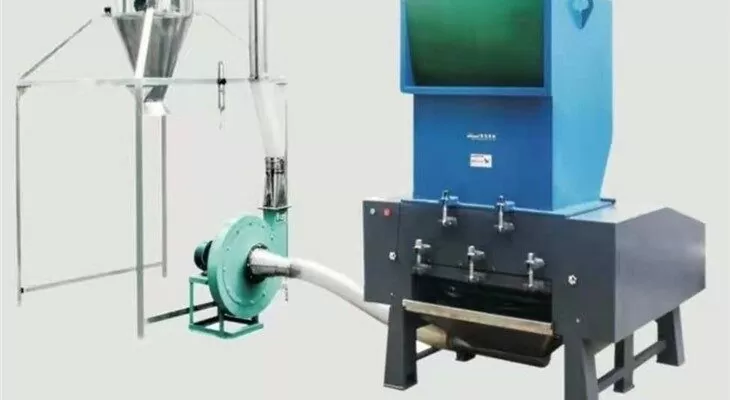
How to crush plastic bottles in an industrial line
1. Inspect and sort incoming bottles
Identify the main polymer, color mix and contamination. Separate bottles that do not belong in the intended product stream. Remove metal, glass, stones and pressurized containers before size reduction. If feed arrives in bales, a bale breaker and controlled conveyor can create a steadier flow.
2. Remove loose contamination and residual liquid
Drain residual product and remove loose dirt that could increase wear or contaminate process water. Labels, adhesives and closures need a planned separation route. PET bottle systems often use label removal, screening and sink-float separation rather than relying on the crusher to solve every contamination problem.
3. Feed bottles evenly into the crusher
A belt conveyor meters bottles into the cutting chamber. Hollow containers can bounce, bridge or carry trapped air, so hopper design and feed control matter. An overload-protected conveyor can stop or slow when crusher load rises instead of continuously forcing material into a jam.
4. Cut and screen the plastic into flakes
Rotating knives pass fixed knives and cut the bottles. Pieces remain in the chamber until they fit through the screen openings. Knife geometry, clearance, rotor speed, screen size and feed condition affect flake distribution, dust, heat, capacity and wear.
5. Wash, separate and dry the flakes
After crushing, flakes may pass through friction washing, hot washing, float-sink separation, rinsing and mechanical or thermal drying. The sequence should match the resin and buyer specification. See how a plastic friction washer fits into this stage.
Crusher, shredder or complete bottle recycling line?
| Feed and goal | Typical approach | Reason |
|---|---|---|
| Loose PET or HDPE bottles | Dedicated bottle crusher | Efficient cutting to screened flakes |
| Compressed bales | Bale opening plus controlled feed | Improves separation and stabilizes loading |
| Large drums or bulky hollow parts | Shredder before crusher | Primary reduction protects crusher feeding |
| Clean flake for sale or reuse | Crushing, separation, washing and drying line | Flake quality depends on more than particle size |
If your main question is which machine can reduce bottles, read our separate plastic bottle shredder and crusher selection guide. This page focuses on the complete crushing process and line design.
What determines bottle-crushing capacity?
- Bottle resin, size, wall thickness and shape.
- Loose, compacted or baled feed condition.
- Contamination, residual liquid and label load.
- Conveyor rate and cutting-chamber dimensions.
- Rotor, knife arrangement and knife clearance.
- Screen opening and acceptable flake distribution.
- Wet or dry crushing configuration.
- Downstream washing and drying capacity.
A smaller screen may create finer flakes but can reduce throughput and increase recirculation, heat and dust. The best screen is the one that meets the downstream specification without making the crusher the bottleneck.
What should buyers check before ordering?
Request a test using representative bottles and contamination. Record test duration, hourly throughput, screen size, flake distribution, dust, noise conditions and motor load. Compare knife material and adjustment, screen access, bearings, seals, water-contact parts, cleaning access and spare-part scope.
For a complete plastic bottle washing line, also define the target moisture, contamination limit, available water treatment, factory layout, electrical supply and packaging method for finished flakes.
Information needed for a bottle crusher quotation
Send bottle type and resin, photos, bale dimensions if applicable, contamination details, input per hour, target flake size, operating hours and final use. Tell us whether the quotation should include bale opening, conveyors, label removal, washing, separation, drying and flake storage.
Frequently asked questions
Should caps be removed before crushing plastic bottles?
That depends on the process. Compatible polyolefin caps can be separated from PET flakes by a planned density-separation stage, while metal or incompatible closures should be removed earlier. Confirm the accepted feed specification.
Can PET and HDPE bottles be crushed together?
The crusher may cut both, but mixing them can reduce recycled-material quality. Sort polymers according to the final product and separation capability rather than assuming common crushing makes them compatible.
What flake size should a bottle crusher produce?
The required size depends on washing, separation and end use. Specify an acceptable distribution and verify it in a test instead of relying on one nominal screen dimension.
Is wet crushing better than dry crushing?
Wet crushing can combine cutting with initial rinsing and may control heat or dust, but it adds water, drainage and wear considerations. The correct choice depends on contamination and the full washing-line design.
How do I choose a plastic bottle crusher supplier?
Compare representative tests, complete line scope, knife and screen design, maintenance access, water-contact materials, safety, spare parts, documentation and service—not price or motor power alone.
Conclusion
Efficient bottle crushing connects sorting, controlled feeding, screened cutting and downstream cleaning. Define the input and finished-flake requirement first, then size the crusher and washing stages as one production system.
