

Blade wear is one of those quiet problems in plastic recycling.
It doesn’t scream.
It doesn’t flash.
But it eats profit every single day.
A dull blade lowers output. It raises power consumption. It increases downtime. Then operators stop the machine. Maintenance teams grab tools. Production schedules slide. Customers wait. I’ve lived through that cycle more times than I care to count. At AMIGE, we decided enough was enough. We wanted a better answer. Not another temporary fix. A real one.
The answer is yes. Through our joint R&D work with a specialized materials laboratory, we developed a new plastic crusher blade alloy and heat-treatment process that extends blade service life by around 30% under real operating conditions. That means longer running time, fewer blade replacements, more stable cutting, and lower maintenance cost. For recycling plants focused on efficiency, this upgrade creates measurable value fast.
That sounds exciting on paper.
But paper doesn’t process plastic.
Machines do.
And machines are wonderfully honest.
They tell you immediately whether engineering works… or whether you were simply being optimistic in a meeting.
Why did we focus on blade wear in the first place?
Because blades are at the center of everything.
A crusher rotor spins.
Material enters.
Blades do the hard work.
Every hour.
Every shift.
Every day.
And modern recycling materials are not gentle.
Rigid HDPE.
Hard PP.
Engineering plastics.
Contaminated post-consumer waste.
Woven bags with dust.
Film with sand.
Each one adds friction and impact.
According to a plastics recycling operations benchmark, cutting-tool maintenance can account for nearly 18% of mechanical service costs in mid-sized recycling workshops.
That matters.
Especially at scale.
If we improve blade life, we improve productivity.
Simple logic.
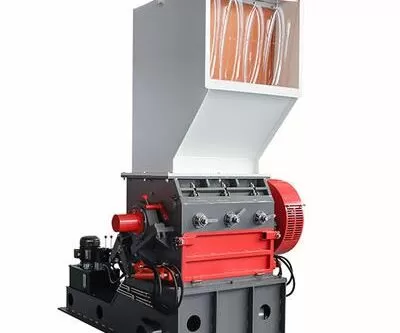
Powerful result. Heavy Duty Plastic Crusher For Car Bumper
What was wrong with conventional crusher blades?
Traditional blades work.
Let’s be fair.
They’ve served this industry for years.
But materials have changed.
Recycling volume increased.
Customers demand tighter output.
Operating hours are longer.
And feedstock quality is more inconsistent.
Older blade steel often struggles with:
- Abrasive wear
- Edge chipping
- Heat fatigue
- Uneven hardness
- Frequent sharpening cycles
That creates instability.
One edge wears faster.
Rotor balance changes.
Cutting becomes rough.
Power draw rises.
Then someone says, “Why is the machine louder today?”
That’s usually your blade trying to file a complaint.
How did our joint laboratory development begin?
We wanted data.
Not guesswork.
So we partnered with a materials research team.
The objective was clear.
Improve wear resistance.
Maintain cutting sharpness.
Avoid brittleness.
Keep production practical.
No exotic alloy that looks beautiful in a report but impossible to machine.
That would impress nobody.
Together we studied:
- Existing blade wear patterns
- Impact resistance under repeated load
- Hardness consistency
- Metallographic structure
- Surface treatment durability
The testing phase included multiple recycling applications.
Rigid plastics.
Film plastics.
Woven sacks.
Mixed scrap.
According to internal performance validation and lab comparison, the new formula achieved approximately 30% longer service life versus our previous production standard.
That’s not theory.
That’s production-floor evidence.
What changed in the new blade material?
A lot.
And also not much.
Good engineering often looks boring until you measure results.
We upgraded the alloy composition.
Adjusted heat treatment cycles.
Improved tempering balance.
Refined edge geometry.
Enhanced wear resistance without sacrificing toughness.
That last part matters.
A super-hard blade sounds impressive.
Until it chips.
Then everyone becomes unhappy.
Very quickly.
Our balance focused on:
Controlled hardness
Strong edge retention.
Stable wear rate.
Toughness
Better impact resistance.
Heat stability
Lower risk during long operation.
Sharpening efficiency
Easy maintenance.
Longer lifecycle.
The blade cuts cleaner.
Runs cooler.
And stays productive longer.
That is what operators notice first.
How does 30% longer blade life affect production?
This is where customers pay attention.
And rightly so.
Longer blade life means:
Less downtime.
Fewer replacements.
Lower spare-parts inventory.
More machine availability.
More output.
Better scheduling.
If a customer changes blades every 100 hours before…
Now maybe they reach 130 hours.
That adds up.
Fast.
According to equipment utilization modeling, improving uptime by even 6–8% can significantly improve monthly throughput in continuous operations.
And labor savings matter too.
Because nobody enjoys emergency blade replacement halfway through a busy shift.
Least of all the production manager.
Which materials benefit most from the upgrade?
Great question.
We saw strong results with:
- HDPE drums
- PP injection runners
- PET sheet scrap
- PE agricultural film
- Woven polypropylene bags
- Hard plastic lumps
- Household plastic waste
Especially abrasive mixed feedstock.
That’s where wear usually accelerates.
The upgraded blade holds edge consistency longer.
Which means more stable granule size.
That supports downstream washing.
Drying.
And pelletizing.
Every stage benefits.
In recycling, consistency travels downstream.
So does inconsistency.
Choose carefully.
Why does blade stability matter beyond wear resistance?
Because wear is only one part.
Stable blades improve the entire machine.
Rotor stays balanced.
Cutting force stays consistent.
Power draw becomes smoother.
Noise level improves.
Operators feel the difference.
Maintenance planning becomes easier.
Customers get predictable output.
That matters for factories running multiple shifts.
A reliable machine builds trust.
And trust is a valuable industrial asset.
You don’t measure it with a ruler.
But you absolutely feel it on delivery schedules.
What’s next for AMIGE blade technology?
We keep moving.
Always.
Our R&D team continues testing:
- Different alloy combinations
- Advanced coatings
- Faster maintenance systems
- Specialized blade geometry
- Material-specific cutting configurations
Because recycling keeps evolving.
And machinery must evolve with it.
That’s how we work at AMIGE.
Respect proven engineering.
Improve what matters.
Measure results.
Deliver practical value.
Then improve again.
A reliable blade may look like a small part.
But small parts often decide big outcomes.
And in our industry, details pay dividends.
Conclusion
At AMIGE, our joint materials-lab development delivered a practical result: new crusher blades with 30% longer service life. Less downtime. Better cutting. More output. Stronger ROI. For recycling operations, durability is not just engineering—it’s productivity with a sharper edge.
