

Every year, mountains of discarded fishing nets end up in recycling yards instead of returning to productive use. The problem is not collecting them. The real headache starts when the nets hit the shredder. Long nylon fibers twist around the rotor shaft like seaweed around a boat propeller. Production stops. Bearings overheat. Operators curse. Maintenance teams lose weekends. I have seen factories spend more time cutting tangled ropes from shafts than actually processing material. In a business where uptime means profit, shaft wrapping is not a small inconvenience. It is a direct attack on operating margins.
The good news is that shaft wrapping during fishing net shredding is not an unsolvable engineering mystery. In my experience at Amige, the answer comes from combining proper rotor structure, optimized knife arrangement, hydraulic feeding control, anti-entanglement shaft design, and pre-cutting process management. When these systems work together, recyclers can transform troublesome fishing nets into stable, profitable recycled material streams instead of maintenance nightmares.
If plastic recycling teaches us anything, it is this: soft materials always expose weak machine design. Fishing nets are the perfect stress test.
Why Are Old Fishing Nets So Difficult to Shred?
Fishing nets behave very differently from rigid plastics.
PET bottles crack. HDPE crates fracture. PP drums split. Easy.
Fishing nets do none of that.
Most nets contain nylon, polyethylene, or polypropylene fibers with extremely high tensile strength. According to Global Marine Waste Statistics, abandoned fishing gear accounts for nearly 46% of large plastic waste collected in ocean cleanup zones. These materials are designed to survive storms, saltwater, and constant pulling force.
Unfortunately, those same strengths become a nightmare inside a shredder.
The fibers stretch instead of breaking. They twist instead of falling. They wrap instead of discharging.
I often tell customers this simple truth: a fishing net does not want to become scrap. Your machine must force it to surrender.
Another complication comes from moisture and salt residue.
Wet nets increase friction. Sand hidden inside the fibers accelerates blade wear. Salt promotes corrosion around bearings and shafts. Without proper protection, equipment lifespan drops rapidly.
This is why ordinary plastic crushers fail quickly in fishing net applications.
What Causes Shaft Wrapping During the Shredding Process?
Most wrapping problems start from one overlooked detail: rotational pulling force.
When the rotor spins, long fibers naturally follow the shaft direction. If the cutting chamber lacks sufficient interruption points, the material begins forming loops around the shaft core.
One loop becomes ten.
Ten become one giant nylon snake.
Then the machine stops.
From my experience, shaft wrapping usually comes from five major causes:
- Rotor surface is too smooth
- Knife gaps are too large
- Rotor speed is too high
- Feeding volume is unstable
- Material length entering the chamber is excessive
Many factories wrongly assume “more power” solves the issue.
Actually, excessive torque often worsens wrapping because the machine keeps pulling instead of cutting.
A poorly configured shredder becomes a giant fishing reel.
According to Industrial Recycling Equipment Review, nearly 63% of fishing net recycling downtime comes from entanglement-related stoppages.
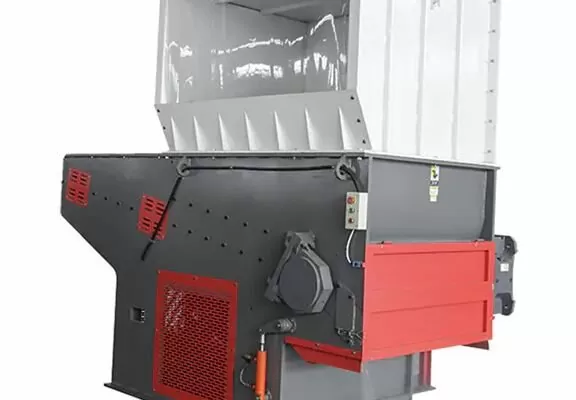
That number does not surprise me at all. Single Shaft Shredder Machine For LDPE Film
How Does Rotor Design Reduce Entanglement?
Rotor design is where the real battle is won.
At Amige, we pay enormous attention to rotor geometry for soft plastics. A standard flat rotor may work for hard scrap, but fishing nets demand a more aggressive anti-wrapping structure.
We usually recommend:
- Hexagonal shafts
- Concave rotor profiles
- Hooked blade arrangements
- Intermittent cutting zones
- Anti-slip surface treatment
These designs interrupt fiber movement before wrapping begins.
Think of it like controlling traffic. If fibers travel smoothly in one continuous direction, wrapping happens. If movement is repeatedly interrupted, the material breaks apart faster.
One of our clients processing discarded aquaculture ropes reduced shaft cleaning frequency from every 40 minutes to once every 9 hours simply by changing rotor geometry.
That is not marketing language. That is operational reality.
Why Is Rotor Speed More Important Than Many Operators Think?
Many operators love high RPM numbers.
I understand why. Fast machines look productive.
But fishing nets do not respect appearances.
High-speed rotation often creates stronger winding force before cutting can occur. Instead of fragmenting the material, the rotor behaves like a spinning spindle.
For fishing nets, controlled low-speed shredding works better.
Based on testing data from Polymer Recovery Technology Center, rotor speeds between 60–95 RPM typically generate better discharge stability for flexible marine plastics.
In our projects, lower speed offers three advantages:
- Reduced heat generation
- Lower shaft winding probability
- More stable torque output
This is why single-shaft shredders often outperform high-speed crushers in net recycling.
Slow and steady wins this race.
Sometimes traditional mechanical wisdom still beats fashionable automation slogans.
Can Knife Arrangement Solve Wrapping Problems?
Absolutely.
Knife arrangement determines whether fibers get trapped or severed.
Improper blade spacing allows long strands to slide around the shaft without enough cutting interruption. The result is continuous entanglement.
For fishing nets, I prefer staggered knife layouts.
This configuration creates irregular cutting paths. The fibers cannot predict movement direction. They become unstable and break apart faster.
We also recommend:
- Narrow knife clearance
- High-hook cutting teeth
- Replaceable edge inserts
- Multi-angle blade overlap
Some operators hesitate to invest in better blades.
Then they lose thousands in downtime.
I have learned something over the years: cheap knives become expensive very quickly.
Especially when your maintenance crew starts carrying scissors in their pockets full-time.
How Important Is the Feeding System?
Extremely important.
Even the best shredder struggles if feeding conditions are chaotic.
Fishing nets are lightweight and elastic. If dumped unevenly into the hopper, they form compressed bundles. These bundles rotate together and instantly create wrapping pressure around the shaft.
A hydraulic feeding ram solves much of this problem.
Instead of uncontrolled dumping, the material enters the rotor gradually and consistently.
At Amige, we often combine:
- Hydraulic push systems
- Variable feeding pressure
- Intelligent load sensing
- Reverse rotor programming
When overload begins, the rotor reverses automatically before wrapping escalates.
This is preventive engineering.
Not emergency maintenance.
According to Recycling Plantg Efficiency Monitor, automated feeding systems improve fishing net processing efficiency by nearly 37%.
That improvement directly impacts labor cost per ton.
Should Fishing Nets Be Pre-Cut Before Shredding?
In many cases, yes.
Especially for extremely long trawl nets or aquaculture ropes.
Some customers want one machine to do everything. I understand the temptation. Fewer machines sound cheaper.
But overloaded shredders create hidden costs.
Pre-cutting reduces strand length before entering the primary shredder. This dramatically lowers entanglement risk.
Common pre-treatment methods include:
- Bale opening
- Hydraulic shearing
- Slow-speed tearing
- Manual length reduction
The goal is simple.
Never allow excessively long continuous fibers into the rotor chamber.
In large-scale recycling plants, process flow matters more than individual machine horsepower.
A balanced line always beats a brute-force approach.
What Maintenance Strategies Prevent Chronic Shaft Wrapping?
Even excellent machines need discipline.
Fishing net recycling is not a “set it and forget it” business.
Operators should regularly inspect:
- Blade sharpness
- Bearing temperature
- Rotor balance
- Shaft cleanliness
- Hydraulic pressure stability
I also strongly recommend anti-corrosion maintenance because salt residue quietly destroys components over time.
One overlooked issue is blade dullness.
Dull knives pull.
Sharp knives cut.
That difference determines whether fibers fragment or wrap.
At our factory, we encourage customers to schedule blade inspections based on operating hours instead of waiting for visible problems. Preventive maintenance always costs less than emergency shutdowns.
The old manufacturing principle still holds true:
Take care of the machine before the machine forces you to care for it.
Why Is Fishing Net Recycling Becoming a Bigger Opportunity?
Because global regulation is tightening rapidly.
Governments increasingly target marine plastic waste. Brands also demand more recycled nylon and recycled PE content in manufacturing.
According to Circular Ocean Materials Report, recycled fishing net nylon demand grew over 28% globally in the last three years.
That trend is creating serious opportunities for recyclers equipped with proper shredding systems.
But profitability depends on stable operation.
A recycling line constantly stopped by shaft entanglement cannot compete.
Efficient processing is no longer optional. It is the entrance ticket to this market.
Conclusion
Fishing net recycling is challenging, but the shaft wrapping problem can be controlled through proper rotor design, smart feeding systems, optimized blade arrangement, and disciplined maintenance. In my experience, recyclers who respect process engineering always outperform those relying only on machine power. The ocean waste problem is huge. The opportunity is equally large.
