

Soft plastic film looks harmless.
A thin piece of LDPE bag. A roll of stretch film. A pile of agricultural mulch. Nothing dramatic. Yet in many recycling plants, these materials create the biggest headaches. Operators stop the machine. Motors overload. Knives wrap up like noodles on a fork. Production stalls. Labor costs rise. I’ve seen it too many times. At AMIGE, we work with film recycling lines every year, and I can say this plainly: soft film can humble a standard crusher faster than hard plastic ever will.
The short answer is simple: ordinary crushers are built for brittle or rigid plastics, not flexible film. Soft plastic bends, wraps, stretches, and absorbs impact instead of breaking cleanly. That creates bridging, shaft winding, clogged screens, and unstable feeding. The result is downtime, heat buildup, and frustrating jams. The right machine design changes everything.
And if you’ve ever stood beside a crusher with a wrench in one hand and wrapped film in the other, you already know what I mean.
Why does soft plastic behave differently during crushing?
Rigid plastics fracture.
Soft films do not.
That one difference changes the entire process.
HDPE bottles crack under force. PP crates shatter into flakes. But LDPE stretch film bends under pressure. Then wraps itself around rotating shafts. Then folds again. Then compresses.
Eventually, material stops moving.
That is why many standard crushers struggle.
Based on our internal testing and customer feedback, flexible films can reduce throughput by over 35% compared with rigid plastics when processed on conventional crushing equipment.
The machine isn’t broken.
It’s simply doing a job it wasn’t built for.
Why do crusher shafts get wrapped so quickly?
This is the classic film recycling problem.
You feed plastic film.
The rotor grabs it.
Instead of cutting cleanly, the film stretches.
Then it twists around the shaft.
Then more material follows.
Very soon, the shaft looks like it’s wearing a giant plastic scarf.
Not ideal.
This happens because thin film has strong tensile behavior and low rigidity.
Ordinary rotor geometry often lacks enough pulling force and controlled cutting angle to separate film fast enough.
At AMIGE, we often redesign the rotor profile specifically for this reason.
Knife angle matters.
Rotor spacing matters.
Even shaft diameter matters.
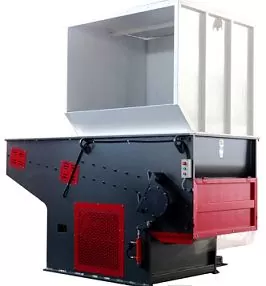
A small engineering detail becomes a major operational difference. Single Shaft Shredder Machine For LDPE Film
What role does the screen play in film jamming?
A very big role.
Many people blame the blades first.
I understand why.
Blades look dramatic.
But screens quietly cause many stoppages.
Here’s what happens:
Film gets partially cut.
Then reaches the screen.
Instead of dropping through, it stretches across the openings.
Like cling wrap over a bowl.
More pieces arrive.
Pressure increases.
Airflow weakens.
Temperature rises.
Suddenly discharge slows down.
Then stops.
According to a recycling equipment benchmark, oversized screen resistance can reduce film discharge efficiency by nearly 28%.
That’s expensive downtime.
For soft film, screen hole pattern and open area must match material thickness and target output.
Otherwise the machine fights itself.
Can feeding method make jamming worse?
Absolutely.
Sometimes the machine is fine.
The feeding is the real villain.
Loose film is lightweight.
It floats.
It bridges.
It bunches.
A manual feed hopper may dump too much at once.
Then the rotor gets overwhelmed.
Then wrapping begins.
That’s why we often recommend force-feeding systems.
Hydraulic push devices.
Belt conveyors.
Automatic compacting.
Controlled feed rates.
A stable feed creates stable cutting.
This sounds obvious.
Yet it’s often overlooked.
And overlooked details usually become expensive details.
Why does heat build up faster with film materials?
Because friction becomes the hidden enemy.
Film rubbing against rotor surfaces creates heat.
Film stretching creates heat.
Film clogging near the screen traps heat.
Then soft plastic becomes softer.
Then it sticks more.
Then resistance increases again.
That cycle escalates quickly.
LDPE film softening temperatures are not high.
A few extra degrees matter.
This is why we focus on efficient cutting and airflow.
Good machine design avoids unnecessary friction.
Sharp knives help.
Balanced rotor speed helps.
Ventilation helps.
Cooling options help.
The goal is simple.
Keep cutting.
Keep moving.
Keep temperature stable.
That protects both output and blade life.
What machine features solve soft film jamming best?
Now we get practical.
Here’s what I usually recommend for film recycling customers:
1. Dedicated shredding before crushing
A single-shaft shredder pre-cuts bulky film.
Then the crusher finishes granulation.
Less shock load.
More control.
Better output.
2. Optimized V-cut rotor design
Better grabbing.
Cleaner shearing.
Less wrapping.
3. Wider open-area screens
Improves discharge.
Reduces buildup.
4. Forced feeding system
Steady material flow.
Lower bridging.
5. Sharp wear-resistant blades
Consistent cut quality.
Longer intervals between maintenance.
6. Integrated line automation
Conveyor + crusher + blower + storage.
Smooth production.
Lower labor cost.
According to a flexible packaging recycling trend report, demand for film recycling equipment continues rising worldwide.
And customers increasingly want automated systems.
For good reason.
Nobody wants operators wrestling tangled plastic every afternoon.
When should I choose a shredder + crusher combination?
A fair question.
My answer:
Choose the combo when material is:
- Stretch film
- Jumbo bags
- Agricultural film
- Woven bags
- PE rolls
- Dirty post-consumer film
- High-volume soft packaging waste
Why?
Because shredders reduce volume first.
Crushers refine particle size second.
Each machine handles what it does best.
That improves throughput.
Protects motors.
Cuts maintenance.
And gives cleaner output downstream for washing or pelletizing.
In manufacturing, specialization wins.
The same applies to machines.
Conclusion
Soft plastic film jams ordinary crushers because it bends, wraps, and traps heat instead of breaking cleanly. In my experience at AMIGE, the right rotor, screen, and feeding system make the difference. Good machine matching saves downtime, labor, and patience. And yes—your operators will thank you.
