

The ocean is not forgiving. Lost fishing gear drifts for years. It traps marine life. It breaks into microplastics. The problem is growing faster than regulation. I have seen data that shows abandoned nets are one of the most persistent pollutants in marine ecosystems. Yet recycling them is not simple. Traditional shredders fail. They clog. They overheat. They stall. If we cannot process fishing nets efficiently, the entire recycling chain collapses.
Global fishing gear recycling initiatives are forcing net shredders to evolve. Machines must handle high-tensile fibers, resist entanglement, operate continuously under wet and contaminated conditions, and integrate intelligent control systems. In short, the shredder must shift from a general-purpose machine to a specialized, high-reliability system designed for one of the toughest materials in recycling.
I have built machines for difficult materials before. Fishing nets rank near the top. They test both engineering and patience.
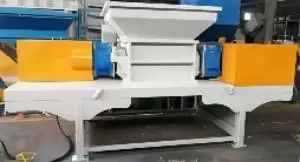
Why Are Fishing Nets So Difficult to Recycle?
Fishing nets are not ordinary plastics.
They are designed to survive harsh marine environments.
High tensile strength. UV resistance. Saltwater exposure.
Materials include nylon (PA), polyethylene (PE), and polypropylene (PP).
According to Marine Debris Data Portal, discarded fishing gear accounts for nearly 46% of large plastic debris in some ocean gyres.
That scale creates urgency.
The structure is the real challenge.
Flexible. Long. Easy to wrap around shafts.
A standard shredder treats them like rigid waste. That is a mistake.
What Are Global Recycling Initiatives Demanding?
Regulations are tightening. Fast.
Programs like extended producer responsibility (EPR) are expanding into marine sectors.
Governments and NGOs are pushing for closed-loop recycling systems.
Reports from Global Ocean Alliance show increasing mandates for gear collection and processing infrastructure.
This directly impacts equipment design.
Shredders must now meet:
- Continuous operation requirements
- Minimal downtime
- High throughput for bulky nets
- Compatibility with downstream washing lines
It is no longer about cutting. It is about system integration.
How Should a Net Shredder Handle Entanglement?
This is the first technical battlefield.
Fishing nets wrap. Fast.
If the rotor design is wrong, the machine stops within minutes.
We solve this with:
- Low-speed, high-torque shredding
- Special rotor geometry
- Hook-style cutters for pulling and tearing
Based on Recycling Equipment Engineering Study, anti-wrapping rotor designs reduce downtime by over 60%.
That is not theory. That is survival.
We also incorporate automatic reverse systems. Without them, the machine is blind.
What Blade Material Works Best for Fishing Nets?
Blades take the punishment.
Fishing nets may look soft. They are not.
Sand. Salt. Embedded debris.
All abrasive.
Standard tool steel wears too quickly.
We prefer high-alloy steels with surface hardening.
Sometimes we apply coatings.
Data from Industrial Materials Research shows that optimized blade materials can extend service life by up to 2.3 times.
That matters.
Frequent blade replacement kills productivity.
How Important Is Moisture and Corrosion Resistance?
Critical. Non-negotiable.
Fishing nets arrive wet. Often soaked.
Saltwater accelerates corrosion.
If your machine is not protected, it degrades quickly.
We design with:
- Anti-corrosion coatings
- Stainless steel components where necessary
- Sealed bearings
According to Coastal Equipment Durability Report, corrosion-related failures account for 22% of downtime in marine recycling facilities.
Ignoring this is expensive.
What Role Does Intelligent Control Play?
Control systems are the hidden backbone.
You cannot rely on manual operation.
Net feeding is inconsistent.
Load fluctuates constantly.
We integrate PLC systems to:
- Monitor torque and current
- Trigger automatic reverse
- Adjust speed dynamically
Reports from Smart Recycling Systems Journal indicate that intelligent control improves operational stability by over 35%.
That is the difference between a working plant and a failing one.
How Does Shredder Output Affect Downstream Recycling?
Shredding is not the end.
It is the beginning.
Output size must be consistent.
Too large? Washing inefficiency.
Too small? Material loss.
We aim for controlled particle size that feeds smoothly into washing and pelletizing lines.
According to Plastic Recycling Workflow Analysis, optimized shred size improves overall recycling yield by 18%.
That is real money.
Are Energy Efficiency and Throughput Still Important?
Always.
Recycling must be economically viable.
Fishing nets are bulky but lightweight.
This creates a paradox.
High volume. Low density.
Machines must process large volumes without excessive energy consumption.
We focus on:
- Optimized motor sizing
- Efficient torque transmission
- Smart load management
Data from Energy Use in Recycling Equipment shows that efficient shredders reduce energy cost per ton by up to 20%.
Margins matter.
What Is the Future of Net Shredding Technology?
Clear direction.
More automation. More specialization.
Integration with AI-based sorting systems.
Mobile shredding units near coastal collection points.
Global initiatives are not slowing down.
They are accelerating.
From my perspective, the companies that adapt early will dominate this niche.
This is not a trend. It is a structural shift.
Conclusion
Fishing gear recycling is reshaping shredder design. Machines must be tougher, smarter, and more specialized. From anti-wrapping rotors to intelligent PLC systems, every detail matters. In this field, only purpose-built equipment survives.
