

Plastic shredder ROI is the financial return created by a new or upgraded shredding system after its installed cost and additional operating expenses are considered. A useful calculation compares the current process with the proposed process under the same material, output specification and annual operating basis.
There is no universal 12-, 24- or 36-month payback. The result depends on verified throughput, saleable output, electricity tariff, labor, wear parts, downtime, installation and the value created by each additional ton.
I’m Jacky, CEO of AMIGE. When a buyer asks whether a more efficient shredder will pay for itself, I first separate measured plant data from supplier assumptions. That prevents an attractive spreadsheet from becoming an expensive production surprise.
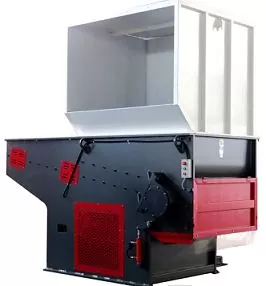
What is the basic plastic shredder ROI formula?
Annual net benefit = additional contribution from saleable output + energy savings + labor savings + maintenance savings + avoided downtime cost − additional annual operating costs.
Simple payback period = total installed investment ÷ annual net benefit.
Annual ROI (%) = annual net benefit ÷ total installed investment × 100.
Use simple payback as one decision tool, not the whole investment case. Financing, tax, depreciation, residual value, ramp-up time and risk may require a discounted cash-flow review by the buyer’s finance team.
Which costs belong in the installed investment?
| Cost group | Items to verify |
|---|---|
| Machine package | Shredder, feeder, conveyor, separator, discharge and controls |
| Project preparation | Material testing, engineering, drawings and approvals |
| Logistics | Packing, freight, insurance, customs and inland transport |
| Site work | Foundation, electrical supply, dust control, guarding and fire measures |
| Start-up | Installation, commissioning, training and initial spare parts |
| Working-capital effect | Ramp-up losses, extra inventory and temporary production disruption |
A low machine price can still create a high installed cost if auxiliary equipment, site changes or integration work is excluded. Ask every supplier to state exactly what is included.
Measure benefits per saleable ton
Motor power alone does not reveal operating efficiency. Compare electricity, knives, screens, lubrication, labor and maintenance against verified saleable output.
- kWh per saleable ton under an agreed material and output size
- Wear-part cost per ton and expected service interval
- Planned and unplanned maintenance hours
- Labor hours for feeding, monitoring, cleaning and changeovers
- Rejects, fines and material loss
- Availability during the agreed operating period
- Downstream restrictions that may limit usable throughput
Do not count nominal shredder output as additional profit if the conveyor, washer, granulator or pelletizer cannot process the extra material.
How should downtime be valued?
Record the cause, duration and production effect of every stoppage. Separate shredder-related downtime from upstream shortages, downstream stops and scheduled maintenance.
One practical method is: recoverable downtime hours × constrained saleable output per hour × contribution margin per ton. Only use hours the new system can realistically prevent. Otherwise, the calculation double-counts benefits.
Our PLC shredder control guide explains how overload detection and automatic reverse can support recovery. It does not eliminate the need for correct feeding, contamination control and maintenance.
Avoid five common ROI calculation errors
- Using catalogue capacity without the test material and output specification.
- Counting all additional throughput as saleable production.
- Ignoring auxiliary equipment, installation and site costs.
- Adding energy, labor and downtime benefits that overlap.
- Using one unusually good production day as the annual baseline.
Use a representative baseline period and show low, expected and high cases. The investment should remain understandable when assumptions change.
What data should a supplier provide?
- Test material, feed condition and prohibited contaminants
- Target output size and downstream process
- Measured or estimated throughput with stated conditions
- Installed and operating power for the proposed line
- Cutter, screen and wear-part specification
- Maintenance tasks and access requirements
- Auxiliary equipment and exclusions
- Commissioning, training, documentation and spare-parts scope
Use the same inputs when comparing quotations. Our heavy-duty industrial shredder buyer’s guide provides a technical comparison framework for single-shaft, double-shaft and multi-stage systems.
Build an acceptance test before approving the ROI
Define the representative material, preparation method, test duration, throughput measurement, output-size check, energy reading and stop conditions before the order. State which values are guarantees, targets or estimates.
The post-installation review should use the same definitions as the approval model. That allows procurement, production and finance to determine whether the expected savings were actually achieved.
Information AMIGE needs for an ROI review
Send material photos or samples, annual tonnage, current and target output, operating hours, electricity tariff, labor arrangement, downtime log, maintenance and wear-part cost, required output size, downstream equipment, voltage and site layout.
Frequently asked questions
What is a good payback period for a plastic shredder?
There is no universal target. The acceptable period depends on the buyer’s capital policy, project risk, equipment life and confidence in the operating assumptions.
Should throughput be based on input or finished output?
Use saleable output when calculating financial benefit. Input tonnage can overstate the return when rejects, fines, moisture or downstream losses are significant.
How do I compare two shredder quotations financially?
Use the same material, output size, annual hours, utility rates, labor basis and installed-cost scope. Then compare cost per saleable ton, risk and service support.
Can a material test prove the final ROI?
A test can support throughput, output and energy assumptions, but annual ROI also depends on utilization, maintenance, labor, material value and plant integration.
What is the difference between ROI and total cost of ownership?
ROI compares net benefit with investment. Total cost of ownership adds acquisition, installation, energy, labor, maintenance, wear parts, downtime and end-of-life costs across the evaluation period.
