

A shredder can have a powerful motor, a robust rotor, and a premium control system. Yet many recycling plants still suffer from frequent blade replacements. Why? Because blade life is often determined not by the machine itself, but by daily operating habits. I have visited facilities where operators blamed blade quality, only to discover that maintenance mistakes were quietly shortening blade life every day. The result is higher operating costs, unexpected downtime, and lower profitability. Fortunately, most of these problems are preventable.
Extending shredder blade life is not complicated. It starts with avoiding three common maintenance mistakes: ignoring material contamination, delaying blade inspections, and operating the machine outside its designed parameters. Combined with proper maintenance practices, these simple improvements can significantly reduce wear, improve productivity, and lower long-term operating costs. At AMIGE, we have helped customers double blade service intervals simply by correcting these daily habits.
Blade wear is inevitable.
Premature blade wear is optional.
The difference often comes down to discipline rather than technology.
Why Are Shredder Blades So Important?
The blade is the hardest-working component in the entire machine.
Every piece of material must pass through it.
Every ton of output depends on its cutting performance.
When blades wear excessively, operators experience:
- Lower throughput
- Increased power consumption
- Poor output consistency
- Higher maintenance costs
- More machine downtime
According to the Global Size Reduction Technology Institute, blade condition can directly influence overall shredding efficiency and energy consumption.
A sharp blade cuts.
A worn blade struggles.
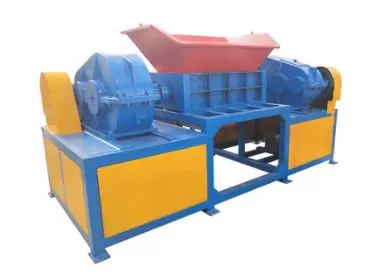
The electricity bill notices the difference immediately. Double Shaft Shredder For Metal Drum
What Factors Influence Blade Life?
Many operators assume blade material is the only factor.
It is important.
But it is not everything.
Blade life depends on:
- Material type
- Contamination levels
- Blade material
- Rotor speed
- Feeding consistency
- Maintenance practices
- Operating conditions
For example, shredding clean HDPE containers is very different from processing agricultural film contaminated with sand and stones.
One job cuts plastic.
The other job cuts plastic and grinds rocks.
Your blades know the difference.
Mistake #1: Ignoring Material Contamination?
This is the most common mistake I encounter.
And often the most expensive.
Many waste streams contain hidden contaminants such as:
- Sand
- Stones
- Metal fragments
- Glass particles
- Dirt
- Concrete residues
These materials dramatically accelerate blade wear.
According to the Industrial Wear Analysis Center, abrasive contaminants can increase cutting tool wear rates several times compared to clean materials.
The solution is simple.
Inspect incoming materials.
Install magnetic separators when appropriate.
Remove contaminants before shredding whenever possible.
Blades are designed to cut plastic.
Not construction materials.
Why Does Material Preparation Matter So Much?
Good preparation protects equipment.
Poor preparation destroys it.
Some operators view pre-sorting as extra work.
I view it as preventive maintenance.
Proper preparation can include:
- Visual inspections
- Metal detection
- Magnetic separation
- Material classification
- Dirt removal
A few minutes spent preparing material often saves hours of maintenance later.
That is one of the highest-return investments any recycling plant can make.
Mistake #2: Waiting Too Long to Inspect Blades?
Many operators follow a simple maintenance strategy.
Ignore the blades until something goes wrong.
Unfortunately, the machine rarely appreciates that approach.
Blade wear happens gradually.
Performance declines slowly.
The warning signs include:
- Increased power consumption
- Reduced throughput
- Uneven output size
- Excessive noise
- Material accumulation
The Advanced Recycling Maintenance Laboratory reports that routine inspections significantly reduce major maintenance events and unplanned downtime.
Small problems are easier to solve.
Large problems are simply small problems that were ignored.
How Often Should Blades Be Inspected?
There is no universal answer.
Different applications create different wear rates.
However, I generally recommend:
High-Abrasion Materials
Weekly inspections.
Standard Plastic Applications
Bi-weekly inspections.
Light-Duty Materials
Monthly inspections.
Regular inspections allow operators to:
- Identify wear patterns
- Plan maintenance schedules
- Prevent catastrophic failures
- Optimize blade replacement timing
A blade does not suddenly wake up one morning and decide to fail.
It leaves clues.
Good maintenance teams pay attention.
Mistake #3: Operating Outside Design Parameters?
This mistake often begins with good intentions.
Production demand increases.
Operators push the machine harder.
Then problems follow.
Common examples include:
- Feeding oversized materials
- Exceeding capacity limits
- Running improper materials
- Ignoring overload warnings
- Increasing throughput beyond specifications
The Industrial Equipment Reliability Association highlights improper operation as a leading cause of accelerated wear and maintenance costs.
A shredder is powerful.
It is not indestructible.
Neither are its blades.
Why Does Overloading Accelerate Blade Wear?
Overloading creates excessive stress.
The rotor experiences greater resistance.
The blades encounter higher impact forces.
The motor works harder.
Heat generation increases.
Everything suffers.
Some operators believe pushing equipment harder improves productivity.
Usually, it improves maintenance schedules.
Sustainable throughput always outperforms temporary overloading.
Machines appreciate moderation.
Even industrial ones.
Does Blade Material Affect Longevity?
Absolutely.
Different applications require different blade materials.
Popular options include:
- D2 tool steel
- DC53 alloy steel
- SKD11 steel
- Customized wear-resistant alloys
The Tool Steel Performance Institute notes significant differences in wear resistance and impact performance among various blade materials.
At AMIGE, we select blade materials according to customer applications.
There is no universal solution.
The best blade is the one matched to the material being processed.
Can Proper Lubrication Improve Blade Life?
Indirectly, yes.
Lubrication does not sharpen blades.
But it protects related components.
Proper lubrication helps:
- Reduce bearing wear
- Minimize vibration
- Improve machine stability
- Reduce unnecessary mechanical stress
A stable machine supports consistent cutting performance.
Consistency is the friend of blade longevity.
Neglect is not.
What Role Does Operator Training Play?
A surprisingly large one.
Well-trained operators identify problems early.
They understand machine limits.
They recognize warning signs.
They know when to stop production and investigate unusual behavior.
According to the Global Manufacturing Skills Council, operator training remains one of the most cost-effective methods for improving equipment reliability.
Technology matters.
People matter too.
Often more than we admit.
What Are the Best Practices for Maximizing Blade Life?
Based on years of experience, I recommend the following:
- Inspect incoming materials carefully.
- Remove contaminants whenever possible.
- Follow regular inspection schedules.
- Avoid machine overloading.
- Use proper blade materials.
- Maintain lubrication systems.
- Train operators thoroughly.
- Monitor power consumption trends.
- Replace worn blades before severe damage occurs.
- Follow manufacturer recommendations.
None of these practices are revolutionary.
Together, they are extremely effective.
Why Is Blade Life Really About Profitability?
Some managers focus only on blade replacement costs.
That is too narrow.
Blade life affects:
- Production uptime
- Labor efficiency
- Energy consumption
- Maintenance budgets
- Customer delivery schedules
Longer blade life means more production and fewer interruptions.
In the recycling business, uptime is revenue.
Downtime is expense.
The math is remarkably consistent.
Conclusion
Extending shredder blade life starts with avoiding three major mistakes: ignoring contamination, delaying inspections, and operating beyond machine limits. Combined with proper maintenance and operator training, these practices reduce costs, improve reliability, and maximize long-term profitability. A blade’s lifespan is not determined by luck. It is determined by daily decisions.
#ShredderBlades #PlasticShredder #IndustrialShredder #BladeMaintenance #PlasticRecycling #RecyclingEquipment #WastePlasticRecycling #IndustrialMaintenance #PlasticMachinery #AMIGE
