

Computer motherboard recycling begins with collection, data and asset controls, depollution and manual removal of batteries or hazardous components. The remaining printed circuit boards can then be size-reduced and physically separated before qualified downstream facilities recover metals and manage residues.
A shredder does not recover pure gold, copper or palladium by itself. It prepares controlled feed for later separation and refining. Safe, economical plant design depends on incoming board type, contamination, target fraction and the buyer for every output stream.
I’m Jacky, CEO of AMIGE. For an e-waste project, I start with material characterization and downstream requirements—not a universal machine list.
What Is in a Computer Motherboard?
A motherboard combines a glass-fiber-reinforced resin board with copper tracks, solder, connectors, steel, aluminum and many electronic components. Composition varies by age, board grade and equipment source. Some units may include batteries or components that require removal under local rules.
Because the feed is heterogeneous, a representative sample and downstream assay are more useful than a generic online value claim. Recovery economics also depend on labor, power, dust control, wear parts, permits and saleable output specifications.
Computer Motherboard Recycling Process
| Stage | Purpose | Important control |
|---|---|---|
| Receiving and sorting | Separate board grades and remove unsuitable items | Traceability and safe storage |
| Depollution | Remove batteries, capacitors or other regulated components as required | Trained manual handling |
| Primary size reduction | Create manageable pieces at controlled throughput | Fire, dust, noise and tramp metal |
| Secondary liberation | Expose bonded metal and non-metal fractions | Heat generation and wear |
| Physical separation | Concentrate ferrous, non-ferrous and non-metal streams | Stable particle-size distribution |
| Downstream refining | Recover metals using a licensed specialist process | Environmental and product compliance |
Where Shredding Fits in the Line
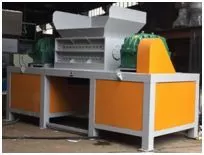
A low-speed, high-torque two-shaft shredder can serve as controlled primary size reduction for suitable e-waste. Cutter geometry, gap, speed and drive protection must match board dimensions, attached heat sinks, brackets and acceptable output size.
Finer liberation may require a separate granulator or mill after pre-shredding. Trying to obtain final fine particles in one aggressive step can increase dust, heat, wear and the risk of material loss.
Review the AMIGE two-shaft shredder for waste appliances as a primary-reduction reference. Final suitability must be confirmed with the actual boards and attached components.
Separation After Size Reduction
Magnets can remove ferrous pieces. Screening classifies particles by size, while density, eddy-current or electrostatic equipment may concentrate selected fractions depending on liberation and conductivity. No separator compensates for unstable feed or a particle size outside its working range.
Before buying equipment, define who will accept each fraction and what purity, moisture, size and contamination limits apply. A line should be designed backward from these acceptance criteria.
Safety and Environmental Controls
- Remove batteries and prohibited components before shredding.
- Use enclosed transfer and suitable dust collection.
- Assess combustible dust, fire detection and suppression with qualified specialists.
- Control noise, airborne fibers and operator exposure.
- Monitor cutter wear, bearings, motor load and temperature.
- Store and ship residues through authorized channels.
Requirements vary by country and material classification. Engage local environmental, electrical, fire and occupational-safety professionals before commissioning a computer motherboard recycling line.
How to Specify Motherboard Recycling Equipment
Send representative photos and samples, board dimensions, attached components, hourly and annual tonnage, required output size, downstream separation method, final buyer specification, operating hours, utilities, site layout and applicable regulations.
Use the AMIGE inquiry form to request an equipment discussion. We can evaluate the size-reduction stage and interfaces; specialist metal refining and regulated residue treatment remain separate project scopes.
Frequently Asked Questions
Can computer motherboards be recycled?
Yes. After controlled collection and depollution, mechanical processing can concentrate material streams for qualified downstream metal recovery and residue management.
Does shredding recover precious metals from motherboards?
No. Shredding reduces size and improves liberation. Separation and specialist refining are required to recover marketable metals.
Which shredder is used for motherboard recycling?
A low-speed two-shaft shredder may suit primary reduction, but cutter design and drive must be selected from actual board size, attachments, throughput and target output.
Should batteries be shredded with circuit boards?
No. Batteries and other prohibited components should be identified and removed under the site’s approved depollution procedure before mechanical processing.
What data is needed to quote an e-waste shredding line?
Provide samples, composition, dimensions, attachments, throughput, output target, downstream process, utilities, layout and local compliance requirements.
