

Every recycling plant manager knows this headache. The line runs fast for two hours. Then suddenly, the shredded woven bags become uneven. One batch looks perfect. The next batch contains long strips, tangled fibers, and dusty flakes. Production slows down. Workers complain. Pellet quality drops. Electricity bills rise quietly in the background like an uninvited shareholder. I have seen this scenario too many times in factories across Asia, South America, and the Middle East. In woven bag recycling, high output means nothing if the final material consistency collapses halfway through the shift.
The solution is not simply “buying a bigger machine.” Uniform output under high-capacity conditions depends on rotor design, feeding stability, screen selection, blade arrangement, cooling control, and operator discipline working together as one system. In my experience at Amige, factories that optimize these five areas can increase throughput by over 30% while reducing material variation significantly. The key is balance. Fast feeding without stable cutting is chaos. Stable cutting without production speed is wasted investment.
Most factory owners chase tonnage first. I understand why. Customers ask for volume. Markets move fast. But if the flakes are inconsistent, the pelletizer will punish you later.
Why Is Uniform Output So Important In Woven Bag Recycling?
Woven PP bags behave differently from rigid plastics. They are soft. Flexible. Fibrous. Sometimes contaminated with sand, cement powder, or moisture. They stretch before cutting.
That stretching effect creates inconsistent flakes if the cutting geometry is weak.
According to Global Plastic Recycling Statistics, inconsistent particle size can reduce pelletizing efficiency by nearly 22%. Poorly shredded woven bags also increase extrusion pressure fluctuation. That means unstable pellets later.
I often tell customers something simple:
“Your pellet quality begins inside the shredder.”
Not inside the pelletizer.
Factories ignore this fact because shredders are not glamorous machines. They are loud. Dusty. Heavy. Nobody takes selfies beside a shredder.
But the shredder quietly determines everything downstream.
What Feeding Problems Usually Destroy Production Stability?
Uneven feeding is the silent killer.
Many operators dump woven bags aggressively into the hopper. They think faster feeding equals higher output. Actually, it creates rotor shock loads and inconsistent cutting pressure.
I once visited a customer whose 1000kg/h line was producing only 620kg/h in real conditions. The machine itself was fine. The issue came from manual feeding.
Workers fed compacted woven bags in giant clumps.
The rotor stalled repeatedly.
The screen clogged continuously.
The amperage curve looked like a mountain range.
After installing a hydraulic force feeder and conveyor balancing system, the same line exceeded 950kg/h steadily.
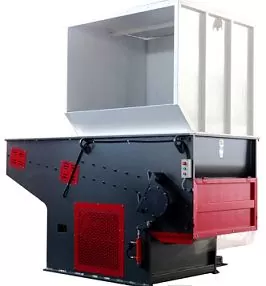
That is why controlled feeding matters. Single Shaft Shredder Machine For LDPE Film
How Does Rotor Design Affect Material Uniformity?
Rotor geometry changes everything.
This is where many cheap machines fail badly.
A weak rotor grabs woven bags unevenly. Instead of cutting cleanly, it tears the material randomly. The result is long strips mixed with powder.
Our engineering team prefers V-shaped rotor knife arrangements for woven bag applications. This design distributes cutting force more evenly across the rotor width.
The benefits are practical:
- Lower vibration
- Better pulling force
- More stable particle size
- Reduced knife wear
- Lower heat generation
According to Industrial Size Reduction Research, optimized rotor geometry may improve cutting consistency by up to 35%.
That number sounds technical.
But on the factory floor, it simply means fewer customer complaints.
Why Do Screens Matter More Than Most Buyers Think?
Customers often focus only on motor power.
That is a mistake.
The screen determines the final discharge size.
Choosing the wrong screen is like wearing winter boots to run a marathon.
Technically possible.
Commercially foolish.
For woven PP bags, screen diameter selection depends on downstream application:
- 20mm–30mm for washing lines
- 40mm–50mm for rough pre-shredding
- Smaller holes for densifying systems
But screen hole shape also matters.
Round holes behave differently from hexagonal holes.
Thicker screens improve durability but reduce airflow.
Poor airflow increases heat.
Heat softens PP fibers.
Soft fibers smear instead of cut.
Then everyone blames the blade quality.
Classic recycling industry tradition.
How Can Blade Configuration Improve Production Efficiency?
Sharp blades alone are not enough.
Blade angle matters equally.
I have seen factories install premium imported steel blades incorrectly. The result was terrible despite expensive hardware.
Proper knife clearance is critical.
Too tight?
Excessive friction.
Too loose?
Material tearing instead of cutting.
For woven bags, we usually recommend adjustable knife gaps because material thickness changes constantly between fertilizer bags, rice bags, jumbo bags, and cement sacks.
According to Polypropylene Processing Insights, optimized blade clearance may reduce energy consumption by 18%.
That is real money over twelve months.
Especially in countries where electricity prices continue climbing.
Does Cooling Really Matter During High-Speed Recycling?
Absolutely.
Heat is the hidden enemy.
Many operators notice only the visible problems:
- Smoke
- Melted flakes
- Sticky screens
But heat damage starts much earlier.
Excessive rotor temperature changes cutting behavior before visible melting appears.
This creates inconsistent flakes gradually.
Then production quality drifts slowly during long shifts.
Our larger woven bag crushing systems often include:
- Water-assisted cooling
- Rotor airflow channels
- External blower systems
- Bearing temperature monitoring
Some customers initially think cooling systems are “optional luxury items.”
Until summer arrives.
Then the machines begin teaching expensive lessons.
Why Is Dust Control Essential For Stable Output?
Dust is not only an environmental issue.
It directly affects material consistency.
Fine dust mixes into washed flakes and later influences pellet density. Excessive dust also blocks screens and reduces cutting efficiency.
I visited one recycling workshop where dust accumulation covered the motor cabinet completely. The operator proudly said:
“Our machine runs every day without stopping.”
I replied:
“Yes. But your filters stopped working three months ago.”
Nobody laughed.
Well, maybe I laughed internally.
Modern woven bag recycling requires integrated dust collection systems. Especially for dry woven bags contaminated with powder or agricultural residue.
According to Recycling Air Quality Monitoring, effective dust extraction may improve final pellet consistency by approximately 15%.
Clean airflow supports stable operation.
Stable operation supports predictable profits.
How Important Is Automation In Maintaining Uniform Discharge?
Very important.
Manual operation creates human variation.
Human variation creates production instability.
Simple truth.
Modern recycling lines increasingly use PLC automation systems for:
- Load balancing
- Feeding speed control
- Rotor protection
- Temperature alarms
- Conveyor synchronization
Automation does not replace workers.
It protects production consistency.
That difference matters.
At Amige Machinery, we often explain to customers that automation is not about showing fancy touchscreens to visitors.
It is about reducing operator mistakes during twelve-hour shifts.
Machines do not get tired.
People do.
What Maintenance Practices Keep Output Consistent Long-Term?
Maintenance discipline separates professional recyclers from temporary speculators.
Daily inspection matters.
Weekly blade checks matter.
Bearing lubrication matters.
Screen cleaning matters.
Ignoring maintenance for three weeks usually creates six months of regret.
I prefer traditional preventive maintenance schedules instead of waiting for failures. Some factory owners dislike downtime for inspection.
Unfortunately, machines also dislike neglected maintenance.
Eventually, one side wins the argument.
And it is usually physics.
Our recommendation includes:
- Blade inspection every 80–100 hours
- Bearing lubrication weekly
- Screen inspection daily
- Rotor balancing checks monthly
- Hydraulic system checks quarterly
These routines are boring.
Boring is good.
Profitable factories are often boring factories.
Can High Throughput And Uniform Output Truly Coexist?
Yes.
But only when the recycling line is engineered as a complete system.
Too many suppliers sell machines individually instead of designing integrated production solutions.
That approach creates bottlenecks later.
High throughput without uniform discharge creates unstable pellets.
Uniform discharge without sufficient throughput limits profitability.
The real objective is balance.
That balance comes from:
- Stable feeding
- Proper rotor geometry
- Correct screen selection
- Precision blade setup
- Effective cooling
- Dust control
- Smart automation
- Preventive maintenance
None of these elements work perfectly alone.
Together, they create reliable recycling performance.
Conclusion
In woven bag recycling, production speed alone is not success. Consistent output quality determines long-term profitability. I believe disciplined engineering, stable machine design, and practical factory management remain the foundation of efficient recycling operations worldwide.
