

A mini industrial shredder is a compact machine for reducing controlled production scrap, packaging, small plastic parts, cardboard, light components and other approved waste streams. It brings industrial guarding and drive systems to a smaller footprint.
Mini does not mean multipurpose or low risk. A compact shredder has defined limits for feed dimensions, hardness, thickness, throughput and operating hours.
I’m Jacky, CEO of AMIGE. Before recommending a small shredder, I ask what material enters the machine, the largest piece, kilograms per hour, required output and how many hours it will run each day.
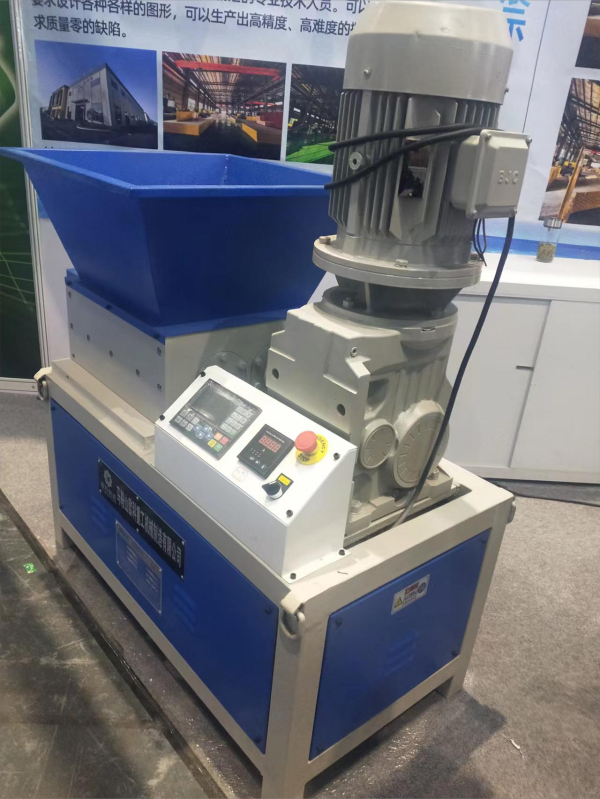
How Does a Mini Industrial Shredder Work?
- Prepared material enters a guarded hopper.
- A rotor or paired shafts grip and shear the feed.
- Overload logic stops or reverses the cutters when required.
- Screen-equipped models retain oversize pieces for further cutting.
- Reduced material discharges into a bin or conveyor.
Suitable Applications
- Controlled plastic production scrap and small rejected parts
- Packaging film, bags and cardboard after application review
- Small wood, textile, cable or mixed components in dedicated configurations
- Volume reduction near a production cell or collection point
- Sample preparation or limited-batch recycling work
Metal, batteries, pressurized containers, hot material, hard contamination and unknown waste require specialist procedures and may be unsuitable.
Mini vs Full-Size Industrial Shredder
| Factor | Mini shredder | Full-size shredder |
|---|---|---|
| Footprint | Compact and easier to place near a process | Requires larger operating and service area |
| Feed | Controlled dimensions and composition | Handles larger or more variable material when designed for it |
| Duty | Limited or moderate duty depending on design | Better suited to continuous high-volume duty |
| Handling | Manual or small conveyor feeding | Conveyor, grab, pusher or bulk handling |
Single-Shaft or Twin-Shaft Design?
A compact single-shaft shredder can use a screen for more controlled output and may include a pusher. A twin-shaft machine provides coarse, high-torque reduction for irregular feed but generally produces a wider particle range.
The required downstream size and feed behavior should determine the design—not the number of shafts alone.
Key Selection Factors
- Material type, hardness and contamination
- Largest dimensions, thickness and piece weight
- Loose, rolled, stacked or bundled feed form
- Required hourly and daily throughput
- Target particle size and downstream process
- Duty cycle and expected operating hours
- Manual or conveyor feeding method
- Voltage, floor space, noise and maintenance access
Capacity and Duty Cycle
Small machines can deliver useful output on consistent feed, but capacity should be stated with the actual material and target size. Hollow packaging, dense purgings and cardboard can occupy the same hopper volume while representing very different mass and torque.
Confirm whether the rating applies to occasional batches, one shift or continuous operation. Motor cooling, gearbox, bearings, cutters and discharge must match the duty.
Safety and Installation
A compact machine still requires guarded access, emergency stops, interlocks, overload protection and lockout points. Hopper height and opening must prevent operators from reaching the cutters. Loading and jam-clearing procedures belong in the risk assessment.
Allow clearance for cutter service, lifting, electrical access and safe removal of the output bin. Confirm foundation, ventilation and noise requirements.
Maintenance and Operating Cost
Inspect cutters, fixed knives, spacers, screen, bearings, gearbox, fasteners and seals. Track operating hours, overloads, motor current and output quality. A small machine can become costly if knives are difficult to service or spare parts are unavailable.
Review the AMIGE industrial shredder range and the single-shaft shredder platform when comparing compact and larger configurations.
Information Needed for a Proposal
Send material photos, composition, maximum dimensions, piece weight, hourly volume, daily operating hours, target size, feeding method, downstream use, voltage and available layout.
Submit the information through the AMIGE inquiry form. A sample test is recommended when material is mixed, fibrous, elastic or difficult to describe.
Frequently Asked Questions
What is a mini industrial shredder used for?
It reduces controlled small-volume production scrap, packaging and approved waste near a process or collection point.
Can a small industrial shredder run continuously?
Only if its motor, gearbox, cooling, cutters and discharge are rated for the required duty. Confirm operating hours with the supplier.
Can a mini shredder process metal?
Only a configuration specifically approved for the metal type, dimensions and thickness should do so. General plastic models may be damaged.
How much capacity does a mini shredder have?
Capacity depends on material, feed size, density, feeding stability, cutter design, motor and target output. Request data for the actual feed.
What information is needed to select a compact shredder?
Provide material photos, dimensions, weight, throughput, operating hours, target size, utilities, feeding method and layout.
