

The global plastic recycling industry is growing fast. Yet many overseas buyers still face the same problem. Finding a machine is easy. Finding a reliable supplier is hard. I have met customers who purchased equipment based solely on price. The result? Delayed delivery, poor machine performance, unavailable spare parts, and expensive downtime. The risk is not buying from China. The risk is buying from the wrong supplier. Fortunately, there are practical ways to separate professional manufacturers from trading companies and unreliable factories.
If you want a reliable Chinese plastic machinery supplier, focus on five key factors: manufacturing capability, engineering experience, quality control, after-sales support, and long-term business stability. Price should never be your only decision factor. In my experience as the CEO of AMIGE, customers who evaluate suppliers based on total lifecycle value usually achieve lower operating costs and higher profitability over time.
Many buyers ask me the same question.
“How do I know whether a supplier is truly reliable before I transfer a deposit?”
The answer is simpler than most people think. You just need a structured evaluation process.
Why Is China Still the Leading Source for Plastic Recycling Machinery?
China has become the world’s manufacturing center for plastic recycling equipment.
According to industry reports from Global Recycling Equipment Research Center, China accounts for a significant portion of global plastic recycling machinery exports.
The reasons are obvious.
Large manufacturing clusters.
Mature supply chains.
Competitive production costs.
Continuous innovation.
Factories can source motors, gearboxes, electrical components, steel materials, and machining services within a short distance.
This creates cost advantages that many countries struggle to match.
At the same time, competition among manufacturers is intense.
That is good news for buyers.
You gain access to a wide range of technologies, machine configurations, and customization options.
However, not all suppliers operate at the same level.
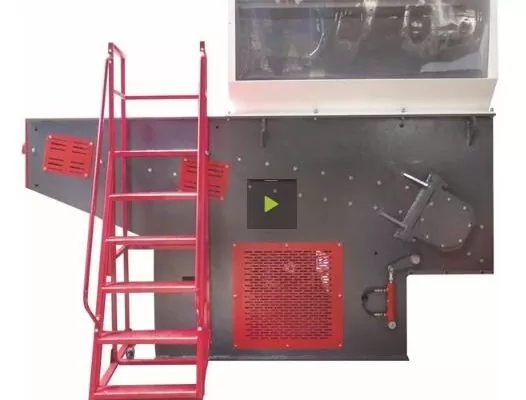
That is where careful selection becomes essential. Single Shaft Shredder Machine For Waste Cardboard
Is the Supplier a Real Manufacturer or Just a Trading Company?
This should be your first investigation.
Many overseas buyers unknowingly communicate with trading companies.
There is nothing inherently wrong with traders.
Some provide good service.
But if you want technical customization and direct factory support, working with the manufacturer usually delivers better results.
Ask several questions.
Can they provide factory videos?
Can they arrange live video inspections?
Can they show machining workshops?
Do they have welding, assembly, and testing departments?
Can they explain rotor design details without consulting another party?
A genuine manufacturer answers quickly and confidently.
At AMIGE, we regularly provide live factory tours through video meetings because customers deserve transparency.
Another useful indicator is technical communication.
When discussing shredder rotor design, knife materials, hydraulic systems, or PLC programming, real engineers usually speak with precision.
Salespeople without technical support often struggle.
How Can You Verify Production Capability?
A beautiful website proves very little.
A factory proves everything.
I always recommend examining production capacity.
Ask for:
- Workshop photos
- Production schedules
- Machine testing videos
- Customer installation cases
- Quality inspection procedures
Reliable suppliers invest in equipment.
Look for CNC machining centers.
Look for laser cutting machines.
Look for balancing machines.
Look for testing platforms.
According to Industrial Equipment Mannufacturing Benchmark Report, manufacturers with advanced machining capabilities generally achieve better consistency in machine performance.
Production capability directly impacts machine quality.
There is no shortcut.
What Certifications and Quality Systems Matter?
Many buyers immediately ask for CE certificates.
That is important.
But certifications alone should not determine your decision.
Some suppliers possess certificates but lack robust quality control systems.
Instead, ask about the complete process.
How is incoming steel inspected?
How are motors tested?
How is rotor balancing performed?
How is final machine acceptance conducted?
Reliable factories follow documented procedures.
A professional supplier should provide:
- CE certification
- Electrical diagrams
- Operation manuals
- Maintenance instructions
- Spare parts lists
The best suppliers view quality as a process.
Not a document.
How Important Is Industry Experience?
Experience saves money.
Lots of money.
I have seen situations where a customer bought a machine designed for rigid plastics and then attempted to process agricultural film.
The results were predictable.
Low output.
Frequent blockages.
Operator frustration.
A supplier with real industry experience will ask detailed questions:
- Material type
- Material thickness
- Moisture content
- Expected capacity
- Final particle size
- Operating hours
These questions are signs of professionalism.
According to Plastic Recycling Technology Institute, matching machine configuration to material characteristics significantly improves productivity.
Experienced suppliers focus on solutions.
Inexperienced suppliers focus on quotations.
That difference matters.
Why Should You Evaluate After-Sales Service Before Purchase?
Most buyers evaluate service after a problem occurs.
That is too late.
Evaluate support before signing the contract.
Ask:
How quickly do they respond?
Do they provide online troubleshooting?
Can they supply spare parts internationally?
Do they offer installation guidance?
Do they provide training?
At AMIGE, we consider after-sales support part of the product itself.
A machine without support is simply expensive steel.
Modern suppliers should provide:
- Remote diagnostics
- Video support
- Spare parts inventory
- Maintenance documentation
- Commissioning assistance
A good supplier becomes a long-term partner.
Not just a machine seller.
How Can Customer References Reveal the Truth?
Customer references are powerful.
But use them correctly.
Do not ask for one reference.
Ask for multiple references.
Different countries.
Different machine types.
Different project sizes.
A reliable supplier should be able to share successful installations.
Ask for:
- Machine operation videos
- Customer testimonials
- Export records
- Installation photos
I always encourage prospective customers to speak with existing users whenever possible.
Real operating experience reveals facts that brochures cannot.
According to Global Industrial Procurement Survey, customer references remain one of the most trusted evaluation methods among industrial equipment buyers.
Should You Always Choose the Lowest Price?
No.
This is probably the most expensive mistake buyers make.
Let me explain.
Imagine two shredders.
One costs $20,000.
The other costs $25,000.
The cheaper machine saves $5,000 initially.
But what if it consumes more energy?
Requires more blade replacements?
Breaks down frequently?
Produces lower throughput?
Suddenly the “cheaper” machine becomes expensive.
Smart buyers calculate Total Cost of Ownership (TCO).
This includes:
- Purchase price
- Energy consumption
- Maintenance cost
- Spare parts cost
- Downtime cost
- Machine lifespan
The best investment is rarely the cheapest option.
The best investment delivers the highest return over time.
What Warning Signs Should Overseas Buyers Avoid?
Several red flags appear repeatedly.
Be cautious if a supplier:
- Refuses factory inspections
- Cannot provide testing videos
- Offers unrealistic prices
- Gives vague technical answers
- Avoids discussing spare parts
- Has no export experience
- Cannot provide customer references
Trust is built through evidence.
Not promises.
Professional suppliers welcome scrutiny.
Unreliable suppliers avoid it.
The difference becomes obvious very quickly.
How Do I Personally Recommend Evaluating a Supplier?
After years in the industry, I follow a simple framework.
Step 1: Verify factory authenticity.
Step 2: Evaluate engineering capability.
Step 3: Review production facilities.
Step 4: Check quality systems.
Step 5: Verify customer references.
Step 6: Assess after-sales support.
Step 7: Compare lifecycle value rather than purchase price.
This approach helps buyers reduce risk significantly.
It is not complicated.
It simply requires discipline.
Conclusion
Choosing a reliable Chinese plastic machinery supplier is not about finding the lowest price. It is about finding a trustworthy manufacturing partner with proven engineering expertise, strong quality control, and dependable support. The right supplier can help your recycling business grow profitably for many years.
