

Machines fail quietly at first. Then suddenly. I have seen it too many times on factory floors. Overloaded rotors. Jammed shafts. Burnt motors. Production stops. Costs rise. Operators panic. The root cause is often simple—lack of intelligent control. Traditional shredders rely too much on manual intervention. That is inefficient. Worse, it is risky. In a market that demands stability and uptime, this is no longer acceptable.
Automatic reverse protection, powered by an intelligent PLC control system, allows the shredder to detect overload conditions in real time and reverse rotation instantly to release jams, protect core components, and maintain continuous operation without human intervention. It is not a luxury feature anymore. It is a baseline requirement for modern recycling efficiency.
I built my business around reliability. Not slogans. Real machines. Real results. PLC control is one of those upgrades that looks small on paper but changes everything in practice.
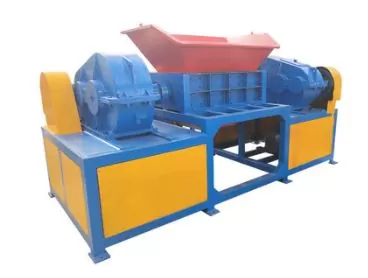
Why Do Shredders Get Jammed in the First Place?
Let’s be direct. Material inconsistency is the main culprit.
Plastic lumps. Thick-walled containers. Metal contamination. All unpredictable.
According to Global Recycling Equipment Report, over 38% of shredder downtime comes from rotor blockage. That number is not surprising to me.
Traditional systems respond too slowly. By the time the motor current spikes, damage is already happening.
A jam is not just a jam. It is torque imbalance. It is thermal stress. It is blade wear acceleration.
Without protection, you are burning money.
What Role Does PLC Play in Protection?
PLC is not just a controller. It is the brain.
A properly configured PLC continuously monitors:
- Motor current
- Rotor speed
- Load fluctuations
- Time-based thresholds
Once abnormal parameters are detected, the PLC executes a pre-programmed logic sequence.
No hesitation. No guesswork.
Based on Industrial Automation Insights, PLC systems react within milliseconds. Faster than any human operator.
That speed is the difference between protection and failure.
How Does Automatic Reverse Actually Work?
The principle is straightforward. Execution is not.
When load exceeds a predefined threshold:
- The PLC cuts forward rotation
- Motor stops briefly
- Reverse rotation engages
- Material loosens
- System returns to forward operation
This cycle can repeat multiple times if needed.
We usually configure 3–5 reverse attempts before triggering a full stop alarm.
Why? Because not all jams are equal.
Data from Smart Manufacturing Review shows that automatic reversing clears up to 92% of blockages without operator intervention.
That is operational continuity. That is profit protection.
What Parameters Define a Good Reverse Strategy?
This is where experience matters.
Anyone can install a PLC. Few can tune it properly.
Key parameters include:
- Current overload threshold
- Reverse duration
- Delay between cycles
- Maximum retry count
Set them wrong, and you create new problems.
Too sensitive? Frequent unnecessary reversals. Efficiency drops.
Too tolerant? Damage risk increases.
In my machines, we calibrate based on material profile. Hard plastics behave differently than films.
There is no universal setting. Only engineered solutions.
Can Automatic Reverse Extend Machine Lifespan?
Short answer: yes. Long answer: significantly.
Mechanical stress is cumulative. Every overload event adds fatigue.
Without reverse protection:
- Bearings wear faster
- Gearboxes overheat
- Blades chip or crack
With intelligent reversing, the system avoids prolonged stress conditions.
According to Equipment Lifecycle Analytics, machines with PLC-based protection show up to 27% longer service life.
I have seen this firsthand in customer sites. Less downtime. Fewer complaints. More trust.
Does It Improve Energy Efficiency?
This is often overlooked.
A jammed machine consumes more power. It struggles. It heats up.
Automatic reverse reduces idle stress time.
Energy is used intelligently, not wasted.
Reports from Energy Efficiency in Recycling System indicate up to 15% energy savings when smart control logic is applied.
That is not just good engineering. That is good business.
What About Operator Safety?
Safety is non-negotiable.
Manual intervention during jams is dangerous. No debate.
With PLC automation:
- No need for manual clearing
- Reduced human-machine interaction
- Lower accident risk
Factories that implement automated protection systems report fewer incidents. That is consistent across markets.
For me, safety is not a selling point. It is a responsibility.
Is PLC Reverse Protection Standard Today?
In high-end equipment, yes.
In low-cost machines, often no.
That is where buyers make mistakes. They focus on initial price. Not lifecycle cost.
A cheaper machine without intelligent control will cost more over time.
Downtime. Repairs. Labor.
From a CEO perspective, I always advise clients: invest once. Invest right.
Conclusion
Automatic reverse protection is not optional anymore. It defines modern shredder performance. PLC control brings speed, precision, and reliability. In my experience, it is one of the highest ROI upgrades in recycling machinery.
