

Industrial stretch film looks harmless when it’s stacked on pallets. But once it enters the recycling line, it behaves like a stubborn guest who refuses to leave. It wraps around shafts. It bridges inside hoppers. It reduces output and forces shutdowns. I’ve seen recycling plants lose hours every week because the shredder “should” process film smoothly, but reality says otherwise. The pressure is real. Downtime costs money. Low throughput cuts margins. And nobody wants to explain missed production targets.
My direct answer: when I want to increase industrial stretch film shredding capacity, I focus on three proven areas—feeding consistency, rotor-and-blade geometry, and discharge control. These aren’t theoretical ideas. We apply them on AMIGE projects every year. A few targeted upgrades often raise throughput by 20–35% while reducing wrapping and labor intervention. No magic. Just practical engineering done right.
Stretch film has a personality.
It stretches. It rebounds. It clings.
If steel could roll its eyes, it probably would.
That’s why I treat film recycling differently from rigid plastics.
Why Does Stretch Film Reduce Shredder Capacity So Easily?
Stretch film has low density.
That means a large volume but very little weight.
A hopper may look full, but the rotor receives inconsistent material. Then the rotor grabs too much at once. Then too little. Then material bridges.
Throughput becomes unstable.
Industry research often shows film density creates significant bulk handling inefficiency.
The mechanical issue is simple.
Film bends instead of breaking.
It wraps before cutting.
It resists clean engagement.
That’s why the machine needs a different approach than crushing injection runners or hard HDPE lumps.
Technique #1: How Do I Improve Feeding Consistency?
This is usually the fastest win.
And often the cheapest.
Many operators blame knives first.
I check feeding first.
Why?
Because unstable feeding makes even a strong shredder look weak.
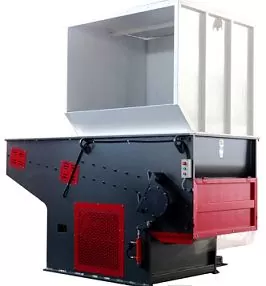
Here’s what we typically improve: Single Shaft Shredder Machine For LDPE Film
1. Use a force-feeding conveyor
A standard belt can drop film unevenly.
A pressure conveyor or compression feed gives constant material density.
That keeps rotor loading stable.
Stable loading means more cuts per minute.
Which means better throughput.
Simple.
2. Add anti-bridging hopper geometry
Film likes to arch.
It loves corners.
Sharp hopper transitions reduce hang-ups.
We often widen entry zones and reduce dead corners.
A small structural change matters.
3. Pre-compress loose rolls
Loose pallet wrap contains too much trapped air.
Pre-compression improves feeding density.
According to Flexible Packageing Recycling Efficiency Report, densified feed can improve handling efficiency by over 20%.
That matches what I see on the factory floor.
Less air.
More plastic.
More output.
Exactly what production managers want.
Can Rotor and Blade Design Really Change Throughput?
Absolutely.
This is where engineering earns its lunch.
Stretch film doesn’t need brute force alone.
It needs controlled grabbing.
Our AMIGE teams often adjust rotor configuration based on film thickness and contamination level.
Here’s what works.
Larger rotor surface contact
More grip.
Less slipping.
The film enters cutting zones faster.
Lower rotor speed with stronger torque
Fast spinning can worsen wrapping.
Controlled speed improves bite.
The rotor pulls film steadily instead of whipping it around.
A stable bite beats chaos every time.
Optimized knife clearance
Knife gap matters.
Too wide.
Film escapes.
Too tight.
Heat increases.
Both hurt performance.
The right tolerance improves cut quality and lowers strain.
Knife performance references: Industrial Blade Tolerance Guide.
What About Film Wrapping Around the Shaft?
A classic headache.
Operators everywhere know this battle.
Film wraps.
Temperature rises.
The line stops.
Everyone stares at the machine.
Nobody smiles.
My preferred solutions:
Install anti-wrap rotor shoulders
These help interrupt film accumulation.
Simple hardware.
Big benefit.
Use automatic reversing logic
PLC reverse cycles release early tangles.
Before wrapping becomes serious.
Keep blades sharper than rigid-plastic settings
Film dulls edges differently.
Maintenance intervals should be shorter.
A dull blade and stretch film are not friends.
Not even a little.
Technique #3: How Do I Improve Discharge Efficiency After Shredding?
This part gets ignored.
It shouldn’t.
A shredder may cut well.
But poor discharge slows everything.
Then throughput still drops.
I review discharge in three steps:
Proper screen opening
Too small creates resistance.
Too large creates oversized flakes.
Balance matters.
Especially before washing or pelletizing.
Air conveying support
Light film flakes don’t fall easily.
Air assist improves evacuation.
Keeps chamber clear.
Supports continuous cutting.
Match downstream capacity
Shredder output must align with crushers, washers, and dryers.
A bottleneck downstream creates back pressure upstream.
And suddenly the shredder “looks slow.”
But the shredder isn’t the problem.
How Much Throughput Improvement Do I Usually See?
Every plant differs.
Every material differs.
But in real stretch-film projects we commonly see:
- Feeding upgrade: +10% to +18%
- Rotor optimization: +8% to +15%
- Discharge improvements: +5% to +12%
Combined gains often exceed 30%.
Sometimes more.
And importantly:
Less downtime.
Less manual cleaning.
Lower wear.
Better labor efficiency.
That matters as much as output.
Because production managers don’t celebrate theoretical tons per hour.
They celebrate machines running all shift without drama.
Why Do I Still Prefer Mechanical Fundamentals Over Complicated Add-ons?
Because proven fundamentals last.
Always have.
Always will.
Sensors help.
Automation helps.
PLC intelligence helps.
We use all of them.
But mechanical design is still king.
Good feeding.
Good cutting.
Good discharge.
That foundation wins across shifts, seasons, operators, and materials.
A reliable shredder beats a fancy unstable one every day.
And yes—steel still deserves respect.
It remembers everything.
Conclusion
Industrial stretch film recycling becomes efficient when feeding, cutting, and discharge work together. At AMIGE, we keep the solution practical. Improve those three areas, and throughput rises while downtime drops. That’s how recycling lines stay profitable. One clean cut at a time.
