

North America is investing heavily in plastic recycling. Yet many recyclers still struggle when processing soft plastics. During my recent visit to NPE, I spoke with recycling plant owners, equipment distributors, plastic processors, and investors. The same complaints appeared again and again. Low throughput. Material wrapping. Frequent downtime. High labor costs. These issues are slowing profitability. The challenge is not a lack of demand. The challenge is finding a soft plastic shredding solution that can run efficiently day after day.
After returning from NPE, my biggest takeaway is clear. North American recyclers are not looking for the cheapest soft plastic shredder. They are looking for stable output, lower maintenance costs, reduced labor dependency, and smarter automation. Whether processing LDPE film, stretch wrap, agricultural film, or woven bags, buyers want equipment that minimizes wrapping, reduces downtime, and integrates seamlessly with washing and pelletizing lines. Reliability has become more important than initial purchase price.
The conversations at NPE confirmed what we have observed for years.
Soft plastics remain one of the most difficult materials to process efficiently.
Why Are Soft Plastics Still So Difficult to Shred?
Hard plastics break.
Soft plastics stretch.
That simple difference creates enormous engineering challenges.
Materials such as LDPE film, LLDPE stretch wrap, PP woven bags, and agricultural films behave differently inside a shredder.
Instead of cutting cleanly, they often wrap around the rotor.
They clog the cutting chamber.
They reduce throughput.
According to the latest North American Flexible Plastic Recovery Report, flexible plastics remain among the fastest-growing waste streams generated by commercial and industrial facilities.
The volume keeps increasing.
The processing challenges remain.
Many visitors at NPE showed me samples of heavily contaminated films.
Their question was simple:
“How can we shred this continuously without stopping every hour?”
That question tells the whole story.
Is Material Wrapping Still the Biggest Industry Problem?
Absolutely.
And it was the most common complaint I heard throughout the exhibition.
Material wrapping occurs when films wind around the rotor shaft instead of being cut.
Once wrapping begins, productivity drops rapidly.
Operators must stop production.
Open the machine.
Remove tangled material.
Restart operations.
Repeat.
Some recycling plants lose several hours every week because of this issue.
Studies from Flexible Film Processing Institute indicate that rotor wrapping remains one of the leading causes of downtime in soft plastic processing facilities.
At AMIGE, we often joke that soft film behaves like spaghetti.
The problem is nobody wants spaghetti inside a shredder.
The solution requires proper rotor design, knife geometry, and intelligent feeding systems.
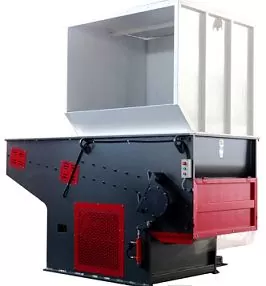
Not simply a bigger motor. Single Shaft Shredder Machine For LDPE Film
Why Are North American Recyclers Demanding Higher Throughput?
Labor costs.
The answer always comes back to labor.
In North America, labor expenses continue to rise.
Many recycling companies cannot easily hire additional operators.
As a result, equipment must compensate.
One machine now needs to perform the work that previously required multiple operators.
According to data published by the Recycling Operations Benchmark Center, labor efficiency has become a primary investment criterion for recycling facilities evaluating new equipment.
This trend was obvious at NPE.
Buyers repeatedly asked:
- How many tons per hour?
- How many operators?
- How much downtime?
- How much maintenance?
Notice something?
Nobody asked about paint color.
That is why engineering always beats marketing.
Are Maintenance Costs Becoming a Bigger Concern?
Without question.
Five years ago, buyers focused heavily on purchase price.
Today they focus on ownership costs.
The market has matured.
Experienced recyclers understand that downtime can be more expensive than equipment.
Soft plastics accelerate wear on certain machine components.
Particularly:
- Rotor knives
- Counter knives
- Bearings
- Screens
- Hydraulic pushing systems
Maintenance data collected by Instrial Recycling Equipment Analytics shows that unscheduled maintenance can significantly impact annual operating profitability.
At NPE, many customers asked me about blade replacement intervals before discussing machine prices.
That is a sign of an experienced buyer.
They know where the real costs hide.
Why Is Automation Becoming a Purchasing Requirement?
North American recycling plants face workforce shortages.
This reality is shaping equipment demand.
Buyers increasingly want:
- Automatic feeding
- Smart load sensing
- Automatic reversing
- Remote diagnostics
- Predictive maintenance alerts
The days of relying solely on operator experience are disappearing.
The next generation of recycling plants will depend more on data.
According to the Smart Recycong Facility Report, investment in automation technologies continues to grow throughout the recycling sector.
At our booth discussions, many visitors wanted machines capable of sending maintenance alerts before failures occurred.
Think about that.
Ten years ago, buyers wanted machines.
Today they want machines that think.
What Role Does Energy Efficiency Play in Purchasing Decisions?
A very large one.
Electricity costs vary across North America.
However, energy efficiency remains a universal concern.
Large recycling facilities may operate shredders for thousands of hours annually.
Even small efficiency improvements generate meaningful savings.
Research from the Green Manufacturing Energy Center indicates that energy consumption is becoming an increasingly important metric during capital equipment evaluations.
Modern shredder designs focus on:
- Optimized rotor geometry
- Reduced friction
- Intelligent motor control
- Variable frequency drives
- Efficient cutting chambers
The goal is simple.
More throughput.
Less energy.
Every recycler likes that equation.
Why Are Integrated Recycling Lines Gaining Popularity?
Another major trend I observed at NPE was the growing demand for complete solutions.
Buyers increasingly prefer integrated systems rather than standalone equipment.
Many companies now seek:
- Shredder
- Crusher
- Washing line
- Dewatering system
- Pelletizing line
All connected.
All optimized.
All supplied through a single source.
According to the Global Plastics Circular Ecomony Research Group, integrated recycling systems can improve operational consistency and simplify supplier management.
This trend aligns perfectly with what we have seen globally.
Customers want fewer headaches.
One supplier.
One responsibility.
One solution.
What Soft Plastic Materials Are Driving Equipment Demand?
Several materials dominated discussions at NPE.
LDPE Stretch Film
Warehousing and logistics industries generate enormous volumes.
The material is lightweight but challenging to process.
Agricultural Film
Often contaminated with dirt and moisture.
Requires robust preprocessing.
PP Woven Bags
Strong.
Durable.
Difficult to cut efficiently.
Jumbo Bags
Large size.
High tensile strength.
Need aggressive shredding performance.
Post-Consumer Film
Highly variable composition.
Requires flexible machine settings.
The diversity of materials is forcing manufacturers to build more adaptable systems.
One machine can no longer be optimized for only one material type.
What Features Are Buyers Prioritizing Most?
After dozens of conversations, several priorities appeared consistently.
Anti-Wrapping Rotor Design
The most requested feature.
No surprise.
Quick Knife Replacement
Reduced maintenance downtime.
Intelligent PLC Controls
Better operational stability.
Heavy-Duty Bearings
Longer service life.
Remote Monitoring
Faster troubleshooting.
Higher Throughput Per Operator
Improved profitability.
In other words, buyers want productivity.
Not complexity.
Technology should simplify operations.
Not create new problems.
What Lessons Did I Bring Home from NPE?
NPE reinforced a reality we have witnessed across global recycling markets.
North American recyclers are becoming increasingly sophisticated.
They no longer evaluate shredders solely by horsepower.
They evaluate total operating performance.
They care about:
- Throughput
- Reliability
- Energy efficiency
- Automation
- Maintenance costs
- Lifecycle value
The industry’s expectations continue rising.
And frankly, that is a good thing.
It pushes manufacturers like us to innovate continuously.
The recycling industry deserves equipment designed for real-world conditions, not just showroom demonstrations.
Conclusion
My biggest takeaway from NPE is simple: North American recyclers want soft plastic shredders that deliver stable output, low maintenance, anti-wrapping performance, and intelligent automation. The future belongs to equipment that reduces downtime, lowers operating costs, and maximizes profitability across the entire recycling process.
