

Anyone running a shredder line knows the feeling. The motor sounds right. The material enters smoothly. Then suddenly a bundle of woven bags, stretch film, raffia, or cable scrap wraps itself around the rotor like it owns the machine. Production stops. Operators grab tools. The machine waits. Time disappears. Profit follows. I’ve seen this in recycling plants worldwide, and the pattern never changes. Tangled materials challenge even powerful machines. The frustration is real. The cost is measurable. The solution needs to be smarter than brute force.
My answer is yes. At AMIGE, we reduce shredder downtime on tangled materials through automatic reversing technology and optimized PLC logic. Instead of waiting for overload alarms or manual intervention, our system detects abnormal torque, reverses at the right timing, releases material, and resumes shredding automatically. The result is fewer stoppages, smoother operation, and a more reliable recycling line. Good steel matters. Smart logic matters too. Together they work beautifully.
And frankly, tangled materials have a talent.
A suspicious amount of talent.
If film and woven bags had a career option, “professional troublemaker” would fit perfectly.
That’s why we engineer accordingly.
Why Do Tangled Materials Cause So Many Unexpected Shutdowns?
Because they behave unpredictably.
Rigid plastics break.
Soft tangled materials twist.
Wrap. Pull. Then tighten.
The rotor doesn’t always “cut” them immediately.
Sometimes it grabs.
Sometimes material winds around shafts.
Sometimes the torque spikes hard and fast.
Then the overload protection stops the machine.
Traditional systems respond late. Too late.
Studies from Industrial Recycling Downtime Analytics Center show tangled flexible materials account for a major share of unexpected shredder stoppages in film-processing applications.
That matches what I see on real projects. And every stop matters.
Because restarting always costs more than avoiding the stop.
What Is Automatic Reversing Technology?
Simple idea.Precise execution.
The shredder monitors rotor load continuously.
When torque reaches an abnormal threshold, the PLC responds. Fast.
The rotor reverses. Material loosens. Pressure releases.
Then the rotor resumes forward cutting.
No operator needed. No panic. No wrench.
At AMIGE, we tune this logic based on material type:
- Stretch film
- Jumbo bags
- Woven PP sacks
- Agricultural film
- Fishing nets
- Soft mixed plastics
Each behaves differently.
Which means reversing logic should never be “one setting for everything.”
Machines deserve better than that.
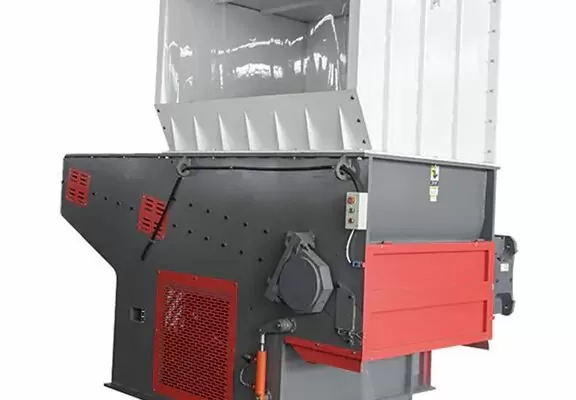
Operators do too. Single Shaft Shredder Machine For LDPE Film
How Does PLC Logic Decide When to Reverse?
This is where software meets steel.
And I enjoy this part.
Because good logic saves real money.
Our reversing logic typically monitors:
Motor current
Sudden spikes show overload.
Quick response matters.
Torque trend
Not just peak load. Trend matters.
A rising curve often predicts tangling before overload.
Rotor speed drop
If speed drops unexpectedly, resistance is building.
Reverse cycle frequency
Too many reverses reduce throughput.
Too few increase jams. Balance matters.
We build logic windows around real production conditions.
Data reference: PLC Shredder Performance Monitoring Report.
Why Does Algorithm Optimization Matter More Than Simple Reverse Timers?
Because timers are blind. Material isn’t. A timer says:
“Reverse every X seconds.”
But tangled materials don’t care about schedules.
They care about physics.
A torque-based algorithm reacts to actual conditions.
Which means:
- Reverse only when needed
- Shorten recovery time
- Protect knives
- Reduce motor stress
- Maintain throughput
That’s much more efficient. And less irritating.
A random reverse timer can feel like a traffic light in the desert.
You stop. Nothing is there. You keep waiting. Nobody wins.
How Much Can Downtime Actually Be Reduced?
From our AMIGE field installations, the improvement is very measurable.
Typical results include:
- Unexpected stoppages reduced by 20–35%
- Manual intervention reduced by 30%+
- Rotor overload alarms reduced significantly
- Knife wear stabilized
- Daily throughput consistency improved
In one flexible-film recycling setup, automatic reversing reduced operator stoppage frequency enough to recover several production hours weekly.
Performance benchmark: Plastic Recycling Line Automation Report.
Hours matter. Recovered hours become output.
Output becomes revenue. That math stays beautifully simple.
Does Automatic Reversing Help Protect Mechanical Components?
Very much.
And that matters long term.
Without controlled reversing:
Torque spikes hit shafts.
Bearings take extra stress.
Knife edges wear faster.
Heat rises.
Maintenance increases.
With optimized reversing:
Load releases earlier.
Impact reduces.
Stress spreads more evenly.
Mechanical parts last longer.
That’s operational stability.
And stability always wins in industrial equipment.
A shredder should work hard.
Not fight itself.
Which Materials Benefit Most from Automatic Reverse Logic?
In my experience, strongest benefit appears with:
Stretch film
Very flexible. Very sticky.
Woven polypropylene bags
Tough fibers. Easy to wrap.
Raffia scrap
Long strands.
High tangling risk.
Fishing nets
Elastic. Dense. Unpredictable.
Mixed flexible packaging
Inconsistent thickness. Different friction levels.
These materials require intelligent rotor recovery.
Heavy force alone isn’t enough.
A smart machine outperforms an angry machine. Every time.
Why Do I Believe Mechanical Design and Logic Must Work Together?
Because software alone cannot solve poor hardware.
And hardware alone cannot predict material behavior.
At AMIGE, we combine:
- Strong rotor geometry
- Stable blade configuration
- PLC load monitoring
- Automatic reverse logic
- Emergency protection
- Operator-friendly controls
That combination matters.
Old-school mechanical engineering gives strength.
Modern automation gives reaction speed.
Together they create dependable production.
And dependable production is still the most profitable production.
Always has been.
Always will be.
Conclusion
Automatic reversing technology helps tangled materials release faster, protects core components, and reduces unexpected downtime. At AMIGE, optimized PLC logic turns difficult materials into manageable production. Better response. Less interruption. More uptime. Sometimes the smartest move forward starts with one well-timed reverse.
