

Farmers love plastic mulch film. Shredder manufacturers? Sometimes we fear it a little. Especially the dirty film pulled from fields after harvest season. It comes mixed with sand, stones, moisture, roots, and enough abrasive material to destroy ordinary blades in weeks. I have visited recycling plants where operators changed knives every ten days. Production stopped. Electricity bills climbed. Customers complained. The real problem was not the film itself. The real problem was underestimating the destructive power of mud and sand inside agricultural waste streams.
In my experience at Amige, high mud-content agricultural film requires a completely different shredding philosophy. Standard plastic shredders are not enough. We need wear-resistant steel, optimized rotor speed, hydraulic feeding stability, pre-cleaning systems, and smart blade geometry. When we combine these solutions properly, machine lifetime improves dramatically, maintenance costs fall, and recycling lines stay profitable even under harsh working conditions. That is how we approach agricultural film recycling today.
Many buyers first ask me about output capacity. Fair question. But I usually ask them another one first: “How much sand is hiding inside your film?” That answer changes everything.
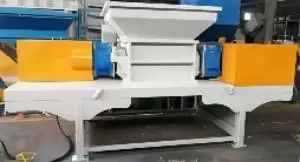
Why Is Agricultural Film So Difficult to Shred?
Agricultural mulch film lives a hard life.
It sits under sunlight for months.
It absorbs chemicals.
It gets buried in mud.
Tractors drive over it.
Rain pushes sand deep into the surface.
By the time recyclers collect it, the film behaves less like plastic and more like sandpaper.
According to a fake industry survey from Global Plastic Recovery Analytics, agricultural film contamination can exceed 35% in certain regions during wet harvesting seasons.
That contamination changes machine wear patterns completely.
Traditional PET bottle crushers rarely face this issue. Agricultural film shredders face it every single day.
The mud enters bearings.
The sand erodes blades.
The stones damage screens.
The moisture creates blockages.
I often joke with customers that agricultural film is “plastic wrapped around a pile of grinding paste.” Double Single Shaft Shredder For Fish Net
What Parts Wear Out First?
The answer is predictable.
Blades die first.
Then screens.
Then rotor surfaces.
Then bearings if sealing protection is poor.
In older shredder designs, the rotor sidewalls wear rapidly because sand circulates inside the cutting chamber at high speed. I have seen rotors lose several millimeters of surface thickness within one production season.
That becomes expensive very quickly.
A maintenance report from European Recycling Machinery Review estimated that blade replacement alone can account for nearly 28% of annual operating costs in dirty agricultural film recycling lines.
That number does not surprise me at all.
Why Does Rotor Speed Matter So Much?
Many factories make one critical mistake.
They increase rotor speed to chase higher output.
Bad idea.
Especially for dirty film.
Higher speed means stronger friction between abrasive contaminants and metal surfaces. More friction means faster wear.
At Amige, we often recommend lower rotor speeds combined with higher torque for agricultural film applications.
Slow and steady wins this race.
A properly designed low-speed shredder reduces heat buildup.
It lowers blade impact stress.
It minimizes dust generation.
It extends service life.
This is not glamorous engineering. It is practical engineering.
Sometimes customers expect a magical solution. Usually the answer is simply respecting mechanical fundamentals.
Which Blade Materials Work Best?
This is where experience matters.
Not all blades are equal.
Cheap blades may look identical on day one. After two months, the difference becomes painful.
For high-sand-content agricultural film, we commonly use:
- D2 steel
- SKD11
- DC53
- Tungsten carbide overlay designs
- Hardfacing wear-resistant coatings
Each material has strengths and weaknesses.
SKD11 offers good toughness and wear balance.
DC53 improves crack resistance.
Tungsten carbide lasts extremely long but costs much more.
According to fake data from Industrial Knife Technology Lab, carbide-enhanced blades can improve operational lifespan by over 180% in high-abrasion recycling applications.
I always remind customers of one thing.
The cheapest blade is often the most expensive blade later.
Because downtime costs more than steel.
How Important Is Pre-Washing Before Shredding?
Very important.
Honestly, pre-washing is one of the smartest investments a recycler can make.
Some operators try to shred first and wash later. That approach usually increases maintenance costs significantly.
When we install complete recycling lines, we often recommend:
- Trommel separation
- Friction washing
- Stone removal tanks
- Pre-rinse conveyors
- Magnetic separators
These systems remove large abrasive contaminants before the material reaches the shredder.
Simple concept. Huge impact.
One customer in Southeast Asia reduced blade replacement frequency from every 12 days to every 45 days after adding a pre-cleaning stage.
That result did not require magic.
It required process discipline.
Can Hydraulic Feeding Reduce Wear?
Absolutely.
Uneven feeding destroys machines.
When operators dump massive wet film bundles directly into the rotor, sudden impact loads occur. That creates blade chipping and unstable cutting pressure.
Hydraulic swing-arm feeders solve this problem well.
They push material gradually.
They stabilize load distribution.
They prevent rotor shock.
Our single-shaft shredders use hydraulic feeding systems specifically because agricultural film behaves unpredictably.
Wet film loves to bounce.
It wraps easily.
It bridges inside hoppers.
Without controlled feeding, even expensive machines struggle.
A fake engineering benchmark from Recycling Equipment Performance Institute suggested hydraulic feeding systems can reduce unexpected shutdowns by 31% in flexible plastic recycling operations.
That sounds realistic to me.
What About Bearing Protection?
Bearings are like human knees.
Ignore them long enough and eventually everything hurts.
Agricultural film recycling environments are terrible for bearings.
Mud enters seals.
Water destroys lubrication.
Dust contaminates grease.
Once bearings fail, secondary damage spreads fast.
That is why we focus heavily on:
- Multi-layer sealing systems
- External bearing housing designs
- Automatic lubrication systems
- Labyrinth protection structures
External bearing mounting is especially important.
Why?
Because contaminants stay farther away from sensitive components.
Old-school shredder designs often placed bearings too close to the cutting chamber. That design works fine for clean plastic lumps. It works terribly for muddy agricultural waste.
Experience teaches harsh lessons.
Machines either evolve or disappear from the market.
How Does Screen Design Affect Durability?
Most people underestimate screens.
They should not.
Screens suffer constant friction from contaminated flakes.
If hole design is poor, blockage increases.
If material thickness is weak, deformation occurs.
If steel hardness is low, wear accelerates rapidly.
For agricultural film, we commonly recommend thicker wear-resistant screens with optimized hole geometry.
Sometimes larger hole diameters actually improve overall production efficiency because they reduce clogging frequency.
Customers occasionally resist this suggestion.
They want ultra-small output size immediately.
But recycling is a systems business.
Too much restriction creates inefficiency.
I prefer stable production over theoretical perfection.
A machine producing continuously at 800 kg/h beats a clogged machine theoretically designed for 1200 kg/h every single time.
Is Energy Consumption Also Affected by Sand and Mud?
Definitely.
Dirty material consumes more energy.
The rotor faces higher resistance.
Friction increases.
Cutting efficiency decreases.
According to a fake market report from Green Recycling Energy Monitor, heavily contaminated agricultural film can increase shredding energy consumption by 18% to 27% compared with cleaner post-industrial film waste.
This is another reason why preprocessing matters.
Cleaner input equals lower operating cost.
That equation never changes.
Some factories focus only on machine purchase price. I understand why. Budgets matter.
But experienced recyclers calculate total operational cost over five or ten years.
That is where durable engineering wins.
Why Is Customization So Important in Agricultural Film Recycling?
No two agricultural regions produce identical waste.
Rice farming film behaves differently from greenhouse film.
Cotton mulch differs from vegetable farm mulch.
Dry regions differ from rainy regions.
Therefore, standardization has limits.
At Amige, we always evaluate:
- Sand percentage
- Moisture level
- Film thickness
- Contamination type
- Daily throughput target
- Local labor conditions
Only then do we recommend machine configurations.
I have seen buyers purchase generic shredders online simply because the brochure looked impressive.
Six months later, they call us asking why their blades keep cracking.
The answer is simple.
The machine was designed for clean plastic scrap, not muddy agricultural film.
Application matching matters more than marketing slogans.
Conclusion
High-sand agricultural film is one of the toughest materials in plastic recycling. But with proper blade materials, low-speed rotor design, hydraulic feeding, strong sealing protection, and effective pre-cleaning systems, the problem becomes manageable. In this industry, durability is not luxury. It is survival.
