

Soft plastic looks easy to process.
It is lightweight. It is flexible. And compared with thick pipes or heavy plastic blocks, it hardly looks dangerous to a shredder.
Then production starts.
Film bridges inside the hopper. Woven bags wrap around rotating parts. Loose material refuses to feed consistently. Operators repeatedly stop production to push material manually.
At AMIGE, we have seen these problems in recycling plants handling LDPE film, PP woven bags, stretch film, jumbo bags, and other flexible plastic waste.
Based on our customer feedback and application experience, a properly configured Single-Shaft Shredder is often a practical solution for many soft-plastic recycling applications. Hydraulic feeding, controlled rotor cutting, screen-based particle sizing, and PLC overload protection can help stabilize production and prepare material for downstream crushing, washing, drying, or pelletizing. The correct machine, however, must always be selected according to the actual material, capacity, contamination, and final recycling process.
Soft plastic is light.
Its production problems are not.
The difference between unstable shredding and continuous production often begins with selecting the right feeding and cutting system.
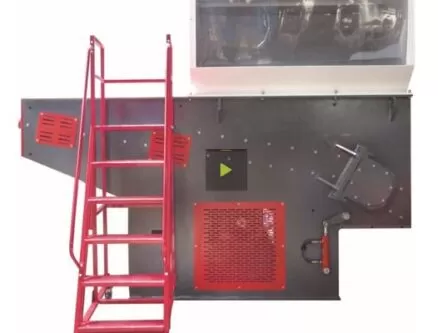
Why Are Soft Plastics Difficult to Shred Continuously?
Typical soft-plastic materials include:
- LDPE film
- LLDPE stretch film
- PP woven bags
- Jumbo bags
- Agricultural film
- Packaging film
- Thin flexible production scrap
These materials behave very differently from rigid plastics.
They can wrap.
They can bridge.
They can compress into large bundles.
Contaminated agricultural film may also contain moisture, soil, or sand.
That means buying a Plastic Shredder Machine based only on motor power is risky.
For soft-material applications, we pay particular attention to:
- Feeding method
- Rotor design
- Blade arrangement
- Cutting speed
- Screen size
- PLC control
The objective is not simply to make the material smaller.
The objective is to keep it moving through the machine consistently.
Precision Single Shaft Shredder for LDPE Film & Flexible Plastics
Why Is a Single-Shaft Shredder Often Suitable for Film and Woven Bags?
A Single-Shaft Shredder normally combines a rotating cutting rotor with a controlled feeding mechanism.
For many flexible materials, the hydraulic pusher is particularly important.
Instead of relying only on gravity, the system pushes lightweight material toward the rotor.
This can help reduce:
- Unstable feeding
- Empty rotor running
- Manual pushing
- Production interruptions
The rotor then cuts the material against stationary knives.
Material that has not reached the required size remains in the chamber until it can pass through the screen.
This gives the recycler more control over discharge size before the next processing stage.

How Does Hydraulic Feeding Improve Production Stability?
Imagine loose film inside a large hopper.
It weighs very little relative to its volume.
Without controlled feeding, it may simply sit above the cutting area.
A hydraulic feeding system applies controlled pressure and keeps material in contact with the rotor.
For suitable applications, this can improve:
- Continuous cutting
- Rotor utilization
- Hourly output stability
- Operator efficiency
This is one reason why Film Recycling Equipment should be selected differently from equipment designed mainly for dense rigid plastic.
The feedstock determines the engineering.
Not the catalog.
PE PP Waste Film Recycling Machine for Soft Plastic Processing
Why Does Rotor and Blade Design Matter for Soft Plastic?
Film has one particularly annoying talent:
It likes to wrap around things.
Rotor and blade design therefore matter.
We evaluate:
- Material gripping
- Cutting angle
- Knife arrangement
- Rotor speed
- Blade condition
A suitable cutting system should shear the material efficiently while reducing unnecessary entanglement.
Blade maintenance is also important.
As blades wear, cutting resistance increases.
That may affect throughput, motor load, and production stability.
A good Industrial Plastic Shredder therefore depends on the complete cutting system—not one impressive specification.
How Does Screen Size Affect the Next Recycling Stage?
The smallest possible output is not always the best output.
Screen size should be selected according to what happens after shredding.
The next stage might be:
Plastic Crusher → Washing Line → Dewatering → Pelletizing Line
If secondary crushing follows, the shredder only needs to prepare material for stable crusher feeding.
If shredded material enters washing directly, a different size may be preferred.
Using an unnecessarily small screen can increase cutting cycles and potentially reduce throughput.
At AMIGE, we therefore ask:
What does the next machine need?
That question is more useful than:
How small can this shredder make the material?
Special Plastic Crusher For Plastic Bags Recycling
How Does PLC Automatic Reverse Reduce Manual Intervention?
Soft material is not perfectly uniform.
A compacted bundle may suddenly increase rotor load.
A PLC-controlled system can detect overload and respond automatically.
A typical sequence can be:
Pause Feeding → Reverse → Release Material → Restart → Resume Feeding
This helps protect the machine and reduces unnecessary manual intervention.
But there is an important limit.
If the shredder reverses constantly, we do not call that “smart automation.”
We call it a problem that needs investigation.
Possible causes include:
- Excessive feeding
- Unsuitable rotor configuration
- Worn blades
- Incorrect screen size
- Improper machine selection
Automation should improve good engineering.
It should not hide bad engineering.


Single-Shaft or Double-Shaft Shredder: Which Should You Buy?
This is an important purchasing question.
Neither is universally better.
A Single-Shaft Shredder is often considered when customers need:
- Controlled output size
- Hydraulic feeding
- Stable continuous processing
- Integration with crushing or washing
A Double-Shaft Shredder may be preferred when the priority is high-torque primary reduction of bulky or irregular materials.
Even within soft plastics, the answer depends on:
- Loose or baled material
- Bale dimensions
- Contamination
- Required kg/h
- Required output size
- Downstream process
That is why we ask customers to send material photos and videos before recommending a model.
Single Shaft vs Double Shaft Shredders: Which One Fits Your Recycling Line?
What Do Recycling Customers Actually Care About?
Customers rarely call me excited about rotor diameter.
They care about production.
Typical purchasing concerns include:
- Will the material feed smoothly?
- Will film wrap around the rotor?
- How often must blades be serviced?
- Can output size be controlled?
- What happens during overload?
- Can the machine connect to my existing Washing Line?
- Can I get spare parts later?
These are the questions a Plastic Shredder Manufacturer should answer before discussing price.
A machine is purchased once.
Its operating behavior is experienced every day.
What Should You Confirm Before Ordering a Soft-Plastic Shredder?
Before we recommend equipment, please provide:
- Plastic type
- Material form
- Photos or videos
- Bale dimensions
- Maximum feed size
- Moisture and contamination
- Required capacity
- Required discharge size
- Daily working hours
- Local voltage
- Downstream process
For example:
“LDPE post-consumer film, baled, contains sand and moisture, target 800 kg/h, followed by washing and pelletizing.”
That gives our engineers something useful.
“Please quote your 800 model” does not.

Waste Plastic Film Washing & Recycling Line for Contaminated Soft Plastic
Conclusion
For many LDPE film, PP woven bag, jumbo bag, and flexible-plastic applications, a properly configured Single-Shaft Shredder can provide controlled feeding, stable size reduction, and easier integration with downstream recycling equipment. The right choice should always start with the customer’s real material—not simply a model number or motor size.
FAQ
1. Is a Single-Shaft Shredder suitable for LDPE film?
Yes, it can be suitable when the feeding system, rotor, blades, and screen are correctly configured for the film. Bale size, contamination, moisture, required capacity, and downstream process should be confirmed before selecting the model.
2. Can a Single-Shaft Shredder process PP woven bags and jumbo bags?
Yes. These are common applications for suitably configured single-shaft systems. Because woven materials can wrap and bridge, feeding and rotor design are particularly important.
3. What is the difference between a Single-Shaft and Double-Shaft Shredder?
A Single-Shaft Shredder commonly provides hydraulic feeding and screen-controlled discharge size. A Double-Shaft Shredder is often selected for high-torque coarse reduction of bulky or irregular waste. The better choice depends on the application.
4. What capacity can a soft-plastic shredder achieve?
Capacity depends on material type, bulk density, bale condition, contamination, screen size, feeding method, motor configuration, and operating conditions. Material photos or videos should be reviewed before confirming a realistic capacity range.
5. Can the shredder connect directly to a Washing Line or Plastic Crusher?
Yes. Depending on the required process, the shredder can be integrated with conveyors, a Plastic Crusher, Washing Line, dewatering equipment, or Pelletizing Line to form a complete recycling system.
#SingleShaftShredder #PlasticFilmShredder #SoftPlasticRecycling #LDPEFilmRecycling #PPWovenBagRecycling
#PlasticShredder #PlasticRecycling #FilmRecyclingEquipment #RecyclingMachinery #AMIGE
