

The global recycling industry is moving faster than ever. Material streams are becoming more complex. Labor costs continue to rise. Energy efficiency standards are becoming stricter. Meanwhile, recycling plants are expected to process more waste with fewer resources. Many operators are asking the same question: What technologies will define the next generation of shredding equipment? As the CEO of AMIGE, I believe the upcoming K Show Germany offers the perfect opportunity to discover the answers and prepare for the future.
The upcoming K Show Germany will showcase several major trends in shredding technology. Smart automation, AI-assisted monitoring, low-energy operation, predictive maintenance, modular designs, integrated recycling systems, and digital service platforms are expected to dominate the exhibition floor. Companies that understand these trends today will be better positioned to compete tomorrow. The future of shredding is no longer just about cutting materials. It is about intelligence, efficiency, sustainability, and connectivity.
Every K Show reveals something new.
But this year feels different.
The industry is no longer discussing possibilities.
It is discussing implementation.
Why Does the K Show Matter to the Global Recycling Industry?
The K Show is widely regarded as the world’s most influential plastics and rubber exhibition.
Held in K Show, it attracts manufacturers, recyclers, technology providers, and decision-makers from across the globe.
According to data published by Global Plastics Exhibition Monitor, previous editions attracted more than 170,000 professional visitors and over 3,000 exhibitors.
That is not just an exhibition.
That is an ecosystem.
For me, K Show is where future equipment trends appear years before they become industry standards.
Many technologies we see today in advanced recycling plants first appeared at K Show exhibitions.
Will Smart Shredders Become the New Standard?
If I had to bet on one trend, this would be it.
Smart shredders are no longer experimental.
They are becoming mainstream.
Modern systems now integrate:
- PLC automation
- IoT connectivity
- Cloud monitoring
- Remote diagnostics
- Predictive maintenance
The rise of Industry 4.0 is transforming recycling equipment.
According to research from Industrial Recycling Digitalization Center, over 60% of new industrial machinery investments now include smart monitoring functions.
At AMIGE, we have already seen growing customer demand for remote fault diagnosis.
Nobody enjoys waiting days for technical support.
Customers want answers now.
Machines should talk before they break.
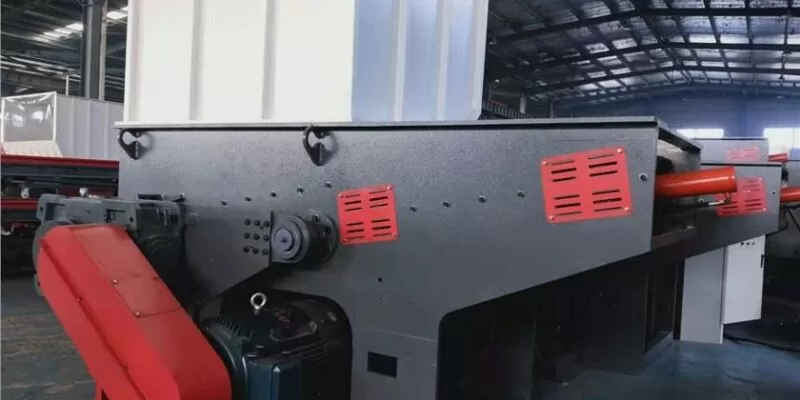
Not after. Single Shaft Shredder Machine For HDPE Pipes
How Important Is Energy Efficiency Becoming?
Ten years ago, customers asked about output.
Today they ask about electricity.
Tomorrow they will ask about carbon emissions.
Energy costs continue to increase worldwide.
Governments are implementing stricter sustainability requirements.
This means energy-efficient shredding technology is no longer optional.
It is becoming a competitive advantage.
Leading manufacturers are expected to showcase:
- High-efficiency motors
- Variable frequency drives
- Optimized rotor designs
- Intelligent load control systems
- Low-friction cutting chambers
Research from European Recycling Energy Institute suggests advanced motor control systems can reduce energy consumption by up to 25%.
That is money saved every hour.
The electricity meter never takes a day off.
Neither should efficiency improvements.
Are AI and Predictive Maintenance Finally Becoming Practical?
For years, artificial intelligence sounded like a buzzword.
Now it is becoming useful.
Really useful.
Modern shredders can collect operational data continuously.
Sensors monitor:
- Vibration
- Temperature
- Motor load
- Hydraulic pressure
- Rotor speed
AI algorithms analyze this data.
Potential failures can be predicted before downtime occurs.
According to Machine Learning Maintenance Consortium, predictive maintenance systems can reduce unexpected equipment failures by nearly 40%.
That gets my attention.
Every hour of downtime costs money.
Every avoided failure improves profitability.
The best repair is the one that never becomes necessary.
Will Modular Shredder Design Continue to Expand?
I believe so.
Customers increasingly want flexibility.
Materials change.
Markets change.
Production requirements change.
Equipment should adapt.
Not resist.
Modular shredders allow operators to:
- Replace components quickly
- Upgrade cutting systems
- Expand throughput capacity
- Reduce maintenance downtime
Many manufacturers are investing heavily in modular engineering concepts.
Reports from Advanced Machinery Engineering Forum show that modular maintenance strategies can reduce service downtime by over 30%.
At AMIGE, we pay close attention to modular development.
The easier a machine is to maintain, the more productive it becomes.
Simple.
Practical.
Profitable.
Are Complete Recycling Lines Replacing Standalone Machines?
This trend is impossible to ignore.
Customers increasingly seek complete solutions.
Not individual machines.
A shredder alone solves only part of the problem.
The real goal is transforming waste into valuable recycled material.
That requires integration.
The future belongs to complete systems combining:
- Shredding
- Crushing
- Washing
- Separation
- Drying
- Pelletizing
According to Global Circular Economy Resarch Institute, integrated recycling plants continue to achieve significantly lower operating costs compared to fragmented processing systems.
This trend aligns perfectly with what we see from customers worldwide.
One supplier.
One system.
One responsibility.
Fewer headaches.
How Is Safety Technology Evolving?
Safety has become smarter.
Older machines relied primarily on emergency stop buttons.
Modern systems go much further.
New safety technologies expected at K Show include:
- Foreign object detection
- Automatic reverse algorithms
- Intelligent overload protection
- Safety interlock systems
- Real-time monitoring
Some advanced systems can identify abnormal operating conditions within milliseconds.
That means less damage.
Less downtime.
Less risk.
According to Industrial Safety Engineering Network, smart protection systems significantly reduce equipment-related incidents in industrial processing environments.
A safe machine is not only good engineering.
It is good business.
Will Remote Service Become a Competitive Requirement?
Absolutely.
The global recycling industry is expanding rapidly.
Customers are operating equipment across multiple continents.
Waiting for an engineer to board an airplane is not always practical.
Digital service platforms are changing the game.
Modern support systems include:
- Cloud diagnostics
- Live troubleshooting
- Software updates
- Online training
- Performance analytics
According to Global Industrial Service Observatory, remote support platforms can reduce technical response times by more than 50%.
That is a major advantage.
At AMIGE, we see remote diagnostics becoming one of the most valuable service tools available.
The machine is in one country.
The engineer is in another.
The solution arrives instantly.
Technology is wonderful when it behaves.
What Opportunities Will These Trends Create for Recycling Businesses?
Every technology trend creates winners.
The companies that adapt early often gain the largest advantages.
Future recycling facilities will likely operate with:
- Higher automation
- Lower energy consumption
- Better uptime
- Improved product quality
- Reduced labor dependency
These improvements directly impact profitability.
Not theoretically.
Financially.
The recycling industry is evolving from labor-intensive operations toward data-driven manufacturing environments.
That shift is already happening.
The K Show will simply make it more visible.
What Will I Be Watching Most Closely at K Show?
As CEO of AMIGE, I will be paying special attention to five areas:
- Intelligent shredding systems
- Energy-saving rotor technology
- Predictive maintenance solutions
- Integrated recycling production lines
- Remote service platforms
These technologies have the potential to redefine industry standards over the next decade.
The most exciting innovations are often not the biggest machines.
They are the smartest ones.
Bigger is impressive.
Smarter is profitable.
Conclusion
The upcoming K Show Germany will highlight the future of shredding technology through automation, AI, energy efficiency, modular engineering, integrated recycling systems, and digital services. For recyclers and machinery manufacturers alike, understanding these trends today is essential for staying competitive in tomorrow’s market.
