

A plastic recycling business can be profitable, but profitability does not come from owning a shredder or washing line. It comes from buying or collecting the right waste, converting enough of it into a consistent saleable product, and controlling cost per saleable ton.
The practical answer is: plastic recycling is profitable when selling price and by-product revenue exceed feedstock, yield loss, energy, water, labor, maintenance, packaging, logistics, finance, and downtime costs. The calculation must use saleable output, not machine nameplate capacity.
I’m Jacky, CEO of AMIGE. Before discussing equipment, I ask a buyer to show me the waste stream and the intended customer. If feedstock supply or product demand is uncertain, a larger machine only makes the uncertainty more expensive.
Plastic recycling profit at a glance
| Profit driver | What to measure | Why it matters |
|---|---|---|
| Feedstock | Delivered cost, consistency, moisture, contamination | Cheap waste can become expensive after sorting and disposal. |
| Saleable yield | Good output divided by incoming material | Rejected material and moisture reduce revenue. |
| Selling price | Price by polymer, color, cleanliness, moisture, melt quality | Higher specifications can require more processing cost. |
| Throughput | Actual saleable tons per operating hour | Bottlenecks and downtime change unit cost. |
| Utilities and labor | Cost per operating hour and per saleable ton | Local prices and automation change the result. |
| Maintenance | Wear parts, planned service, breakdown loss | A low machine price can produce a high lifetime cost. |
How do you calculate plastic recycling margin?
Use a simple contribution-margin model:
Contribution per saleable ton = product revenue + by-product revenue − feedstock − sorting and disposal − utilities − labor − consumables − packaging − variable maintenance − outbound logistics.
Then calculate monthly break-even volume by dividing fixed monthly cost by contribution per saleable ton. Fixed cost may include rent, salaries, insurance, compliance, administration, finance, and the fixed portion of maintenance.
Why should buyers and feedstock come before machinery?
Start with one defined waste stream and one product specification. A buyer for natural HDPE flakes may reject mixed-color material that another customer accepts. A pellet buyer may require filtration, degassing, melt-flow consistency, and tighter moisture control.
Use the planning sequence in our guide on how to start a plastic recycling business: validate buyers, secure supply, define output, calculate yield, and then configure equipment.
How do contamination and yield change profit?
Incoming weight is not the same as saleable weight. Labels, caps, metals, sand, water, mixed polymers, fines, and unusable residue may all be removed. If a plant buys wet or dirty material by weight, it may pay for material that later becomes wastewater or disposal cost.
Run representative trials and record each mass stream. The result should show incoming weight, good product, recoverable by-products, sludge, rejected polymer, and moisture loss. This material balance is more valuable than an optimistic throughput promise.
Which equipment decisions affect profit most?
- Size reduction: the shredder or crusher must match feed size, hardness, contamination, and target flakes.
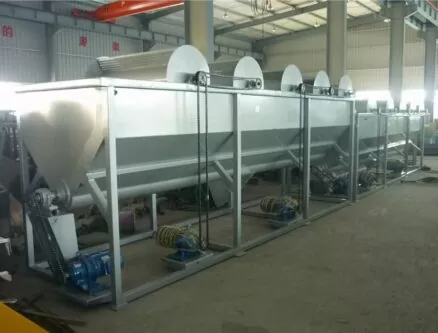
- Washing: pre-washing, friction, separation, rinsing, and drying must match the cleanliness required by the buyer.
- Pelletizing: filtration, degassing, cutting, and cooling are justified only when pellet value and demand support the added cost.
- Automation: automation can reduce labor and improve consistency, but it must match local skills, service, and spare-parts access.
- Line balance: one undersized conveyor, dryer, or water-treatment stage can reduce the output of the complete line.
How do you avoid confusing capacity with profit?
Nameplate capacity may describe ideal input under stable conditions. Profit depends on accepted tons produced during real shifts. Include changeovers, cleaning, knife replacement, screen changes, blocked pipes, maintenance, staff breaks, and upstream supply interruptions.
Compare every stage with the plastic crushing and washing line capacity guide. A balanced line is usually more valuable than one oversized main machine.
What warning signs make a recycling project risky?
- No written feedstock specification or supply agreement.
- No samples, trials, or mass-balance data.
- Revenue based on a premium grade the planned process cannot consistently produce.
- Profit calculated from incoming tons instead of saleable tons.
- No allowance for residue disposal, wastewater, downtime, or working capital.
- Equipment quotations compared without the same scope and performance test.
Get a process and break-even equipment scope
Send AMIGE your feedstock photos or samples, delivered cost, expected selling specification, target capacity, utilities, operating hours, and factory layout. We can recommend a process and identify the machine data needed for your break-even model through the recycling project review form.
Frequently asked questions
Is plastic recycling profitable?
It can be profitable when supply, yield, product quality, selling price, throughput, and operating costs are validated. Profitability must be calculated for the specific material and local market.
Which plastic recycling business is most profitable?
There is no universally most profitable polymer. The best opportunity is usually a locally available, consistently sortable waste stream with committed buyers and a process that can meet their specification.
How do I calculate plastic scrap business profit margin?
Calculate revenue and variable cost per saleable ton, not per incoming ton. Then subtract fixed monthly costs and finance costs at the expected operating volume.
Can a small plastic recycling plant make money?
Yes, if it has stable supply, a clear product, suitable buyers, disciplined quality control, and enough utilization. Smaller capacity does not remove the need for a complete process.
What data should I collect before buying equipment?
Collect feedstock cost and composition, saleable yield, product price, required quality, operating hours, utilities, labor, residue cost, freight, maintenance, and planned monthly volume.
Conclusion
Plastic recycling can be profitable, but the business case must be built around verified supply, buyers, material yield, saleable output, and total operating cost. Configure the machines only after those assumptions are written and tested.
