
Plastic processing methods convert polymers into products or prepare waste plastic for reuse. The main routes include extrusion, injection molding, blow molding, thermoforming, rotational molding, shredding and granulation, washing and separation, and recycling pelletizing.
The correct method depends on whether you are making a product or recovering material. Resin type, feed form, contamination, required shape, production volume and final quality must be defined before equipment is selected.
I’m Jacky, CEO of AMIGE. Our focus is the recycling side of plastic processing: preparing waste so it can return to extrusion, molding or compounding with more consistent quality.
Eight Common Plastic Processing Methods
| Method | What it does | Typical output |
|---|---|---|
| Extrusion | Melts and continuously forms plastic through a die | Pipe, sheet, film, profile or strand |
| Injection molding | Injects molten polymer into a closed mold | Repeatable molded parts |
| Blow molding | Inflates hot plastic inside a mold | Bottles and hollow containers |
| Thermoforming | Heats sheet and forms it over a mold | Trays, packaging and panels |
| Rotational molding | Rotates a heated mold containing polymer | Large hollow products |
| Shredding or granulation | Cuts scrap into controlled pieces | Coarse shred or screened regrind |
| Washing and separation | Removes contamination and separates materials | Clean, dried flakes |
| Recycling pelletizing | Melts, filters and cuts prepared plastic | Recycled pellets |
Primary Manufacturing vs Recycling Processing
Manufacturing processes shape virgin or recycled resin into a product. Recycling processes first make post-industrial or post-consumer waste suitable for manufacturing again. A recycling project may therefore include sorting, shredding, crushing, washing, drying, extrusion, filtration and pelletizing.
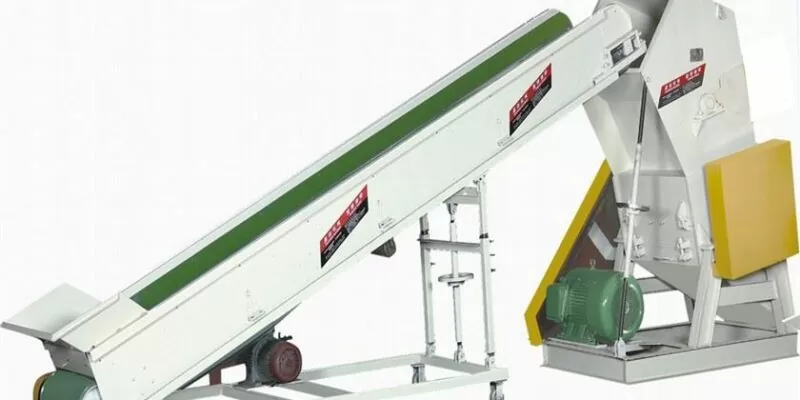
How Mechanical Plastic Recycling Works
- Inspect and sort the waste by polymer, color and contamination.
- Remove metal and incompatible material.
- Shred or crush the feed to a controlled size.
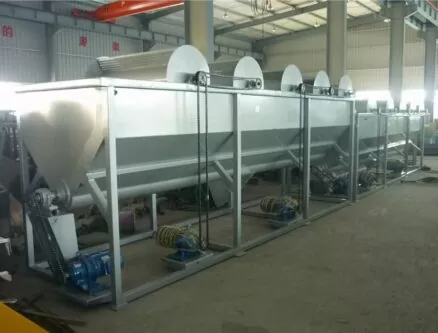
- Wash and separate the plastic according to the contamination and density.
- Dewater and dry it to the downstream specification.
- Use the flakes directly or pelletize them when filtration and consistent feeding are required.
Review the plastic recycling plant process and equipment guide for a complete line view.
Shredder, Crusher or Granulator?
A shredder is normally selected for bulky, thick or difficult-to-feed material. A crusher or cutting granulator produces smaller, screen-controlled flakes. Some projects use both stages to protect throughput and control particle size.
Compare AMIGE plastic shredder machines and plastic crusher machines by material rather than machine name alone.
When Washing and Separation Are Required
Post-consumer bottles, film and containers can contain labels, soil, food residue, glue, metal and mixed polymers. The washing route is chosen from the feedstock and the buyer’s flake specification. Clean factory scrap may need less preparation than contaminated post-consumer material.
When Pelletizing Adds Value
Pelletizing is used when prepared flakes require melt filtration, homogenization or easier feeding into downstream manufacturing. It adds energy, filtration consumables and process controls, so the end market should be confirmed first.
See the plastic pelletizer range and the explanation of how a recycling granulator works.
How Buyers Should Choose a Processing Route
- Identify polymer, additives and feed form.
- Measure dimensions, bulk density, moisture and contamination.
- Define the required flake, pellet or finished-product specification.
- Set capacity on a stated input and output basis.
- Confirm electricity, water, heating, drainage and floor space.
- Plan labor, quality control, maintenance and wear parts.
Send material photos, samples, target output and site data through the AMIGE inquiry form so the recycling process can be configured from evidence.
Frequently Asked Questions
What are the main methods of processing plastics?
Common methods include extrusion, injection molding, blow molding, thermoforming, rotational molding, shredding or granulation, washing and separation, and recycling pelletizing.
Which plastic process is used for bottles?
Bottles are commonly manufactured by blow molding. In recycling, they are sorted, crushed, washed, separated and dried; suitable flakes may then be pelletized.
Is shredding a plastic manufacturing process?
Shredding is mainly a preparation or recycling process. It reduces scrap before washing, granulation, compounding or other recovery steps.
Can recycled plastic be used in extrusion or injection molding?
It can be used when the polymer, contamination, moisture and material properties meet the product and process requirements.
What information is needed to select recycling equipment?
Provide polymer, feed form, contamination, dimensions, capacity, required output, operating hours, utilities and installation conditions.