

The future of plastic recycling technology is not one universal machine. It is a more measurable system: better feed identification, more stable size reduction, targeted washing, controlled drying, consistent pelletizing and data that connects product quality to operating cost.
For equipment buyers, the most useful future-ready investment is a line that can prove material balance, quality, energy use, water use and downtime. Automation only creates value when the feed specification and process targets are clear.
I’m Jacky, CEO of AMIGE. I see the strongest projects combine proven mechanical processes with modular controls and room for later upgrades. A fashionable technology cannot compensate for unknown feedstock or an undefined end market.
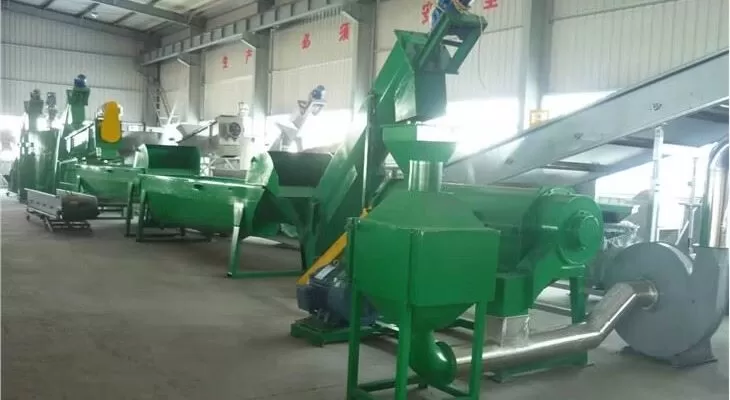
What will define the future of plastic recycling technology?
- Better feed characterization: knowing resin, color, additives, moisture and contamination before processing.
- More accurate sorting: combining mechanical separation, sensors and quality checks where the material value supports them.
- Efficient preparation: producing the size and cleanliness required by the next stage without unnecessary grinding or washing.
- Closed-loop process control: using load, pressure, temperature, moisture and quality data to stabilize production.
- Modular line design: allowing capacity, sorting, washing or filtration stages to change with the business.
- Traceable output quality: linking each production lot to feed conditions and process records.
Technology roadmap: proven now vs project-dependent
| Technology | Current role | Buyer decision |
|---|---|---|
| Automated feeding and load control | Stabilizes throughput and protects connected machines | Verify sensor logic, interlocks and manual recovery |
| Optical or sensor sorting | Separates selected resin, color or object classes | Test representative feed and required purity |
| Mechanical shredding and washing | Prepares many post-industrial and post-consumer streams | Match intensity to contamination and final use |
| Online moisture and process monitoring | Supports consistent drying and extrusion | Define calibration, data use and alarm limits |
| Advanced melt filtration and degassing | Improves selected recycled-polymer output | Confirm contamination load and product specification |
| Chemical recycling routes | Project-dependent conversion for selected feedstocks | Confirm technology provider, feed specification, yield basis and offtake |
| AI-assisted optimization | Can support classification or operating decisions when trained on reliable data | Ask what data is required and how performance is validated |
Smart sorting starts with a defined feed stream
Sorting technology can separate only what it can detect and physically eject. Labels, black materials, multilayer structures, dirt, overlapping objects and small particles may affect performance. Buyers should test real feed across expected seasonal variation rather than relying on a clean demonstration sample.
Measure recovery and purity together. A system that creates a very pure fraction but rejects too much target polymer may not provide the best economic result.
Mechanical recycling will become more measurable
Mechanical recycling remains a practical route for suitable thermoplastic streams. The improvement opportunity is not only faster machinery. It is tighter control of incoming material, particle size, contamination, washing, moisture, filtration and final quality.
A balanced plastic washing line should document input, rejects, clean-flake output, water demand, moisture and downtime. Pelletizing should then be sized around the stable good output—not the nominal capacity of one upstream machine.
What role will chemical recycling play?
Chemical or feedstock-recycling projects may accept selected streams that are difficult for conventional mechanical recycling, but they are not one process and do not accept every mixed plastic. Each technology has its own requirements for polymer composition, chlorine, moisture, metals, ash, particle size and other contamination.
Shredding, sorting, washing, drying and homogenization may still be required as pretreatment. Before buying equipment, obtain a written feed specification and acceptance test from the technology provider or offtake partner.
Energy, water and yield will be evaluated together
Future-ready plants will compare utilities with saleable output. Useful measures include kWh per good-output ton, water makeup per ton, clean-product yield, moisture, reject rate, uptime and labor. Installed power by itself does not show operating efficiency.
Read our plastic recycling energy-efficiency guide for a stage-by-stage approach to shredding, washing, drying and pelletizing.
Seven questions before buying future-ready equipment
- Which resin, product form and contamination range will the line actually receive?
- What saleable specification and verified offtake must the output meet?
- Which stages are proven with representative material?
- What input, output, quality, energy, water and downtime data will be recorded?
- Can the line add sorting, washing, drying or filtration capacity later?
- How are controls, spare parts and software supported over the equipment life?
- What performance conditions, exclusions and acceptance tests appear in the proposal?
Build a modular recycling line around the material
Start with a material balance: incoming polymer, recoverable target, contamination, water, moisture, rejects and expected saleable output. Then select feeding, sorting, size reduction, washing, drying and plastic pelletizing equipment around that balance.
Send AMIGE the feed photos or samples, resin composition, hourly input, target quality, current process, utilities, operating hours and factory layout. We can identify the proven core equipment and the interfaces that should remain ready for future expansion.
Frequently asked questions
What is the most important future plastic recycling technology?
There is no single answer. For many plants, better feed control, sorting, washing, moisture control and process data create more value than an isolated new machine.
Will AI replace operators in plastic recycling plants?
AI can assist sorting or operating decisions when data and validation are reliable. Plants still need trained people for material acceptance, safety, maintenance, quality control and exception handling.
Will chemical recycling replace mechanical recycling?
They serve different material and product requirements. Chemical routes are project-specific and may still need mechanical pretreatment. The feed specification, yield, energy, product and offtake must be assessed for each project.
How can a recycling line be prepared for future upgrades?
Use modular stages, reserve physical and electrical capacity where justified, define equipment interfaces, and record process data that shows where an upgrade will create value.
What information is needed to plan an automated recycling line?
Provide feed composition and variation, contamination, hourly volume, target product, required purity and moisture, utilities, operating hours, labor assumptions, layout and the downstream market.
