

A machine that crushes cardboard boxes is usually called a cardboard shredder, box crusher, or cardboard crusher. The correct name depends on whether the machine cuts boxes into pieces, perforates sheets for packing material, or compresses them into dense bales.
Shredders, perforators, compactors, and balers do different jobs. Before requesting a quotation, define the feed, desired output, throughput, and what happens to the material next.
I’m Jacky, CEO of AMIGE. For industrial waste projects, I select the machine from the real cardboard stream: flattened cartons, whole boxes, corrugated sheets, paper cores, mixed packaging, moisture, tape, staples, and the required discharge size.
What is a cardboard crusher called?
| Machine name | What it does | Typical output |
|---|---|---|
| Cardboard shredder | Cuts boxes, sheets, or cores with a rotor or shafts | Loose strips or pieces |
| Cardboard perforator | Slits and expands sheets | Cushioning or packing mat |
| Box crusher / compactor | Flattens or compresses bulky boxes | Reduced-volume cardboard |
| Cardboard baler | Compresses material and ties it | Dense transportable bales |
| Granulator | Uses high-speed knives for smaller pieces | Fine, controlled-size material |
If the goal is continuous size reduction for recycling or material handling, an industrial cardboard shredder is usually the best starting point. If the goal is transport density, a baler may be more appropriate.
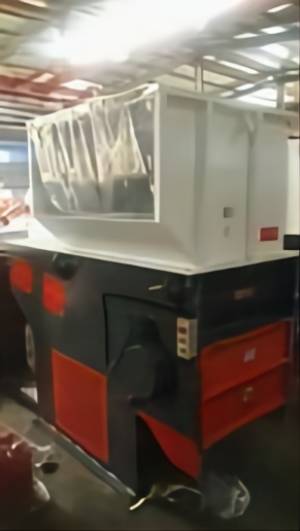
How does an industrial cardboard shredder work?
A single-shaft machine uses a slow rotor with cutting tools and a hydraulic pusher. The pusher moves light, bulky cardboard toward the rotor. Cut material leaves through a screen, which helps control maximum output size.
A double-shaft shredder uses two intermeshing shafts to grab and tear material. It can accept bulky feed and produce coarse pieces, but it normally does not use a sizing screen. The required output and downstream conveyor, baler, separator, or pulping process determine which arrangement fits.
Single-shaft or double-shaft: which fits cardboard?
| Selection point | Single-shaft shredder | Double-shaft shredder |
|---|---|---|
| Output control | Screen-controlled, more consistent | Coarser, based on cutter geometry |
| Feeding | Pusher supports light, bulky feed | Shafts grab material directly |
| Best fit | Boxes, sheets, cores requiring defined pieces | Bulky mixed packaging and primary reduction |
| Downstream | Conveying, separation, densification | Secondary shredding or volume reduction |
See the dedicated waste cardboard single-shaft shredder and our explanation of how an industrial cardboard shredder works.
Which cardboard materials can be processed?
Typical feed includes corrugated boxes, cartons, sheets, edge trim, paper cores, tubes, and selected paper-based packaging. Wet, laminated, waxed, or heavily contaminated cardboard behaves differently from clean dry boxes and may need separate handling.
Tape, plastic straps, staples, clips, and product residue affect wear and downstream quality. Metal detection or removal may be required. Do not assume that a machine specified for clean cartons can accept every mixed commercial waste stream.
What determines cardboard crusher capacity?
- Box dimensions, whether boxes are flattened, and feeding method.
- Bulk density, moisture, corrugated layers, and paper cores.
- Rotor width, cutter arrangement, shaft speed, and drive torque.
- Pusher design and the risk of bridging in the hopper.
- Screen opening or cutter geometry and required output size.
- Conveyor loading, discharge clearance, and downstream capacity.
- Operating hours, contamination, and acceptable maintenance interval.
How should buyers compare cardboard crusher machines?
Compare accepted output under the same feed conditions, not only motor power or rotor width. Ask whether capacity is based on flattened boxes, whole boxes, cores, or a continuous mixed stream. Confirm maximum feed dimensions, output range, noise, dust, safety interlocks, and access for clearing and maintenance.
A useful proposal should show the hopper, feeding conveyor, metal protection, shredder, screen if used, discharge conveyor, dust-control connection, controls, guarding, spare cutters, and factory layout. A material test is valuable when the feed contains cores, wet cartons, laminates, or non-paper contamination.
Crusher, perforator, or baler: how do you decide?
- Choose a shredder when you need smaller pieces, continuous feeding, or downstream sorting and processing.
- Choose a perforator when clean sheets will become protective packaging.
- Choose a baler when reducing storage and transport volume is the main goal.
- Combine shredding and baling only when the downstream buyer or process benefits from both.
What information is needed for a quotation?
- Photos or video, material description, and contamination.
- Maximum box or core dimensions and wall thickness.
- Loose, flattened, baled, or conveyor-fed condition.
- Required output size and downstream use.
- Target accepted capacity and operating hours.
- Voltage, factory space, dust-control needs, and destination.
Request a cardboard crusher recommendation
Send AMIGE representative material information, maximum feed size, target output, capacity, and layout. We can recommend the machine type, rotor or shafts, screen, feeding, discharge, and safety scope through our cardboard shredder quotation form.
Frequently asked questions
What is the best machine for crushing cardboard boxes?
For continuous size reduction, a single-shaft or double-shaft shredder is common. For volume reduction only, a compactor or baler may be better.
Can a cardboard crusher process paper cores?
Yes, when the rotor, cutters, drive, and feed opening match the core diameter and wall thickness. Provide representative cores before selection.
Is a cardboard crusher the same as a baler?
No. A crusher or shredder cuts material into pieces. A baler compresses cardboard into dense tied bales for storage and transport.
Can one shredder process cardboard and plastic?
Sometimes, but cutter, screen, torque, feed, wear, and downstream requirements must match both materials. Mixed feed may reduce output quality.
What affects the price of a cardboard crusher machine?
Feed size, throughput, rotor or shaft design, cutter material, screen, conveyor, dust control, guarding, controls, spare parts, and installation scope affect price.
Conclusion
A cardboard crusher may be a shredder, perforator, compactor, or baler depending on the required output. Define the material and downstream goal first, then compare equipment using the same operating conditions.
