

An industrial garbage shredder reduces bulky mixed waste into smaller, more manageable pieces for sorting, separation, transport, recycling, or refuse-derived-fuel preparation. It normally uses slow-speed, high-torque cutting shafts rather than the high-speed blades found in a kitchen disposer.
The correct shredder is selected from the actual waste stream and required output—not from motor power alone. Composition, dimensions, density, contamination, moisture, hard objects, throughput, and the next process all affect the configuration.
I’m Jacky, CEO of AMIGE. When a buyer asks for a garbage shredder machine, I first clarify whether “garbage” means commercial packaging, municipal solid waste, plastic rejects, bulky waste, textiles, wood, drums, or a controlled mixture. Those materials load a shredder very differently.
What is an industrial garbage shredder?
A garbage shredder is a primary size-reduction machine. Rotating cutters grip, tear, shear, and pull material through the cutting chamber. Reduced material then moves to a conveyor, magnetic separator, screening stage, secondary crusher, baler, or other downstream equipment.
It is not automatically a complete recycling line. Shredding changes size; it does not by itself separate polymers, remove metals, wash contamination, dry material, or make a saleable final product.
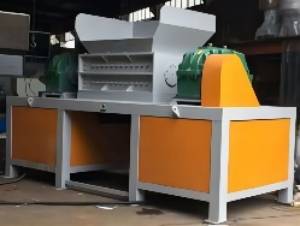
How does a garbage shredder machine work?
| Stage | What happens | Buyer check |
|---|---|---|
| Feeding | Waste enters by loader, grab, conveyor, or controlled manual station. | Maximum size, bulk density, bridging |
| Gripping | Cutters catch and pull material into the shafts. | Cutter profile, hook geometry, shaft spacing |
| Shredding | High torque tears and shears the waste. | Torque, speed, cutter width, wear protection |
| Overload response | The control system stops or reverses under abnormal load. | PLC logic, current sensing, restart sequence |
| Discharge | Pieces fall to conveying or separation equipment. | Output range, conveyor capacity, containment |
Which waste streams can be shredded?
Depending on the design, applications may include plastic packaging, rigid plastic, films, woven bags, textiles, wood, paper, cardboard, light commercial waste, selected drums, appliance shells, and other bulky items. Every proposal should define both permitted and prohibited feed.
Unknown cylinders, sealed containers, batteries, pressurized vessels, hazardous chemicals, hot material, explosives, and uncontrolled metal can create serious risks. They require site-specific sorting, identification, and safety procedures before any shredding decision.
Single-shaft or double-shaft shredder?
| Selection point | Single-shaft | Double-shaft |
|---|---|---|
| Feeding | Hydraulic pusher controls contact with one rotor | Two shafts grip bulky feed directly |
| Output | Screen can control maximum size | Coarser output based on cutters |
| Typical role | Controlled output for plastics and selected waste | Primary reduction of bulky or mixed waste |
| Process position | Primary or secondary stage | Usually primary stage |
Review AMIGE’s double-shaft shredder machine and single-shaft shredder machine as configuration references. The final choice should follow a material assessment or representative test.
What determines throughput and output size?
- Material composition, toughness, moisture, and bulk density.
- Maximum dimensions, wall thickness, and feeding consistency.
- Cutter diameter, width, hook profile, and shaft speed.
- Drive torque, gearbox, motor protection, and control logic.
- Screen opening when a screen-controlled machine is used.
- Metal, stones, and other hard contamination.
- Discharge conveyor and downstream separation capacity.
Capacity should be stated for a defined feed and accepted output. A machine handling light packaging waste cannot be compared directly with one processing dense plastic lumps or mixed bulky waste, even if the rotor width is similar.
Which safety and maintenance features matter?
Specify guarded loading, emergency stops, safety interlocks, overload protection, automatic reverse, controlled access, lockout points, fire-risk assessment, and safe methods for removing foreign objects. Operators must never reach into the hopper or chamber while hazardous energy is present.
Maintenance planning should cover cutter inspection, bolt torque, shaft and spacer condition, gearbox oil, bearings, seals, hydraulic systems, sensors, conveyors, and cleaning. Access space and lifting provision affect real maintenance time.
How should buyers compare waste shredder quotations?
- Ask each supplier to use the same feed description and output target.
- Confirm what contaminants and maximum pieces are permitted.
- Compare accepted throughput, not empty-machine rotor capacity.
- Review cutters, shaft, gearbox, bearings, seals, and wear parts.
- Confirm feeding, discharge, separation, dust, and fire-control scope.
- Check controls, guarding, spare parts, manuals, and commissioning.
What information is needed for a quotation?
Provide material categories and percentages, photos or samples, maximum dimensions, bulk density, moisture, contamination, prohibited items, target output size, accepted throughput, operating hours, feeding method, downstream process, voltage, layout, and destination.
Request a garbage shredder configuration
Send AMIGE representative waste data and the required downstream result. We can recommend the shredder type, cutters, drive, controls, feeding, discharge, and test plan through our industrial waste shredder quotation form.
Frequently asked questions
Is a garbage shredder the same as a kitchen garbage disposal?
No. An industrial garbage shredder processes bulky dry or mixed waste. A kitchen disposer is a small appliance designed for selected food waste.
Can one waste shredder process every type of garbage?
No. Cutter, torque, feed, wear protection, safety, and downstream requirements vary. Define permitted and prohibited materials before selection.
Does a double-shaft shredder produce uniform output?
It produces a general size range based on cutter geometry and feed behavior. A secondary screen-controlled stage may be needed for tighter sizing.
What causes a garbage shredder to jam?
Oversized or prohibited objects, excessive feeding, wrapped flexible material, worn cutters, restricted discharge, or unsuitable cutter geometry can contribute.
What affects the price of an industrial waste shredder?
Machine size, shafts, cutters, drive, gearbox, wear protection, controls, conveyors, guarding, separation equipment, spares, and commissioning scope affect price.
Conclusion
A garbage shredder is the first size-reduction stage in a wider waste-processing system. Define the feed, risks, output, throughput, and downstream process before comparing machines.
