

A plastic recycling machine rarely fails suddenly. It sends warnings first. Strange vibration. Higher amperage. Uneven flakes. More dust. Louder cutting noise. Unfortunately, many factories ignore these signals until the rotor sounds like a metal concert at midnight. Then production stops. Orders get delayed. Customers become impatient. Maintenance costs explode. I have worked in the recycling machinery industry long enough to know one truth: blade wear is not just a maintenance issue. It is a profitability issue hiding inside the machine every single day.
That is exactly why we developed our new intelligent sensing system at Amige Machinery. The system monitors blade wear conditions in real time through vibration analysis, load fluctuation tracking, temperature monitoring, and cutting resistance data. Instead of waiting for blade failure, operators receive early warnings before production quality declines. The result is higher efficiency, lower downtime, more stable particle size, and significantly reduced maintenance costs. Smart monitoring is no longer a luxury feature. It is becoming standard operating logic in modern recycling plants.
Most factories still rely on human ears.
That method worked thirty years ago.
Back then, machines were slower. Electricity was cheaper. Customers were more forgiving.
Today, every hour of downtime burns money faster than a dull blade burns motor current.
Why Is Blade Wear Such A Serious Problem In Plastic Recycling?
Blade wear affects everything downstream.
Cutting efficiency drops gradually. Not dramatically.
That makes it dangerous.
Operators often fail to notice the early stage because production continues running. But internally, the machine is already losing efficiency.
Worn blades create:
- Uneven particle size
- Higher energy consumption
- Increased dust generation
- Motor overload
- Rotor imbalance
- Lower production capacity
According to Global Recycling Equipment Research, blade wear can increase energy consumption by nearly 25% before operators visually recognize serious deterioration.
That statistic surprises many customers.
It does not surprise me.
Machines always whisper before they scream.
How Did Factories Traditionally Detect Blade Wear?
Mostly through experience.
Or luck.
Sometimes both.
Older factory managers often relied on sound recognition. Experienced operators could hear subtle differences in rotor cutting tones.
Frankly, some veteran technicians are impressive.
I have met operators who could identify loose knife bolts just by listening beside the machine for ten seconds.
But there is a problem.
Human judgment varies.
People become tired.
Noise environments change.
Night shifts are different from day shifts.
And sometimes the “expert operator” is on vacation while the machine quietly destroys itself.
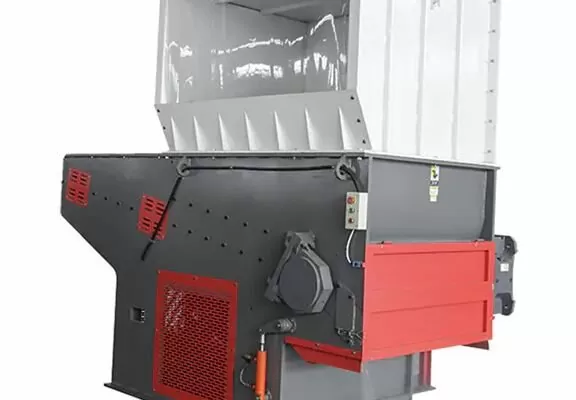
That is why intelligent monitoring systems are becoming essential rather than optional. Single Shaft Shredder Machine For Rigid Material
What Does Our Intelligent Sensing System Actually Monitor?
Good question.
Many companies advertise “smart systems” that are basically touchscreens with colorful buttons.
We wanted something practical.
Our system continuously monitors several operational parameters simultaneously:
- Rotor vibration frequency
- Motor current fluctuation
- Bearing temperature
- Hydraulic pressure variation
- Cutting resistance behavior
- Throughput consistency
- Noise pattern deviation
The system then compares operational data against preset baseline values.
If abnormal wear trends appear, the PLC automatically issues alerts before catastrophic failure occurs.
Simple concept.
Very difficult engineering.
According to Industrial Predictive Mantenance Analysis, predictive monitoring systems may reduce unplanned downtime by over 40%.
That is not theory anymore.
That is factory economics.
Why Is Real-Time Monitoring Better Than Scheduled Maintenance?
Traditional maintenance schedules are useful.
I still believe in preventive maintenance strongly.
But fixed schedules cannot fully reflect real operating conditions.
For example:
A machine processing clean HDPE drums experiences very different wear compared to one processing contaminated agricultural film.
Yet many factories service both machines identically.
That makes little sense.
Real-time monitoring adapts dynamically.
Machines operating under heavy loads receive earlier warnings.
Machines running lighter materials maintain longer service intervals safely.
It is smarter resource allocation.
And yes, it also saves money.
Factory owners appreciate intelligence much more when it reduces spare parts consumption.
Funny how that works.
How Does The System Detect Blade Wear Before Human Operators Notice?
This is where sensor integration becomes powerful.
Blade wear changes cutting behavior subtly.
The machine consumes slightly more power.
Rotor vibration patterns shift slightly.
Temperature rises gradually.
Individually, these changes appear insignificant.
Together, they create a detectable operational fingerprint.
Our intelligent system analyzes these combined signals continuously.
Think of it like a doctor monitoring blood pressure, heart rate, and oxygen levels simultaneously.
One number alone tells little.
Combined data reveals the real condition.
According to Smart Manufacturing Sensor Research, multi-sensor monitoring systems improve fault prediction accuracy by nearly 37% compared to single-point monitoring methods.
The recycling industry is finally catching up with modern industrial analytics.
About time.
Does Intelligent Monitoring Improve Final Product Quality?
Absolutely.
Consistent blade condition creates consistent cutting geometry.
Consistent cutting geometry creates uniform flakes.
Uniform flakes improve washing performance and pelletizing stability later.
Everything in recycling connects.
Many people focus only on machine uptime.
I focus equally on material consistency.
Because customers buying recycled pellets care about stability more than machine appearance.
A shiny machine producing inconsistent flakes impresses nobody after three production batches.
Our smart sensing system helps maintain stable discharge quality by ensuring blades remain within optimal operating conditions.
Not too dull.
Not overused.
Not neglected.
Machines prefer discipline.
So do customers.
What Role Does Artificial Intelligence Play In The System?
Artificial intelligence sounds fashionable nowadays.
Sometimes excessively fashionable.
I recently saw a coffee machine advertised as “AI-powered.”
Apparently even espresso now requires machine learning.
In our case, AI actually serves a real industrial purpose.
The system uses operational pattern learning to identify abnormal behavior trends over time.
It recognizes:
- Unusual wear acceleration
- Repetitive overload patterns
- Seasonal temperature influence
- Operator feeding inconsistencies
- Rotor imbalance development
This allows maintenance teams to respond proactively instead of reactively.
According to Factory Automation Intelligence Report, AI-supported maintenance systems may improve equipment lifespan by approximately 20%.
That matters significantly for high-capital industrial machinery.
How Easy Is The System For Operators To Use?
Very easy.
Complicated systems fail in real factories.
I learned this lesson years ago.
Engineers love complexity.
Operators do not.
Our interface focuses on visual simplicity:
- Green means stable
- Yellow means inspection recommended
- Red means maintenance required
No operator wants to read fifteen pages of diagnostic codes during a night shift.
The system also supports remote monitoring.
Managers can review machine conditions through mobile devices or central control systems.
Modern factories increasingly demand centralized operational visibility.
Especially large recycling plants running multiple production lines simultaneously.
Can Intelligent Monitoring Reduce Overall Maintenance Costs?
Without question.
Unexpected breakdowns are expensive.
Emergency repairs are always more costly than planned maintenance.
Always.
Predictive systems reduce:
- Emergency downtime
- Spare parts waste
- Bearing failures
- Rotor damage
- Motor overload incidents
- Production interruption losses
More importantly, they improve maintenance scheduling efficiency.
Maintenance teams work smarter.
Not simply harder.
According to Industrial Cost Reduction Statistics, predictive monitoring systems can lower annual equipment maintenance expenses by up to 18%.
For large recycling facilities, that becomes serious money quickly.
Is Smart Monitoring The Future Of Recycling Machinery?
I believe it already is.
The recycling industry is changing rapidly.
Customers expect:
- Higher production stability
- Better energy efficiency
- Lower labor dependence
- Reduced downtime
- More predictable operating costs
Traditional mechanical reliability remains important.
Very important.
But data-driven operational management is becoming equally critical.
At Amige Machinery Official Website, we still value durable steel, precision machining, and strong rotor engineering.
Traditional fundamentals matter.
However, combining strong mechanical design with intelligent monitoring creates the next generation of recycling systems.
That combination is where modern manufacturing is heading.
And frankly, the machines are becoming smarter faster than some factory managers.
I say that respectfully.
Mostly.
Conclusion
Smart monitoring transforms blade maintenance from reactive guessing into predictive management. Real-time sensing improves uptime, product consistency, and operational efficiency simultaneously. In modern recycling plants, intelligent monitoring is no longer futuristic technology. It is practical industrial survival.
