

A recycling plant can have enough raw material, enough orders, and enough downstream capacity—and still fail to reach its production target. Why? Sometimes the real bottleneck is the old Plastic Shredder at the front of the line. Frequent jams, unstable feeding, blade wear, and repeated shutdowns can quietly consume productive hours every day. One of our customers faced exactly this problem. After evaluating the material and existing production process, we recommended replacing the old shredder with a more suitable AMIGE solution.
According to this customer’s operating feedback, monthly processed volume approximately doubled after the Plastic Shredder Upgrade. The improvement did not come simply from installing a larger motor. More stable feeding, better rotor and blade matching, PLC overload protection, fewer interruptions, and better coordination with downstream equipment allowed the recycling plant to achieve substantially more productive operating hours each month. Actual capacity improvements, of course, depend on material, feeding conditions, operating hours, machine configuration, and downstream capacity.
A machine can look busy all day.
That does not mean it is producing efficiently all day.
For a recycling plant, productive tons per month matter much more than motor running hours.


What Was Really Limiting the Recycling Plant’s Capacity?
The customer’s existing shredder could still operate.
That was exactly why replacing it was not an obvious decision.
But the plant was experiencing several recurring problems:
- Frequent material jams
- Unstable feeding
- Repeated manual intervention
- Increasing blade maintenance
- Longer unplanned shutdowns
- Inconsistent feed to downstream equipment
Individually, each interruption looked manageable.
Together, they reduced the plant’s effective monthly output.
This is one reason I encourage recycling companies to measure more than nominal kg/h.
Measure:
Actual throughput × productive operating hours.
That number tells you much more about the real performance of your Industrial Plastic Shredder.
Heavy-Duty Single Shaft Shredder for Rigid HDPE Drum Recycling
Why Didn’t We Simply Install a Bigger Motor?
When production is low, the easiest answer is often:
“Use more power.”
I disagree.
Motor power is only one part of a shredding system.
Before recommending equipment, we evaluate:
- Material type
- Material shape
- Maximum dimensions
- Thickness
- Bulk density
- Required capacity
- Required output size
- Feeding method
- Downstream process
A poorly matched rotor with a larger motor is still a poorly matched rotor.
For this project, the objective was not maximum installed power.
It was stable, usable production capacity.
That is an important difference when purchasing Recycling Equipment.

How Did More Stable Feeding Increase Actual Throughput?
A Plastic Shredder needs material continuously—but not uncontrollably.
Too little feed creates unnecessary idle operation.
Too much feed creates overload and repeated reversals.
For suitable single-shaft applications, a hydraulic pusher can maintain more consistent contact between the material and rotor.
This can help achieve:
- More continuous cutting
- More stable rotor loading
- Reduced operator intervention
- Fewer feeding interruptions
- Better hourly productivity
The machine spends more time shredding.
Operators spend less time correcting the feeding process.
That sounds simple.
In a factory running hundreds of hours every month, simple improvements accumulate quickly.
High-Torque Single Shaft Shredder for Hard Plastic & Rigid Scrap
Why Did Rotor and Blade Matching Matter?
Different plastics behave differently inside a shredder.
Film can wrap.
Pallets create impact.
Thick purgings require torque.
Large rigid components require strong and controlled cutting.
That is why we evaluate the complete cutting system:
- Rotor structure
- Blade geometry
- Blade material
- Cutting angle
- Screen opening
- Feeding behavior
The goal is to reduce unnecessary cutting resistance while maintaining reliable size reduction.
This also affects blade wear, motor load, output size, and maintenance frequency.
For procurement managers, this is an important point:
Do not ask only, “What motor does the machine use?”
Also ask, “How is the cutting system designed for my material?”
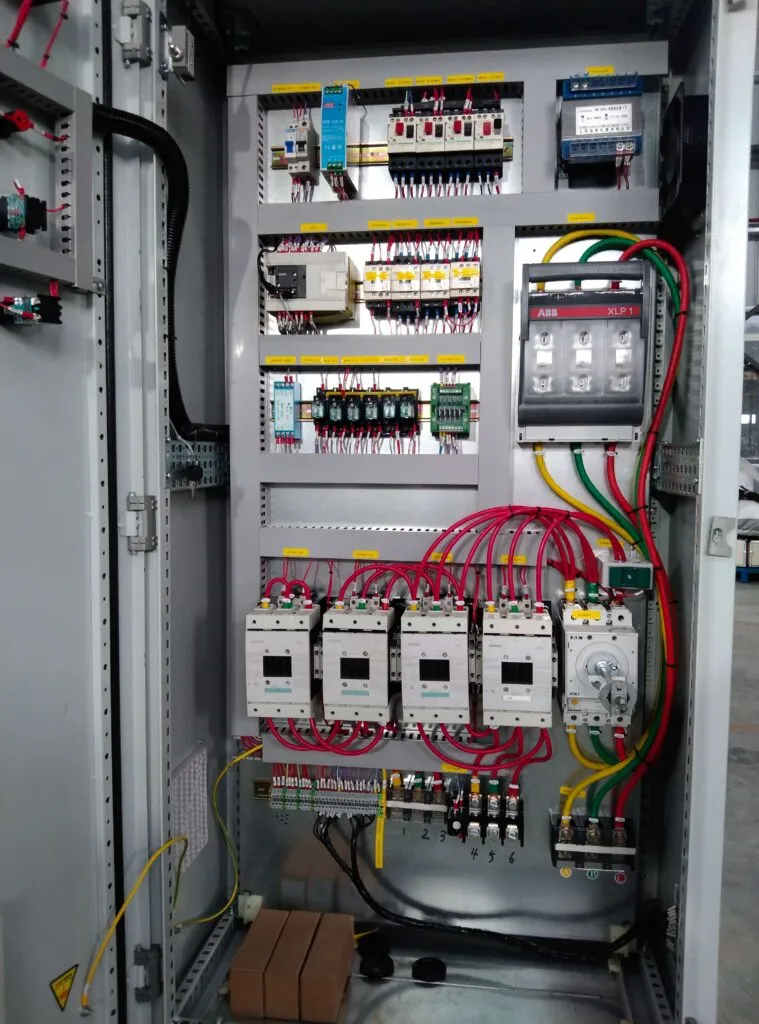
How Did PLC Control Reduce Unplanned Downtime?
Automation does not need to be complicated to create value.
When abnormal rotor load occurs, an intelligent PLC-controlled system can coordinate actions such as:
Pause Feeding → Reverse → Release Material → Restart → Resume Feeding
This reduces the need for operators to manually stop and clear the machine every time temporary overload occurs.
However, automatic reverse is protection.
It should not become normal production.
If a shredder constantly reverses, we need to investigate:
- Feeding rate
- Material condition
- Blade configuration
- Screen size
- Machine selection
A High Efficiency Plastic Shredder should combine mechanical design with intelligent control.
PLC cannot repair bad engineering.
But it can make good engineering more reliable.

Why Did the Whole Recycling Line Benefit From the Upgrade?
The shredder is usually the first major size-reduction machine.
Everything downstream depends on what it delivers.
The next stage may include:
Plastic Crusher → Washing Line → Dewatering → Pelletizing Line
If the shredder stops frequently, those machines may wait for material.
If feeding suddenly surges, downstream equipment may become overloaded.
After the upgrade, more stable shredded-material flow helped the customer’s existing process operate more continuously.
This is why we evaluate the Plastic Recycling Line as a system rather than evaluating only one machine.
Replacing the bottleneck at the front can improve utilization of equipment that the customer already owns.
Heavy-Duty Plastic Crusher for Appliance Shell Recycling
HDPE Bottle Washing Machine for Clean Recycled Plastic Flakes
How Can Monthly Output Double Without Doubling Machine Size?
This is one of the most useful lessons from the project.
Monthly production is not determined only by maximum hourly capacity.
A simple way to think about it is:
Monthly Output = Actual Throughput × Productive Operating Hours
Imagine an old shredder that frequently stops for:
- Material clearing
- Blade adjustment
- Overload
- Maintenance
- Manual feeding correction
Now compare it with a correctly selected machine that operates more consistently.
The difference in one hour may not look dramatic.
Multiply that difference across every shift, every day, and an entire month.
It becomes much larger.
In this particular case, the customer reported approximately twice the previous monthly processed volume after the equipment change.
That does not mean every customer who replaces a shredder will double production.
It means eliminating a severe bottleneck can sometimes create a much larger improvement than the machine’s nameplate specifications suggest.
What Should Buyers Calculate Before Replacing an Old Shredder?
Do not compare only:
Old machine price vs. new machine price.
Instead, calculate:
- Current actual kg/h
- Productive hours per day
- Jam frequency
- Maintenance hours
- Electricity consumption
- Blade and spare-parts costs
- Operator intervention
- Lost downstream production
Then compare those numbers with the expected performance of the replacement machine.
This gives you a much better picture of potential ROI.
A cheaper machine may save money on purchase day.
A more reliable machine may save money every production day.
Is Your Current Plastic Shredder Becoming the Bottleneck?
Consider an upgrade if several of these problems occur regularly:
- Capacity cannot meet existing orders.
- Jams happen frequently.
- Operators constantly clear material.
- Maintenance costs continue rising.
- Downstream machines often wait for feed.
- Electricity consumption per ton is increasing.
- Spare parts are becoming difficult to obtain.
- Production planning is becoming unreliable.
An old shredder does not need to be completely broken before replacement makes economic sense.
Sometimes the most expensive machine in the factory is the machine you already paid for.
What Information Should You Send AMIGE Before Requesting a Recommendation?
Before recommending a Plastic Shredder Machine, we prefer to understand your actual production conditions.
Please provide:
- Plastic material
- Material photos or video
- Maximum dimensions
- Thickness or weight
- Contamination
- Current capacity
- Target capacity
- Required output size
- Daily operating hours
- Local voltage
- Downstream process
Instead of saying:
“I need a 1,000 kg/h shredder.”
Tell us:
“I process HDPE rigid plastic. Here is the video. My current line produces about X kg/h, and I want to reach Y kg/h before secondary crushing.”
Now we can engineer.


Conclusion
This customer case shows that increasing recycling capacity does not always require a dramatically larger machine. By improving feeding, cutting efficiency, PLC control, and operating stability, the customer reported approximately double the previous monthly processed volume. The real value of a shredder is not theoretical capacity—it is reliable production month after month.
FAQ
1. Can replacing a Plastic Shredder really double recycling capacity?
It can happen when the existing shredder is a serious production bottleneck. However, results depend on material, current machine condition, feeding method, operating hours, downstream capacity, and the new equipment configuration. Capacity should always be evaluated project by project.
2. How do I know whether my old shredder should be replaced?
Frequent jams, increasing maintenance, high electricity consumption per ton, unstable output, excessive operator intervention, and downstream equipment waiting for material are strong signals that an equipment evaluation may be worthwhile.
3. Should I choose a Single Shaft Shredder or Double Shaft Shredder?
It depends on your material. Single-shaft shredders are often suitable when controlled output size is important. Double-shaft shredders are commonly used for bulky, difficult, or coarse primary reduction. Material photos and videos help us recommend the correct configuration.
4. What information is required to select the correct Plastic Shredder Machine?
Provide material type, shape, maximum size, thickness, contamination, required kg/h, target output size, operating hours, voltage, and downstream process. Photos or operating videos are strongly recommended.
5. Can AMIGE connect a new shredder to my existing Plastic Recycling Line?
Yes, depending on the existing equipment and layout. We can evaluate feeding height, discharge height, conveyor dimensions, target capacity, electrical requirements, and downstream equipment to determine a practical integration solution.
s
#PlasticShredder #PlasticShredderMachine #IndustrialShredder #PlasticRecycling #RecyclingEquipment #RecyclingCapacity
#ShredderUpgrade #PlasticCrusher #RecyclingMachinery #AMIGE
