
Plastic pollution in the United States is no longer an abstract concept.
It is visible.
It is measurable.
And it is expensive to ignore.
Landfills are reaching capacity.
Municipal waste systems are under pressure.
Recyclers are expected to solve problems created upstream.
I have worked in plastic size-reduction for many years.
From my seat as CEO of Amige, I see one truth clearly.
Without effective plastic shredding, most environmental strategies fail at the first step.
Plastic shredding has become a foundational process in U.S. environmental pollution control. It reduces volume, improves handling efficiency, and enables downstream recycling, RDF production, and waste-to-energy systems. In practice, shredding is not a side process. It is the gatekeeper of efficiency, compliance, and profitability.
This is not theory.
This is factory reality.
Why Is Plastic Shredding Critical in U.S. Pollution Control?
The U.S. generates massive plastic waste every year.
According to national waste statistics, plastic accounts for a significant share of municipal solid waste.
Whole plastic products are inefficient to process.
They occupy space.
They jam systems.
Shredding solves the physical problem first.
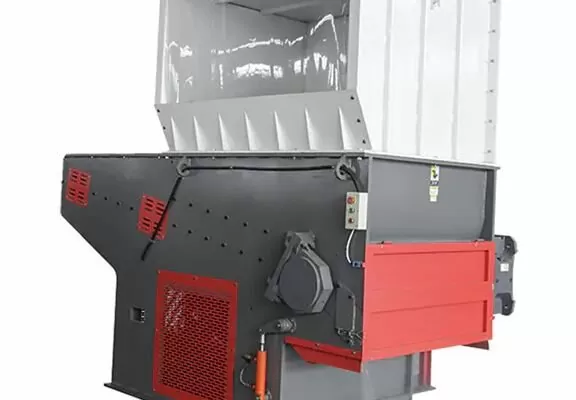
Only then can policy and technology work. Single Shaft Shredder Machine For Rigid Material
How Does Shredding Reduce Environmental Pressure?
Shredding reduces volume by up to 70% depending on material type.
This matters.
Transportation becomes cheaper.
Storage becomes manageable.
More importantly, shredded plastic becomes controllable.
Size uniformity enables sorting.
Sorting enables recycling.
Environmental control begins with physics.
Not slogans.
What Types of Plastic Waste Dominate the U.S. Market?
In the U.S., plastic waste is diverse.
Post-consumer packaging.
Agricultural film.
Automotive plastic.
E-waste housings.
Data from U.S. polymer waste streams shows that rigid plastics dominate by weight, while films dominate by volume.
Each type needs a different shredding approach.
One machine never fits all. Single Shaft Shredder 1200mm For Blowing Mould Waste Recycling
Single-Shaft or Double-Shaft Shredders?
I am asked this weekly.
Single-shaft shredders offer precision.
They deliver uniform output.
They suit recycling lines.
Double-shaft shredders offer brutality.
They tear.
They survive contamination.
In U.S. environmental projects, double-shaft shredders are often used at the front end.
Then single-shaft machines refine the material.
This is not competition.
It is sequencing. Two Shaft Shredder For Waste Home Appliances
How Does Shredding Support Recycling Compliance?
The U.S. recycling system is regulation-heavy.
EPA guidelines.
State-level mandates.
Extended Producer Responsibility.
Shredded material allows accurate weight tracking and contamination control (source: epa-recyclingframework.org/processing).
Without shredding, compliance reporting becomes guesswork.
Machines do not lie.
Scales do not argue.
Shredding and Waste-to-Energy: A Quiet Partnership?
Not all plastic gets recycled.
This is reality.
In waste-to-energy systems, shredded plastic becomes RDF.
Refuse-Derived Fuel needs consistent size and calorific value.
According to WtE fuel preparation studies, shredding quality directly affects combustion stability.
Bad shredding equals unstable energy output.
Operators learn this fast. Double Shaft Shredder 800mm With Feeding and Discharging Conveyor Belt For Blue Drum Recycling
What Role Does Automation Play?
Labor in the U.S. is expensive.
Turnover is high.
Automation is not optional.
It is survival.
Modern shredding systems integrate conveyors, metal detection, and overload protection.
Automation protects machines.
It protects margins.
I have seen manual lines shut down.
Automated lines scale.
How Blade Design Impacts Environmental Outcomes?
This sounds technical.
It is practical.
Blade geometry affects particle shape.
Particle shape affects washing efficiency.
Washing efficiency affects water consumption.
Studies on cutting mechanics show that optimized blade profiles reduce energy use by up to 20%.
Environmental impact hides in small details.
Engineers know this. Two Shaft Shredder For Chemical Drum
Energy Consumption: The Silent Cost
Energy prices in the U.S. fluctuate.
Recyclers feel it first.
Poorly designed shredders waste power.
Over-motorization is common.
Energy benchmarking reports show wide efficiency gaps between machines.
Efficient shredding is green shredding.
There is no contradiction.
How Local Governments Use Shredding Strategically?
Municipal projects often focus on collection.
Processing is underestimated.
Cities that invest in shredding infrastructure reduce landfill dependency faster.
Shredding decentralizes waste handling.
It shortens logistics chains.
Smart cities shred early.
Not late.
Can Small Facilities Contribute Meaningfully?
Yes.
Absolutely.
Not every solution is a mega plant.
Community-level shredding centers handle agricultural film and bulky plastics efficiently.
Small machines.
Local impact.
Environmental control does not require skyscrapers. Shredder Crusher Production Line For Plastic Lumps Recycling
My Perspective as a Manufacturer Serving U.S. Clients
I do not sell dreams.
I sell steel.
U.S. clients care about uptime.
They care about compliance.
They care about ROI.
When shredders fail, programs fail.
When shredders run, systems breathe.
I respect this market.
It forces discipline.
What Mistakes Still Happen in U.S. Projects?
Over-specifying machines.
Ignoring contamination.
Underestimating maintenance.
Environmental goals collapse when operations suffer.
Technology must match reality.
Not PowerPoint.
Experience is expensive.
Learning from others is cheaper.
Where Is U.S. Plastic Shredding Heading?
Toward integration.
AI sorting.
Data-driven maintenance.
Energy-optimized drives.
According to future recycling technology outlooks, shredding will become smarter, not bigger.
Efficiency is the next frontier.
Not noise.
Conclusion
In U.S. environmental pollution control, plastic shredding is not optional.
It is structural.
Get the shredding right, and everything downstream improves.