

Extruder screw cleaning should begin with a controlled production purge whenever the material and equipment allow it. Mechanical removal and manual cleaning are used only after the extruder is shut down, isolated, cooled to the approved service condition, and opened according to the manufacturer’s procedure.
There is no universal cleaning method for every polymer, screw coating, barrel, or contamination problem. Follow the extruder manual, resin and purging-compound instructions, site lockout procedure, and approved maintenance plan.
I’m Jacky, CEO of AMIGE. Before recommending a cleaning method, I ask about the polymer, additives, degradation, color contamination, shutdown duration, screw and barrel material, surface treatment, venting, filtration, and whether the problem is residue or actual wear.
Why do extruder screws need cleaning?
- Color or material changes can leave contamination in low-flow areas.
- Heat history can degrade polymer and create black specks or odor.
- Fillers, pigments, additives, adhesives, and moisture can form deposits.
- Long shutdowns can leave material hardened on the screw or barrel.
- Residue can hide wear, cracks, corrosion, or damaged flights.
Cleaning is not a substitute for correcting temperature control, residence time, venting, dead spots, poor filtration, incorrect shutdown, or worn screw and barrel clearances.
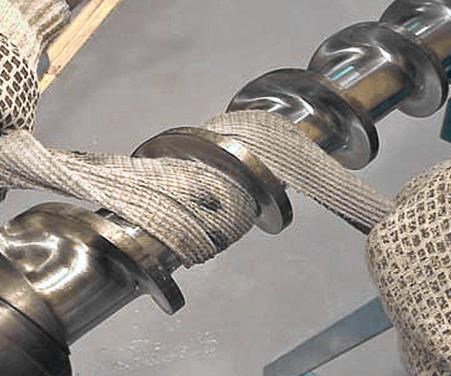
Which cleaning method should be used?
| Condition | Typical approach | Important check |
|---|---|---|
| Routine color or resin change | Controlled displacement and approved purge | Temperature window and compatibility |
| Light residual deposits | Approved purging compound or process adjustment | Screw speed, back pressure, venting |
| Hardened or degraded material | OEM-approved shutdown and mechanical service | Safe isolation and surface protection |
| Persistent black specks | Inspect dead zones, heaters, screw, barrel, and adapters | Root cause rather than repeated purging |
| Wear or corrosion | Measure and assess repair or replacement | Clearance, flight condition, base material |
How should an in-machine purge be planned?
Confirm that the purge material is compatible with the current resin, next resin, screw, barrel, seals, screen changer, die, and operating temperature. Stabilize the process according to the purge supplier and machine manufacturer rather than improvising temperatures or speeds.
Record the material quantity, temperature profile, screw speed, pressure, time, and observed contamination. Excessive purging can waste material without removing a deposit caused by a mechanical dead zone or damaged surface.
When should the screw be removed?
Removal may be required when hardened residue cannot be purged, inspection is due, output or pressure has changed without explanation, metal contamination is suspected, or wear measurements are needed. Only trained personnel with the correct extraction, lifting, and support equipment should perform the work.
Before service, isolate electrical, hydraulic, pneumatic, thermal, and stored mechanical energy. Follow the exact machine manual for cooling, die and screen-changer removal, screw extraction, support points, and lifting limits.
Which tools and methods can damage an extrusion screw?
Unapproved steel tools, aggressive blasting, uncontrolled open flame, excessive heat, harsh chemicals, and incorrect grinding can scratch, decarburize, distort, crack, or remove nitrided, chrome-plated, or other treated surfaces. Never select a method without knowing the screw material and coating.
Use only OEM-approved scrapers, brushes, media, solvents, heating methods, and personal protective equipment. Collect residues and cleaning chemicals according to the site’s environmental and safety procedures.
What should be inspected after cleaning?
- Flight tips, roots, mixing sections, and transition zones.
- Cracks, pitting, corrosion, scoring, coating loss, and discoloration.
- Screw straightness and evidence of contact with the barrel.
- Barrel bore condition, vents, feed throat, adapters, and dead spots.
- Measured screw diameter, flight width, and screw-to-barrel clearance.
- Thrust bearing, gearbox, coupling, heaters, sensors, and seals.
Compare measurements with the original drawing and the machine supplier’s service limits. Cleaning may reveal that contamination is being caused by wear, corrosion, a damaged surface, or an incorrect process setting.
When should an extrusion screw be refurbished?
Refurbishment may be considered when measured wear is outside the desired process condition but the base component remains suitable for repair. The supplier should evaluate material, coating, straightness, cracks, flight damage, target geometry, compatible rebuild method, and final inspection.
Replacement is often safer when structural damage, deep corrosion, severe distortion, unknown material, repeated cracking, or an unsuitable previous repair makes performance uncertain.
How do you prevent repeated contamination?
- Control resin drying, contamination, and material-change procedures.
- Avoid unnecessary residence time and excessive temperature.
- Inspect heaters, thermocouples, cooling, and control accuracy.
- Maintain vents, filtration, adapters, and screen changers.
- Use documented shutdown, purge, and restart procedures.
- Trend pressure, output, motor load, temperature, and black-speck events.
Review the AMIGE plastic recycling granulator machine and PE/PP pelletizer when cleaning problems are linked to an aging or unsuitable extrusion system.
What information is needed for technical support?
- Machine model, serial number, screw drawing, and material or coating.
- Polymer, additives, contamination, moisture, and production history.
- Temperature, pressure, speed, motor load, and output trends.
- Photos of residue, screw, barrel, die, and screen contamination.
- Previous cleaning, purging, refurbishment, and shutdown methods.
- Measured wear, current symptoms, and required production quality.
Request an extrusion-system review
Send AMIGE the machine data, polymer, process history, contamination symptoms, and inspection photos. We can review cleaning, wear, filtration, and pelletizing-line configuration through our extrusion maintenance and equipment inquiry form.
Frequently asked questions
What is the safest way to clean an extruder screw?
Use the approved production purge first when applicable. For manual cleaning, isolate the machine and follow the OEM procedure with approved tools.
Can an extruder screw be cleaned with a wire brush?
Only if the machine or screw supplier approves the brush material and method for that base steel and surface treatment.
Can a torch be used to burn plastic off a screw?
Do not use uncontrolled flame. Excess heat can damage material properties, coatings, straightness, and safety. Follow an approved controlled process.
Why do black specks return after screw cleaning?
Possible causes include dead zones, degraded resin, faulty temperature control, worn surfaces, poor shutdown, contamination, or deposits elsewhere in the flow path.
When should an extruder screw be replaced instead of refurbished?
Replacement may be appropriate for cracks, severe distortion, deep corrosion, structural damage, unknown material, or wear beyond an approved repair method.
Conclusion
Effective extruder screw cleaning combines a controlled purge, safe isolation, approved tools, inspection, measurement, and correction of the root cause. Cleaning and refurbishment decisions must match the screw material, surface, polymer, and machine design.
