

Electricity has become one of the largest operating costs in modern plastic recycling plants. Every extra kilowatt-hour directly affects production costs, profit margins, and long-term competitiveness. I often meet customers who focus entirely on the purchase price of a shredder while overlooking its lifetime energy consumption. A machine that looks inexpensive on day one may become the most expensive machine in the factory after several years of operation. During recent discussions with customers and recycling experts, one question appeared repeatedly: Why can AMIGE shredders produce the same output while consuming less electricity?
The answer lies in engineering rather than simply installing a larger motor. Lower energy consumption is achieved through optimized rotor design, intelligent PLC control, efficient hydraulic feeding, precision blade geometry, reduced idle load, and balanced power transmission. Every component is designed to reduce unnecessary energy loss while maintaining stable throughput. At AMIGE, we believe energy efficiency is not one feature—it is the result of the entire machine working as one optimized system.
Power is important.
Efficiency is even more important.
A larger motor does not automatically create a better shredder.
A smarter machine usually does.
Why Has Energy Efficiency Become So Important?
Electricity prices continue rising worldwide.
Recycling plants operate for long hours.
Sometimes twenty-four hours a day.
Even small energy savings accumulate quickly.
Electricity can represent a significant portion of operating expenses in plastic recycling facilities.
Lower energy consumption provides several advantages:
- Reduced operating costs
- Improved profitability
- Lower carbon emissions
- Greater production stability
- Faster return on investment
Saving energy is no longer just an environmental goal.
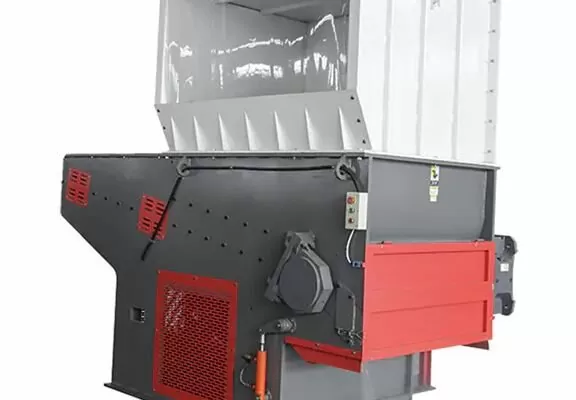
It is a business strategy. Single Shaft Shredder Machine For LDPE Film
Is Motor Power the Most Important Factor?
Many buyers assume larger motors automatically mean better performance.
Not necessarily.
A large motor can consume more electricity without increasing productivity.
What truly matters is:
- Rotor efficiency
- Torque output
- Power transmission
- Feeding stability
- Cutting efficiency
System optimization contributes more to energy savings than motor size alone.
The strongest athlete is not always the fastest.
The same applies to shredders.
How Does Rotor Design Reduce Energy Consumption?
Rotor design plays a decisive role.
At AMIGE, we optimize rotor geometry to improve cutting efficiency.
Benefits include:
- Better material gripping
- Smoother cutting action
- Lower cutting resistance
- Reduced vibration
- Stable rotor balance
A properly designed rotor requires less energy to achieve the same output.
The identifies rotor optimization as one of the most effective methods for improving shredding efficiency.
The rotor is the heart of the machine.
An efficient heart consumes less energy.
Why Does Blade Design Matter?
Many customers only ask about blade material.
I encourage them to ask about blade geometry as well.
Optimized blade design improves:
- Cutting angle
- Material penetration
- Shearing efficiency
- Rotor loading
Sharper cutting means less resistance.
Less resistance means lower power consumption.
Proper blade maintenance also helps maintain efficiency throughout the machine’s operating life.
A dull blade wastes more than material.
It wastes electricity.
How Does Intelligent PLC Control Improve Efficiency?
Modern shredders should think before they work.
Our PLC control system automatically manages:
- Rotor overload
- Automatic reverse
- Feeding speed
- Motor protection
- Operating status
Rather than continuously running at maximum load, the system adjusts operation according to material conditions.
The reports that intelligent automation significantly improves industrial energy efficiency.
Smart machines avoid unnecessary work.
That is where real savings begin.
Why Is Hydraulic Feeding So Important?
Material feeding directly affects energy consumption.
Inconsistent feeding creates:
- Empty running
- Motor overload
- Energy waste
- Lower throughput
Our hydraulic feeding system maintains stable material pressure.
Benefits include:
- Continuous production
- Uniform loading
- Reduced idle time
- Better cutting efficiency
Energy should be used for shredding material.
Not spinning empty rotors.
Does Material Type Affect Energy Consumption?
Absolutely.
Different plastics require different cutting forces.
Examples include:
Easy-to-Process Materials
- LDPE film
- PP woven bags
- Stretch film
Medium-Difficulty Materials
- HDPE bottles
- Plastic containers
- PET sheets
Heavy-Duty Materials
- Plastic pallets
- Thick-wall pipes
- Large drums
- Engineering plastics
Selecting the correct machine configuration for each material improves overall efficiency.
One shredder setup does not fit every application.
How Does Preventive Maintenance Save Electricity?
Energy efficiency declines when machines are poorly maintained.
Routine maintenance should include:
- Blade inspection
- Bearing lubrication
- Hydraulic system maintenance
- Rotor balancing
- Belt tension adjustment
A healthy machine consumes less power.
Maintenance protects efficiency.
Why Does Complete System Design Matter More Than Individual Components?
Customers often compare motors.
I compare systems.
Energy efficiency depends on:
- Rotor design
- Blade geometry
- Feeding system
- Drive system
- PLC programming
- Mechanical balance
Every component contributes.
Small improvements accumulate into significant savings.
Engineering is rarely about one breakthrough.
It is about many intelligent details working together.
What Energy Savings Can Customers Expect?
Actual results depend on:
- Material type
- Operating hours
- Machine size
- Maintenance quality
- Production management
Rather than promising unrealistic percentages, I prefer helping customers optimize their own production conditions.
Sustainable savings always come from measurable improvements.
Not marketing claims.
Why Will Energy Efficiency Become Even More Important?
Future recycling plants will face increasing pressure to reduce:
- Operating costs
- Carbon emissions
- Energy consumption
Equipment manufacturers must respond through smarter engineering.
Not simply larger motors.
At AMIGE, we continue investing in:
- Intelligent automation
- High-efficiency rotors
- Precision cutting technology
- Low-energy drive systems
- Complete recycling solutions
The future belongs to efficient machines.
Not just powerful ones.
Conclusion
Lower energy consumption is achieved through intelligent engineering rather than oversized motors. By optimizing rotor design, blade geometry, hydraulic feeding, PLC control, and preventive maintenance, AMIGE shredders deliver the same production capacity while consuming less electricity. For recycling businesses, higher energy efficiency means lower operating costs, greater profitability, and stronger long-term competitiveness.
#EnergyEfficientShredder #PlasticShredder #PlasticRecycling
#IndustrialShredder #PlasticCrusher #RecyclingEquipment #EnergySaving
#PlasticMachinery #CircularEconomy #AMIGE
