
Every shredder operator eventually faces the same maintenance task—replacing rotary blades. It sounds straightforward. Remove the worn blades, install new ones, tighten the bolts, and restart the machine. Unfortunately, reality is rarely that simple. Improper blade installation can lead to uneven cutting, excessive vibration, poor particle size, accelerated wear, or even catastrophic rotor damage. Over the years, I have visited many recycling plants where a simple blade replacement turned into hours of downtime because basic installation procedures were overlooked. Fortunately, with the right preparation and a disciplined process, blade replacement can be completed quickly, safely, and correctly.
Safe and efficient rotary blade replacement requires proper lockout/tagout procedures, correct lifting tools, careful blade inspection, accurate positioning, torque-controlled fastening, and post-installation testing. At AMIGE, we have developed standardized maintenance procedures that help customers minimize downtime while ensuring maximum cutting performance and operator safety. The goal is simple: replace blades once, replace them correctly, and return to production with confidence.
A shredder works only as well as its blades.
And blades work only as well as they are installed.
Good maintenance begins long before the first bolt is loosened.
Why Is Proper Blade Replacement So Important?
Rotary blades perform the most demanding task inside every shredder.
They cut.
They absorb impact.
They endure continuous wear.
Improper installation affects far more than blade life.
It can influence:
Throughput
Energy consumption
Rotor balance
Particle size consistency
Bearing life
Machine vibration
According to the Global Cutting Technology Research Institute, incorrect blade installation is a leading cause of premature wear and unexpected maintenance in industrial shredding equipment.
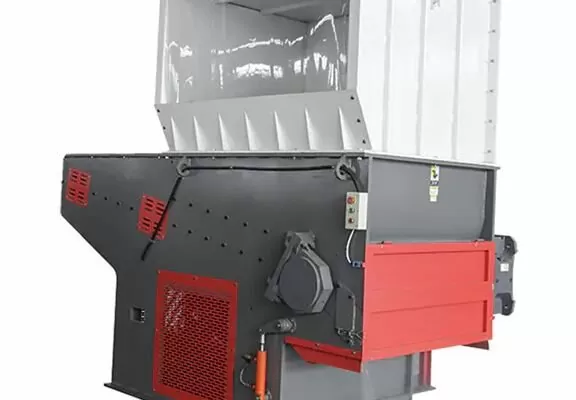
A quality blade deserves a quality installation. Single Shaft Shredder Machine For HDPE Pipes
When Should Rotary Blades Be Replaced?
Many operators wait until production drops dramatically.
That is usually too late.
Instead, monitor warning signs such as:
Reduced throughput
Increased motor load
Uneven particle size
Excessive vibration
Abnormal noise
Visible blade wear
Routine inspections help identify the right replacement time.
Replacing blades before severe wear protects the rotor and reduces long-term maintenance costs.
What Safety Preparations Should Be Completed First?
Before touching the shredder, safety comes first.
Always perform complete lockout/tagout procedures.
The preparation checklist should include:
Shut down the machine.
Disconnect electrical power.
Lock the main power source.
Release hydraulic pressure.
Verify zero energy.
Secure the rotor against movement.
Wear appropriate PPE.
Recommended PPE includes:
Safety gloves
Safety glasses
Steel-toe shoes
Protective clothing
According to the Industrial Machinery Safety Council, proper energy isolation significantly reduces maintenance-related accidents.
No maintenance task is worth risking personal safety.
Which Tools Are Needed for Blade Replacement?
Preparation saves time.
Before starting, gather:
Torque wrench
Socket wrench set
Allen keys
Soft-face hammer
Lifting equipment
Cleaning brushes
Thread lubricant
Cleaning cloths
For larger shredders, lifting devices are strongly recommended.
Heavy rotary blades are designed to cut plastic.
They can also injure operators if handled improperly.
How Should Worn Blades Be Removed?
Removal should follow a consistent sequence.
First:
Loosen bolts gradually.
Avoid removing all bolts from one side first.
Second:
Support heavy blades with lifting equipment.
Third:
Remove blades carefully without damaging rotor surfaces.
Fourth:
Organize removed components.
Keep spacers, bolts, and washers in order.
Good organization simplifies reassembly.
Poor organization creates unnecessary confusion.
Why Should the Rotor Be Inspected Before Installing New Blades?
Many technicians focus only on the blades.
I always inspect the rotor as well.
Check for:
Cracks
Wear marks
Corrosion
Damaged mounting surfaces
Loose fastener holes
The Advanced Rotor Engineering Laboratory recommends inspecting all blade mounting surfaces during every replacement cycle.
New blades installed on damaged rotors rarely perform well.
The foundation matters.
How Can New Rotary Blades Be Installed Correctly?
Installation requires patience.
Follow these steps:
Step 1: Clean All Contact Surfaces
Remove dust, rust, and debris.
Step 2: Position the Blade Correctly
Verify blade orientation carefully.
Step 3: Install Fasteners by Hand
Avoid cross-threading.
Step 4: Tighten Gradually
Use a cross-pattern whenever applicable.
Step 5: Apply the Correct Torque
Always follow manufacturer specifications.
The Industrial Fastening Technology Institute emphasizes torque-controlled assembly to improve equipment reliability.
Tighter is not always better.
Correct is always better.
Why Is Torque Control So Critical?
Overtightened bolts may stretch.
Undertightened bolts may loosen.
Neither outcome is desirable.
A calibrated torque wrench ensures:
Uniform clamping force
Rotor balance
Blade stability
Longer component life
Guessing bolt torque belongs in the past.
Precision belongs in modern maintenance.
Should Blade Clearance Be Adjusted?
Absolutely.
Blade clearance directly affects cutting efficiency.
Improper clearance may cause:
Poor cutting quality
Increased energy consumption
Rotor contact
Excessive blade wear
After installation, verify:
Rotor-to-bed knife clearance
Blade alignment
Rotor rotation clearance
Even small adjustments can significantly improve performance.
What Final Checks Should Be Performed Before Restarting?
Never restart immediately after installation.
Instead, complete a final inspection.
Verify:
All bolts tightened correctly
Guards reinstalled
Tools removed
Rotor rotates freely
Lubrication completed
Hydraulic systems restored
Lockout devices removed properly
Then perform a no-load test.
Observe:
Noise
Vibration
Rotor movement
Motor current
Only after successful testing should production resume.
What Common Blade Replacement Mistakes Should Be Avoided?
During our technical service visits, we frequently encounter these mistakes:
Skipping Lockout Procedures
The most dangerous mistake.
Reusing Damaged Bolts
Fasteners are inexpensive.
Rotor repairs are not.
Ignoring Torque Specifications
Overconfidence creates maintenance problems.
Installing Mixed Blade Sets
Always maintain consistent blade specifications.
Forgetting Clearance Adjustments
Even premium blades require proper setup.
Most maintenance problems originate from rushing.
Slow preparation usually creates faster results.
How Can Blade Life Be Extended After Installation?
Good installation is only the beginning.
To maximize blade life:
Remove metal contaminants.
Inspect materials before feeding.
Maintain proper lubrication.
Monitor vibration.
Follow inspection schedules.
Rotate blades when applicable.
Avoid machine overloading.
According to the Global Recycling Equipment Maintenance Association, preventive maintenance significantly extends cutting tool service life and reduces operating costs.
The longest-lasting blade is usually the best-maintained blade.
Why Does Proper Blade Replacement Improve Profitability?
Some managers view blade replacement as maintenance.
I view it as production management.
Correct installation delivers:
Higher throughput
Lower energy consumption
Better product consistency
Reduced downtime
Longer machine life
Every correctly installed blade contributes to a more profitable recycling operation.
Machines produce material.
Maintenance protects profits.
Conclusion
Replacing shredder rotary blades safely and correctly requires careful preparation, proper tools, accurate torque control, and disciplined inspection procedures. By following standardized maintenance practices, operators can improve equipment reliability, extend blade life, reduce downtime, and maximize shredding efficiency. At AMIGE, we believe professional maintenance is one of the smartest investments any recycling plant can make.
#PlasticShredder #ShredderBlade #RotaryBlade #ShredderMaintenance
#KnifeReplacement #PlasticRecycling #IndustrialMaintenance
#RecyclingEquipment #PlasticMachinery #AMIGE