

Plastic pellets and plastic granules are both small pieces of polymer used as manufacturing feedstock. In everyday trade, the two words are sometimes used interchangeably. In recycling, however, “pellets” usually means uniform material produced through extrusion and pellet cutting, while irregular crushed material is more accurately called flakes or regrind.
The name alone is not a purchasing specification. Buyers should define polymer, source, shape, particle size, melt flow, moisture, contamination, filtration, color and batch consistency before accepting either term.
I’m Jacky, CEO of AMIGE. When a customer asks for equipment to make “plastic granules,” I first ask whether the required output is washed flakes, production regrind or extruded pellets. Each product needs a different process and machine configuration.
Plastic pellets vs granules at a glance
| Characteristic | Pellets | Granules, flakes or regrind |
|---|---|---|
| Typical production | Plastic is melted, filtered, extruded and cut. | Plastic is crushed or granulated without melting. |
| Shape | More uniform cylinders, spheres or cut pieces. | More irregular flakes or chips. |
| Consistency | Can be blended and filtered for tighter control. | Depends strongly on the original scrap and sorting. |
| Bulk density and feeding | Usually more stable for dosing and conveying. | May bridge, separate or feed unevenly. |
| Heat history | Has passed through another melting cycle. | No additional melting during size reduction. |
| Typical use | Extrusion, injection molding, blow molding and compounding. | Direct return of clean factory scrap or feed for washing and pelletizing. |
These are common industry distinctions, not universal legal definitions. A supplier may call uniform virgin resin “granules,” and another may call recycled regrind “granulate.” Put measurable requirements on the purchase order.
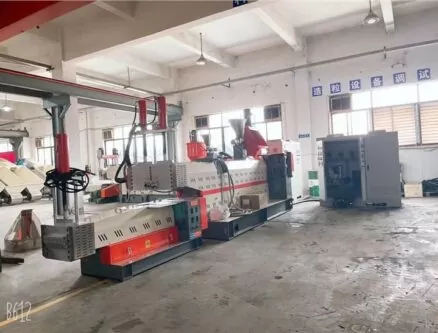
How are plastic granules or regrind produced?
Clean production scrap can be fed into a crusher or granulator. Rotor knives cut the material against fixed knives, and a screen controls the output size. This produces regrind without melting the polymer.
Post-consumer bottles, film and containers normally require sorting, size reduction, washing, separation, dewatering and drying. The resulting flakes may be sold when they meet a buyer specification or sent to extrusion and pelletizing.
How are recycled plastic pellets produced?
- Sorted plastic is shredded or granulated into a controlled size.
- Contaminated material is washed, separated and dried.
- Prepared flakes enter an extruder and are melted.
- Filtration removes solids that should not remain in the melt.
- Degassing removes moisture and volatile contamination where required.
- The melt is cut into pellets by strand, water-ring or underwater pelletizing.
- Pellets are cooled, dried, screened, blended and packed.
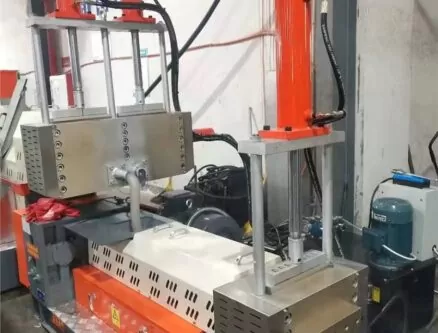
The correct plastic pelletizer depends on polymer, contamination, viscosity, moisture, required filtration, output and pellet-cutting method.
Which material is better for manufacturing?
Pellets are usually easier to meter, blend, convey and feed consistently. They are often preferred when a production line needs stable dosing, controlled additives, melt filtration or predictable bulk density.
Regrind can be economical for clean, single-polymer factory scrap returned to a compatible process. It avoids an additional melting cycle, but irregular shape and bulk density may create feeding problems. Contaminated or mixed regrind should not be returned to production without testing.
What quality data should buyers compare?
- Polymer and grade, including blends or multilayer material.
- Post-industrial or post-consumer source.
- Color, odor and visible contamination.
- Particle or pellet size distribution and fines.
- Moisture and volatile content.
- Melt flow rate or viscosity where relevant.
- Density, ash, fillers and reinforcement.
- Metal, paper, wood, PVC, silicone and other incompatible materials.
- Filtration level and screen pack used during pelletizing.
- Batch traceability, sampling method and test certificate.
A photograph cannot prove material quality. Agree on sampling and acceptance limits before purchasing a batch or designing a recycling line.
When does regrind need pelletizing?
Pelletizing is useful when the buyer needs more stable feeding, mixing, filtration, degassing, additive dosing or packaging. It can also combine flakes from a controlled recipe into a more consistent feedstock.
Pelletizing cannot turn mixed or poorly sorted waste into a guaranteed polymer. Sorting, washing and quality control must solve contamination before extrusion. Review the complete route from crushing and washing to drying and pelletizing.
What causes poor recycled pellet quality?
- Mixing incompatible polymers or uncontrolled grades.
- Extruding flakes with excessive moisture, labels, oil or dust.
- Using insufficient filtration for the contamination level.
- Applying too much heat or residence time and degrading the polymer.
- Allowing unstable feeding, additive dosing or screen changes.
- Blending batches without traceability or representative testing.
Judge the pelletizing process by repeatable test results, not pellet appearance alone. A glossy, uniform pellet can still contain the wrong polymer, excessive moisture or degraded material.
What information should you send for a pelletizing project?
- Polymer, source and photos of representative material.
- Flake size, moisture, contamination and bulk density.
- Required kg/h and daily operating hours.
- Desired pellet shape, size and packaging.
- Required filtration, degassing and additive dosing.
- Target melt flow or customer quality specification.
- Voltage, factory space, water conditions and upstream equipment.
Need to convert plastic flakes or regrind into saleable pellets? Send AMIGE the material and output information above. We will help define the necessary preparation, extrusion, filtration and pellet-cutting configuration.
Frequently asked questions
Are plastic pellets and granules the same?
The terms are sometimes used interchangeably. In recycling, pellets usually mean uniform extruded material, while crushed scrap is more accurately called flakes or regrind. Always check the specification.
What is recycled plastic regrind?
Regrind is plastic scrap reduced by a crusher or granulator without melting. It may come from clean factory waste or processed post-consumer material.
Are pellets always higher quality than granules?
No. Uniform shape does not guarantee polymer purity or performance. Source, sorting, washing, filtration, degradation and test results determine quality.
Can plastic flakes be used without pelletizing?
Clean, compatible factory regrind can sometimes return directly to production. The process must tolerate its shape, bulk density, moisture and quality variation.
What machine turns plastic granules into pellets?
A pelletizing line uses an extruder, melt filtration, degassing where required and a strand, water-ring or underwater cutting system.
Conclusion
Plastic pellets and granules may describe similar products in some markets, but recycled-material buyers need precise specifications. Define whether the output is flakes, regrind or extruded pellets, then compare polymer, size, moisture, contamination and processing history before choosing material or machinery.
