

“Plastic cutting machine” can describe very different equipment. A laser that cuts an acrylic display and a crusher that reduces plastic scrap both cut plastic, but they solve completely different production problems.
The right machine depends on whether you need a finished shape or recyclable flakes. For fabrication, buyers usually compare lasers, waterjets, CNC routers, saws, and guillotines. For recycling, they usually compare shredders, crushers, and granulators.
I’m Jacky, CEO of AMIGE. Our focus is industrial plastic recycling. I will explain all major cutting types, then show where shredders, crushers, and granulators fit in a recycling line.
Plastic cutting machines at a glance
| Machine type | Best suited to | Typical output | Main limitation |
|---|---|---|---|
| Laser cutter | Acrylic and suitable sheet-plastic fabrication | Precise profiles and finished shapes | Material compatibility, fumes, heat effects, and thickness limits. |
| Waterjet | Heat-sensitive sheet or thick plastic parts | Cold-cut profiles | Operating cost, water and abrasive management, and slower processing. |
| CNC router | Plastic sheets, panels, prototypes, and machined parts | Accurate routed shapes | Tool wear, chips, dust, clamping, and programming requirements. |
| Guillotine or saw | Profiles, pipes, sheets, and controlled straight cuts | Sections or blanks | Limited shape flexibility and potential cracking or deformation. |
| Single- or two-shaft shredder | Bulky, thick, baled, or difficult recycling feed | Coarse, lower-speed size reduction | Output may require a second stage for uniform flakes. |
| Plastic crusher | Rigid plastic, bottles, film, sheets, pipes, and production scrap | Screen-controlled flakes | Feed must fit the chamber and contamination must be controlled. |
| Granulator | Clean production scrap and recycling feed requiring uniform regrind | Consistent small flakes or regrind | Knife condition, screen size, heat, noise, dust, and feed consistency. |
1. Laser cutting machines
A laser uses focused energy to cut or engrave a compatible plastic sheet. It is useful when the finished edge, geometry, repeatability, and digital design are the main goals.
Material compatibility must be confirmed before processing. Some plastics can produce hazardous fumes, poor edges, melting, discoloration, or fire risk. Ventilation, guarding, training, and the machine supplier’s approved-material guidance are essential.
2. Waterjet cutting machines
A waterjet cuts without a heat-affected zone, which can help with heat-sensitive or thick materials. It can produce accurate profiles, but the project must account for water, abrasive, kerf, operating cost, cleanup, and the condition of the cut edge.
3. CNC routers
A CNC router removes material with a programmed cutting tool. It is common for sheets, panels, prototypes, signs, and machined plastic parts. Tool selection, spindle speed, feed rate, clamping, chip extraction, cooling, and plastic type affect cut quality.
4. Guillotines, saws, and mechanical cutters
Mechanical cutters are often practical for straight cuts, pipes, profiles, sheets, or repetitive preparation. They can be simpler than digital equipment, but blade geometry, guarding, clamping, material temperature, and crack sensitivity matter.
5. Industrial plastic shredders
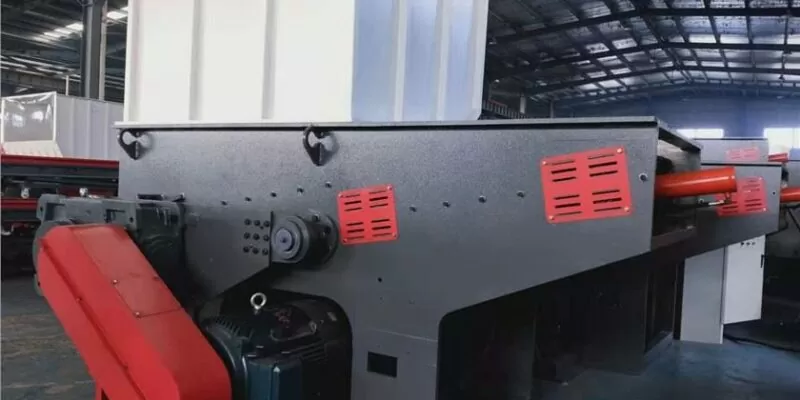
A shredder uses high torque and lower speed to tear and cut bulky material. Single-shaft machines often combine a rotor with a hydraulic pusher. Two-shaft machines pull material between counter-rotating cutters.
Shredders suit thick lumps, purgings, bales, drums, large containers, woven bags, film rolls, pipes, and other feed that cannot enter a high-speed crusher consistently. Compare our plastic shredder machine configurations.
6. Plastic crushers
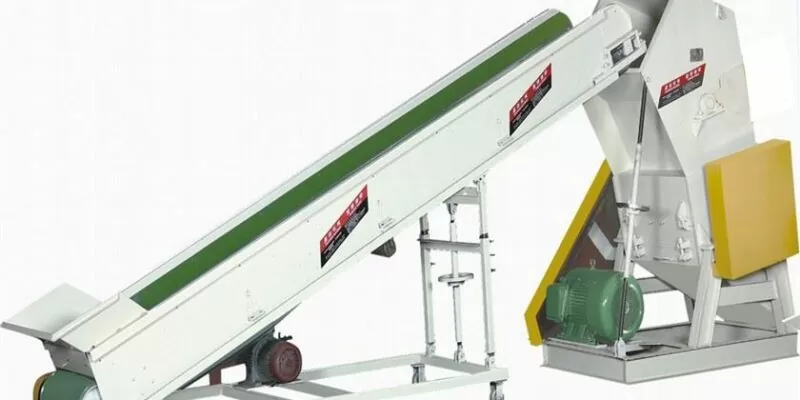
A plastic crusher uses rotating knives, fixed knives, and a screen to produce controlled flakes. It is often the main cutting machine for bottles, sheets, film, pipes, crates, profiles, and production scrap.
Rotor design, cutting chamber, knife material, motor load, screen opening, feeding, and wet or dry operation should match the material. See our plastic crusher machine options.
7. Plastic granulators
A granulator also uses knife cutting and a screen, usually with the goal of consistent regrind. The term overlaps with “crusher” in different markets, so specifications matter more than the label.
Ask about feed dimensions, rotor and knife layout, screen size, throughput basis, dust, noise, heat, evacuation, access for cleaning, and integration with the next process.
How do you choose between fabrication and recycling equipment?
| Question | If your answer is “finished component” | If your answer is “recycling feedstock” |
|---|---|---|
| What must the output become? | Choose a machine for shape, edge quality, and tolerance. | Choose a machine for flake size, capacity, cleanliness, and downstream processing. |
| Is the input a sheet or a bulky waste item? | Laser, waterjet, CNC, saw, or guillotine may fit. | Shredder, crusher, or granulator is usually more relevant. |
| How is success measured? | Dimensional accuracy, finish, kerf, and cycle time. | kg/h, particle-size distribution, fines, energy, wear, and cost per saleable ton. |
What should recycling buyers specify?
- Plastic type, form, wall thickness, and maximum dimensions.
- Loose, baled, rolled, stacked, or bulky feed condition.
- Required capacity in kg/h and operating hours per day.
- Desired output size and acceptable fines.
- Contamination such as metal, sand, glass, wood, liquid, labels, or other polymers.
- Wet or dry processing and the next washing or pelletizing step.
- Voltage, factory space, feeding method, automation, and maintenance access.
Choosing a plastic cutting machine for recycling? Send AMIGE material photos or video, maximum size, target kg/h, output size, operating hours, and the next process. We will explain whether your project needs a shredder, crusher, granulator, or a two-stage combination.
Frequently asked questions
What machine is used to cut plastic for recycling?
Industrial recycling commonly uses shredders, crushers, and granulators. The choice depends on feed size, material, required kg/h, output size, contamination, and the next process.
What is the difference between a plastic shredder and crusher?
A shredder normally uses lower speed and higher torque for bulky or difficult feed. A crusher uses knife cutting and a screen to produce smaller, more controlled flakes.
Can one plastic cutting machine process every polymer?
No configuration is ideal for every polymer and feed form. Film, rigid lumps, pipes, bottles, sheets, reinforced plastic, and contaminated waste behave differently and should be tested.
Is a smaller screen always better for recycling?
No. A smaller screen can increase recirculation, heat, power, wear, and fines. Output size should match washing, separation, conveying, drying, and extrusion requirements.
What affects the price of an industrial plastic cutting machine?
Material, feed dimensions, capacity, output size, rotor and knife design, motor and drive, screen, wet or dry operation, feeding, controls, safety, wear parts, and line integration all affect configuration and price.
Conclusion
Plastic cutting machines serve two different goals: making finished parts and preparing plastic for recycling. Define the output first. For recycling, choose shredders, crushers, and granulators by real feed condition, capacity, flake size, contamination, and the downstream process—not by the machine name alone.
