


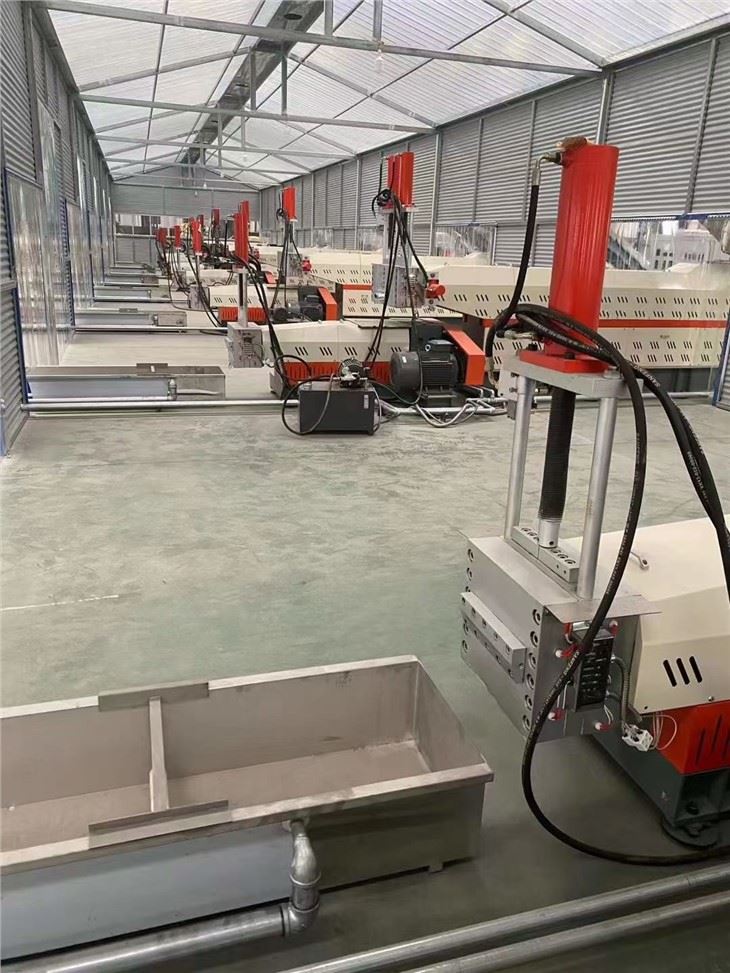
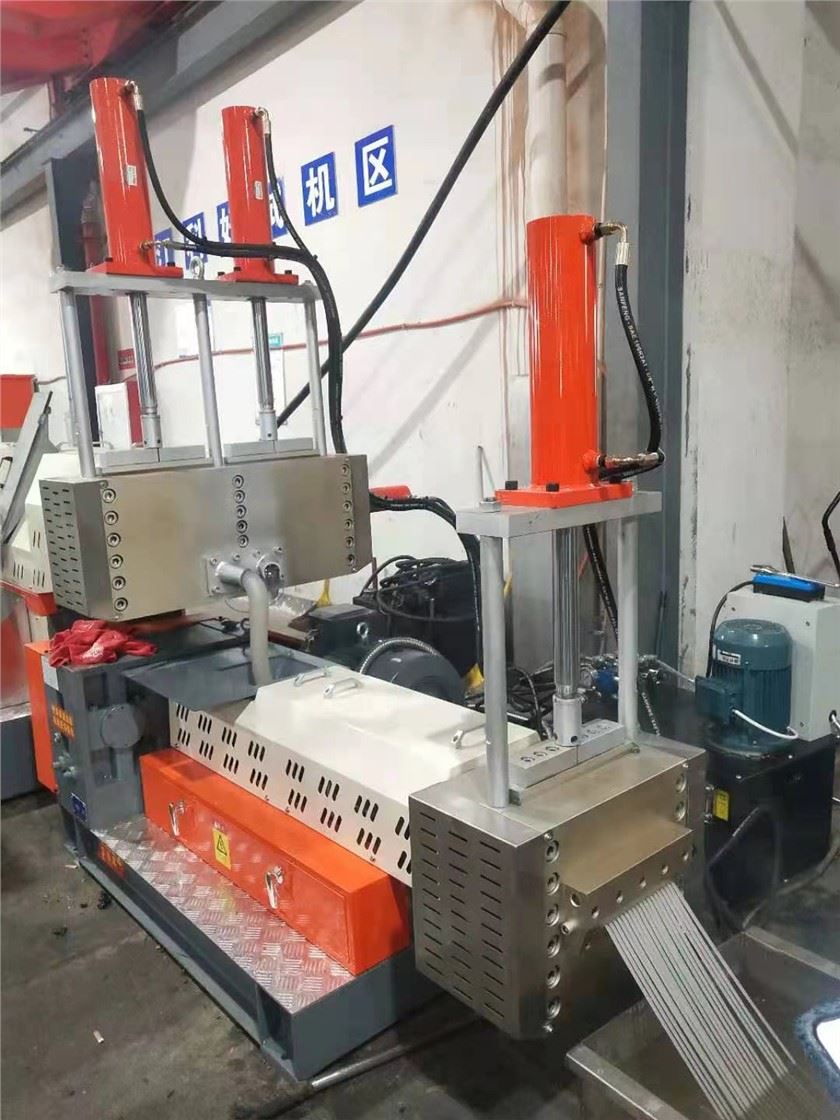
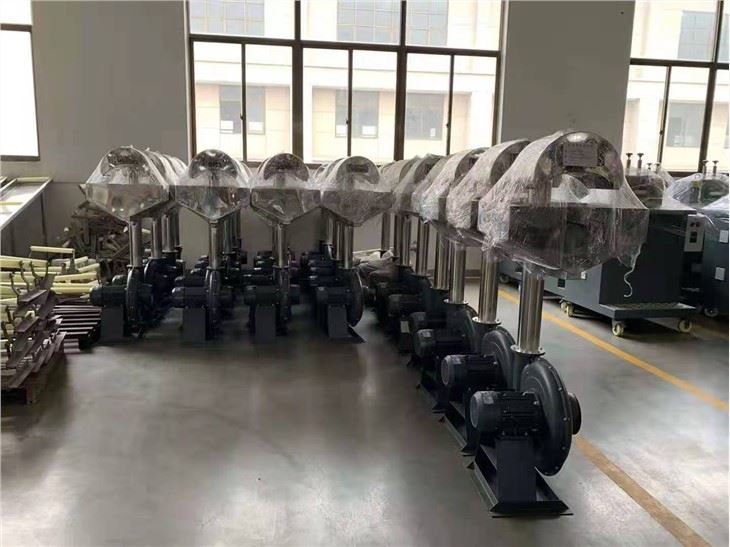
Convert prepared PE and PP waste into reusable pellets with an AMIGE double-stage plastic granulator machine. The line combines controlled feeding, extrusion, filtration, cooling and pellet cutting, with model and auxiliary equipment selected from your material, target output and factory conditions.
This product is an extrusion granulator, also called a plastic recycling pelletizer. It produces pellets from prepared plastic feed. If you need a high-speed cutting granulator that makes flakes, use the machine selector below.
- Five base models from SJ125/115 to SJ160/160.
- Main extruder motors from 45 kW to 110 kW.
- Double-stage extrusion for additional filtration and melt control.
- Forced feeding and hydraulic screen changing available by configuration.

Do you need a cutting granulator or a pelletizing granulator?
| Required output | Correct machine | Next step |
|---|---|---|
| Plastic flakes or regrind | High-speed plastic crusher or cutting granulator | Washing, separation, compounding or direct reuse |
| Recycled plastic pellets | Extrusion granulator or pelletizing line | Bagging, compounding, extrusion or molding |
Terminology differs by country, so “plastic granulator” can describe either machine. This page covers the extrusion system that produces pellets. Buyers who need screened flakes should review our plastic crusher and cutting granulator range.
Materials for this plastic recycling granulator
The machine can be configured for prepared PE and PP recycling feed, including LDPE or LLDPE film, HDPE and PP rigid flakes, woven bags and other suitable polyolefin scrap. Feed condition matters as much as resin name.
- State whether the material is film, flakes, regrind or agglomerated feed.
- Provide moisture, contamination and bulk-density information.
- Remove metal and incompatible material before extrusion.
- Define required pellet size, filtration and final application.

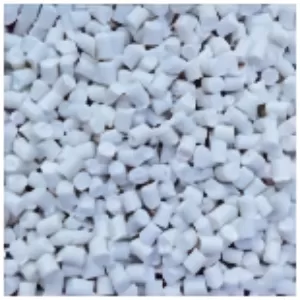
How the double-stage granulation line works
1. Prepared plastic enters the feeding system
A forced feeder or other feeding configuration meters light film or rigid regrind into the first extruder. Stable feeding reduces surging and helps maintain consistent melt pressure.
2. The first extruder melts and mixes the polymer
The screw and barrel heat, convey and homogenize the prepared plastic. Screw design, temperature zones and drive selection must match the polymer, bulk density and required output.
3. Filtration removes remaining contaminants
A screen-changing system filters the melt. Manual or hydraulic configuration, screen area and change frequency depend on contamination and production targets.
4. The second extruder stabilizes the melt
The second stage provides further conveying and filtration before pellet formation. This arrangement is useful when recycled feed requires additional melt cleanup or process stability.
5. Cooling and cutting form recycled pellets
Extruded strands pass through the stainless-steel cooling tank, then an adjustable-speed granule cutter produces pellets for collection and storage.
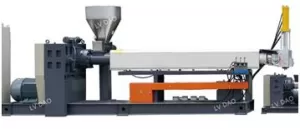
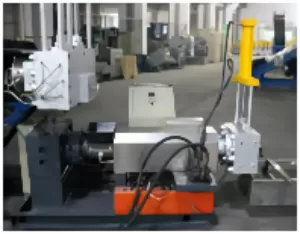
Plastic granulator machine model comparison
| Model | SJ125/115 | SJ130/120 | SJ140/130 | SJ150/140 | SJ160/160 |
|---|---|---|---|---|---|
| Main motor | 45 kW | 55 kW | 75 kW | 90 kW | 110 kW |
| Main screw diameter | 125 mm | 130 mm | 140 mm | 150 mm | 160 mm |
| Main screw L/D | 23:1 | 25:1 | 25:1 | 25:1 | 28:1 |
| Second-stage motor | 18.5 kW | 22 kW | 22 kW | 30 kW | 45 kW |
| Second-stage screw | 115 mm | 120 mm | 120 mm | 140 mm | 160 mm |
| Cooling-tank length | 3,000 mm | 3,500 mm | 3,500 mm | 4,000 mm | 5,000 mm |
| Pellet-cutter motor | 3.0 kW | 4.0 kW | 5.5 kW | 7.5 kW | 7.5 kW |
These specifications are a preliminary model comparison, not a universal capacity guarantee. Final configuration and expected output depend on feed material, moisture, contamination, filtration, pellet specification and operating conditions.
Configuration options for your recycling material
| Option | Selection reason |
|---|---|
| Forced feeding | Improves controlled feeding of light film and low-bulk-density material. |
| Hydraulic screen changer | Reduces manual screen-change work where filtration demand is higher. |
| Degassing arrangement | Selected according to moisture, ink, volatiles and feed preparation. |
| Cooling-tank length | Matched to model, strand cooling and factory layout. |
| Adjustable-speed pellet cutter | Helps coordinate pellet cutting with strand output. |
| Conveying and storage | Completes material handling from feed preparation to pellet collection. |
What buyers should send before requesting a quote
- Polymer and material form: film, flakes, woven bags or agglomerated feed.
- Photos, video and representative sample if available.
- Moisture, contamination and previous washing or drying process.
- Required input and pellet output per hour.
- Target pellet size, filtration and final application.
- Voltage, frequency, factory space and available utilities.
- Required auxiliaries, automation, spare parts and service scope.
I’m Jacky, CEO of AMIGE. We use these details to determine whether the double-stage line is suitable and which screw, feeding, filtration, cooling and cutting configuration should be quoted. The objective is a practical production scope, not an oversized motor list.
You can also review our plastic pelletizer product range and the guide explaining how a plastic granulator works.
Frequently asked questions
Is a plastic granulator the same as a plastic crusher?
The name varies by market. A cutting granulator or crusher makes flakes, while the extrusion granulator on this page melts prepared plastic and produces pellets. Confirm the required output before selecting equipment.
What materials can this granulator machine process?
It can be configured for prepared PE and PP film, rigid flakes, woven bags and related polyolefin recycling feed. Material form, contamination, moisture and final pellet use must be reviewed.
What capacity does a plastic granulator machine produce?
Capacity depends on resin, bulk density, moisture, contamination, feeding, filtration, pellet specification and model. Send representative material data so expected output can be stated with conditions.
Does the plastic need washing and drying before granulation?
Feed preparation depends on contamination and process design. Stable moisture and controlled contaminants generally improve extrusion, filtration and pellet quality. Define the upstream washing and drying stages before finalizing the line.
How do I get an accurate plastic granulator quotation?
Provide material photos or samples, resin, feed form, moisture, contamination, required hourly output, pellet specification, voltage, factory space and the auxiliary equipment you need.
Request a plastic granulator configuration
Describe your recycling material and production target below. For a faster technical review, include the feed form, contamination, required kg/h, pellet use, voltage and available installation space.
