

An industrial clothes shredder reduces garments, fabric offcuts, uniforms and selected textile waste into smaller pieces for fiber recovery, wiping material, filling, recycling or secure destruction. Machine selection depends on textile composition, accessories, bale density, moisture and required output.
This page covers industrial equipment, not household disposal. Consumers should use approved local donation, take-back or textile recycling channels rather than attempting to shred clothing at home.
I’m Jacky, CEO of AMIGE. For a textile project, I first ask whether the feed is loose garments, production offcuts, rolls or compressed bales. That decision changes the feeding and cutter configuration.
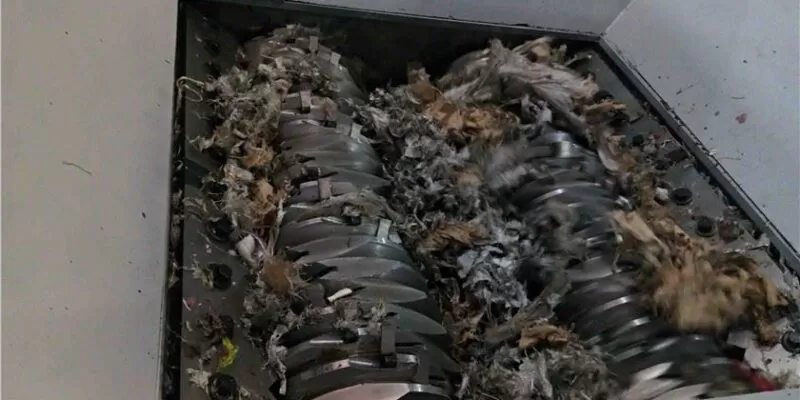
What Textiles Can an Industrial Shredder Process?
Potential feeds include cotton garments, polyester fabric, mixed-fiber textiles, production offcuts, nonwoven material, uniforms and suitable bags. Zippers, buttons, hooks, wire, stones and other hard contaminants should be identified and removed where required.
How the Clothes Shredding Process Works
- Sort textiles by composition, color, contamination and intended output.
- Remove unacceptable metal and hard accessories.
- Open bales or cut oversized rolls when required.
- Feed material at a controlled rate into the shredder.
- Cut through a single- or twin-shaft system selected for the material.
- Screen, separate or open fibers in downstream equipment according to the end use.
Single-Shaft or Twin-Shaft Clothes Shredder?
| Configuration | Typical use | Selection concern |
|---|---|---|
| Single-shaft shredder | Controlled feed requiring screen-sized output | Wrapping, pusher force and screen size |
| Twin-shaft shredder | Bulky garments, bags or coarse first-stage reduction | Cutter geometry, torque and discharge size |
| Two-stage system | Projects needing coarse opening followed by smaller output | Balanced capacity and metal separation |
See AMIGE industrial shredder configurations; final suitability must be confirmed from representative textile samples.
Why Textiles Jam or Wrap
Long strips, elastic fibers and loose garments can bridge in the hopper or wrap around rotating parts. Stable feeding, cutter shape, shaft cleaning, reverse control and upstream opening all affect performance. Capacity should be based on the actual bulk density and bale condition.
Output and Downstream Use
Required output may be coarse pieces for secure destruction, smaller textile fragments for filling or feed for fiber-opening equipment. State the acceptable piece size, fiber length, contamination and downstream machine before selecting a shredder.
Safety and Maintenance
Industrial textile shredders require guarding, emergency stops, interlocks, lockout procedures, dust and fire controls, safe bale handling and scheduled cutter inspection. Follow the manufacturer’s instructions and local site requirements.
Information Required for a Textile Shredder Quote
- Textile composition and product form
- Loose, rolled or baled feed
- Maximum dimensions and bale density
- Buttons, zippers, metal and contamination
- Required throughput and output size
- Downstream fiber or recycling process
- Voltage, operating hours and factory space
Send photos, video and sample information through the AMIGE inquiry form for an equipment review.
Frequently Asked Questions
Can I use an industrial clothes shredder at home?
No. Industrial shredders require trained operation, guarding, power, dust control and formal safety procedures.
Can a textile shredder process zippers and buttons?
Some accessories may pass, but they increase wear and contamination. Identify and remove hard parts according to the process specification.
Which shredder is best for baled clothing?
The choice depends on bale size, density, moisture, contaminants, required throughput and output. Bale opening or staged reduction may be required.
What happens after clothes are shredded?
The material may be separated, opened into fiber, used for filling or wiping products, securely destroyed or sent to another recycling process.
What details are needed for a quotation?
Provide textile composition, feed form, dimensions, contamination, capacity, target output, downstream use and site utilities.
