

Industrial plastic pellet production is not simply “melting waste and cutting it.” Stable recycled pellets depend on controlled sorting, size reduction, washing, drying, extrusion, filtration, degassing and cutting. A weakness in any upstream stage appears later as odor, bubbles, black spots, unstable output or frequent screen changes.
To make recycled plastic pellets, prepare a consistent single-polymer feed, remove contamination and moisture, melt it under controlled conditions, filter and degas the melt, then cut and cool uniform pellets. The correct line configuration depends on resin, feed form, contamination, moisture, required throughput and final use.
I’m Jacky, CEO of AMIGE. When a buyer asks for a pelletizing machine, I first ask what goes into it and what the pellets must become. Those two answers are more useful than choosing a screw diameter from a catalog.
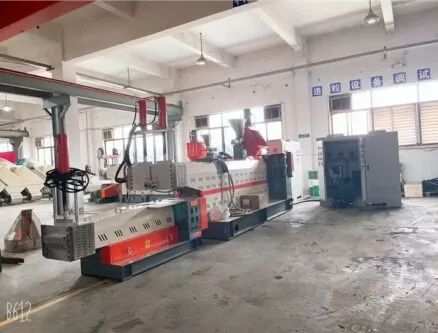
Plastic pelletizing process step by step
1. Define and sort the feedstock
Separate plastics by resin and application requirement. PE, PP, PET, PVC, PS and engineering plastics behave differently under heat and should not be treated as one mixed stream. Record whether the feed is film, flakes, regrind, woven bags, rigid parts or production scrap, and identify labels, paper, metal, sand, oil and incompatible polymers.
2. Shred or crush to a controlled size
Bulky waste may need a shredder first, followed by a plastic crusher for smaller flakes. Consistent feed size improves washing, drying and extruder feeding. Flexible film needs a different feeding strategy from dense rigid flakes because its bulk density and bridging behavior are different.
3. Wash and separate contamination
The washing stage may combine pre-washing, friction washing, float-sink separation, hot washing and rinsing. The sequence should reflect the contamination rather than follow a universal diagram. Heavily printed film, agricultural film and bottle flakes create different washing and wastewater requirements.
4. Dewater and dry
Mechanical dewatering removes bulk water; thermal or air drying may be needed afterward. Residual moisture can create vapor, unstable pressure, voids and surface defects during extrusion. Specify moisture at the pelletizer feed, not only at the washing-line discharge.
5. Feed and melt the plastic
Clean material enters the extruder through direct feeding, force feeding, compaction or agglomeration depending on feed form and bulk density. The screw conveys, compresses and melts the polymer. Screw design, temperature profile and residence time must suit the resin and its degradation sensitivity.
6. Filter and degas the melt
Melt filtration removes remaining solids such as paper, aluminum and unmelted contamination. Degassing removes moisture and volatile compounds. Clean production scrap may need a simpler arrangement than post-consumer material with printing, odor or variable contamination. Filtration capacity and screen-change method must be matched to the actual dirt load.
7. Cut, cool and dry the pellets
Common cutting methods include strand pelletizing and die-face or water-ring pelletizing. Strand systems cool extruded strands before cutting and are straightforward for stable, clean materials. Die-face systems cut at the die and can suit higher-throughput or flexible-plastic recycling when configured correctly. The final choice depends on melt behavior, output, operating skill and downstream pellet requirements.
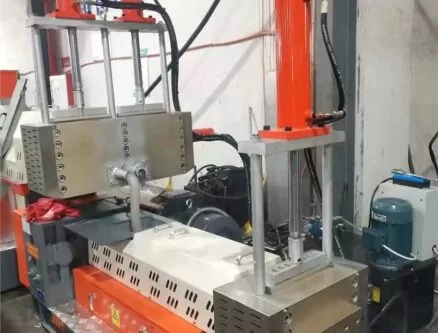
Which machines are needed for a pellet production line?
| Process stage | Typical equipment | Buyer decision |
|---|---|---|
| Preparation | Sorting, shredder, crusher | Feed size, resin purity and contamination |
| Cleaning | Pre-washer, friction washer, float-sink tank | Dirt type and required cleanliness |
| Drying | Dewatering machine, squeeze dryer, hot-air dryer | Feed form and target moisture |
| Feeding | Conveyor, compactor, agglomerator, force feeder | Bulk density and bridging risk |
| Extrusion | Single- or multi-stage extruder | Resin, degradation and contamination |
| Purification | Screen changer, melt filter, vacuum degassing | Particle and volatile load |
| Pellet cutting | Strand, water-ring or other die-face system | Melt behavior and product requirement |
| Finishing | Cooling, centrifugal drying, screening, silo | Pellet uniformity and packaging |
What controls recycled pellet quality?
- Resin consistency: incompatible polymers can weaken performance or create processing defects.
- Contamination: labels, metals, paper, sand and degraded polymer increase filtration load and defects.
- Moisture: excessive water causes vapor, bubbles and unstable extrusion.
- Temperature and shear: too little prevents stable melting; too much can degrade the polymer.
- Melt pressure: unstable pressure may signal feeding, filtration or temperature problems.
- Degassing: vent design and vacuum performance influence odor and volatile removal.
- Cutting stability: die condition, cutter speed, cooling and drying affect pellet shape and fines.
Do not accept a pellet sample without the test conditions. Record feed composition, moisture, contamination, throughput, temperatures, screen mesh, pressure, pellet yield and test duration. The final pellet should also be evaluated in its intended downstream process.
What should a pelletizing-line RFQ include?
- Polymer type and whether it is post-industrial or post-consumer.
- Feed form, size, bulk density, moisture and contamination.
- Photos, representative samples and current washing process.
- Required kg/h and production hours per day.
- Target pellet application and quality tests.
- Preferred cutting method, if already validated.
- Filtration, degassing, odor and additive requirements.
- Voltage, factory layout, utilities, labor and local compliance.
AMIGE supplies plastic pelletizing machines and lines for suitable PE, PP and other project-specific materials. We recommend a configuration only after reviewing the complete feed and final-product requirement.
Planning a recycled plastic pellet line? Send us material photos or samples, moisture and contamination data, target capacity, pellet application and available utilities. We will map the required preparation, extrusion, filtration and cutting stages.
Frequently asked questions
Can mixed plastic waste be made into pellets?
Some compatible streams can be processed for specific applications, but uncontrolled mixed polymers usually reduce consistency. Sort by resin and validate the pellet in its intended end use.
Does plastic need to be washed before pelletizing?
Clean production scrap may not require a full washing line. Post-consumer plastic normally needs cleaning and separation according to its contamination.
What is the difference between strand and water-ring pelletizing?
Strand pelletizing cools extruded strands before cutting. Water-ring pelletizing cuts at the die face. Material behavior, throughput, operation and pellet requirements determine the better option.
Why do recycled plastic pellets contain bubbles?
Common causes include excessive moisture, volatile contamination, inadequate degassing, unstable feeding or an unsuitable temperature profile.
How do I choose a plastic pelletizing machine?
Specify resin, feed form, bulk density, contamination, moisture, throughput, filtration, degassing, cutting method and pellet application, then validate the proposal with a representative test.
Conclusion
Consistent plastic pellets begin with consistent feed preparation. Build the line around the real waste stream and required pellet use, then verify the complete process—not only the extruder—with measurable trials.
