
A metal crusher reduces drums, cans, sheet scrap, profiles, turnings or selected light metal waste into smaller pieces for handling, separation or downstream recycling. The machine uses cutting, shearing or impact according to the scrap form and required output.
“Metal crusher” is not one universal machine. Bulky drums may need a low-speed twin-shaft shredder, while chips or thin scrap may need a dedicated crusher and separation system.
I’m Jacky, CEO of AMIGE. Before selecting equipment, I ask for the metal type, maximum dimensions, wall thickness, contamination, hourly volume and downstream process.
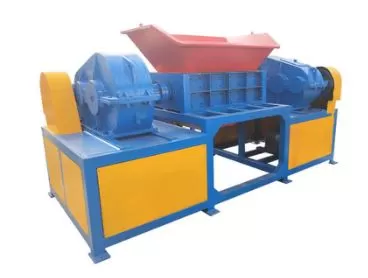
How Does a Metal Crusher Work?
- Scrap is inspected and unsuitable sealed, pressurized or hazardous items are removed.
- A conveyor, grab or controlled hopper feeds the material.
- Rotating cutters or hammers grip, shear or break the metal.
- Oversize material remains in the cutting zone or enters a second reduction stage.
- Discharge equipment moves the reduced scrap to screening or metal separation.
Shredder vs Metal Crusher
| Equipment | Typical feed | Output role |
|---|---|---|
| Twin-shaft shredder | Drums, appliances, sheet bundles and bulky scrap | Coarse, high-torque first-stage reduction |
| Single-shaft shredder | Controlled, more uniform feed | Screen-controlled reduction for suitable applications |
| Metal chip crusher | Turnings and machining chips | Reduces volume for conveying, briquetting or separation |
| Hammer or impact crusher | Selected light scrap after preparation | Further liberation and size reduction |
Materials and Applications
Possible feeds include empty steel drums, aluminum cans, light-gauge sheet, profiles, rejected metal parts and machining chips. Suitability depends on dimensions, hardness, wall thickness, attachments and contamination. Batteries, closed gas cylinders, unexploded devices and unknown containers require separate specialist procedures.
Key Selection Factors
- Metal type and maximum part dimensions
- Wall thickness, hardness and attachments
- Loose, baled, nested or chip feed form
- Required throughput and operating hours
- Target discharge size and downstream separator
- Feeding, discharge, dust and noise controls
- Knife, hammer, screen and wear-part plan
- Voltage, floor space and maintenance access
Review the double-shaft shredder platform when the project needs high-torque coarse reduction.
How Output Size Affects the System
A smaller target output may require multiple stages, screening and recirculation. It can also increase energy use and wear. Define the purpose of crushing—transport, melting, separation or downstream feeding—before specifying size.
Maintenance and Safety Planning
Operators should follow the manufacturer’s instructions and the site risk assessment. Guarding, emergency stops, lockout, fire controls, metal ejection protection, lifting methods and inspection intervals must match the material. Monitor cutter wear, fasteners, bearings, gearbox condition and discharge flow.
Information Required for a Proposal
Send scrap photos or video, metal type, maximum dimensions, wall thickness, contamination, hourly volume, target output and downstream process through the AMIGE inquiry form.
Frequently Asked Questions
What is a metal crusher used for?
It reduces scrap for transport, separation, furnace preparation, briquetting or another recycling stage.
Can one machine crush steel and aluminum?
Possibly, but configuration and output change with material properties, dimensions and contamination. Both feeds must be reviewed.
Is a metal shredder the same as a metal crusher?
The terms overlap, but shredders usually provide high-torque coarse reduction while crushers may perform finer or application-specific reduction.
What controls metal crusher capacity?
Feed size, thickness, density, composition, feeding stability, cutter condition and target output all affect capacity.
What should I send for machine selection?
Provide photos, material, dimensions, wall thickness, hourly volume, target size, downstream process and site utilities.