
LDPE film can be recycled into washed flakes, agglomerated material, or filtered pellets, but the correct process depends on where the film comes from and what the buyer expects from the final product.
A typical post-consumer LDPE recycling process includes sorting, metal removal, shredding, pre-washing, friction washing, separation, dewatering, drying, densifying or agglomeration, extrusion, melt filtration, degassing, and pellet cutting. Clean factory film may need fewer stages.
I’m Jacky, CEO of AMIGE. Before recommending an LDPE recycling machine, I ask whether the material is clean edge trim, pallet wrap, printed packaging, shopping bags, agricultural film, or mixed post-consumer film. Moisture, sand, paper, labels, ink, oil, and foreign polymers change the complete line.
LDPE recycling process at a glance
| Process stage | Purpose | Key buyer decision |
|---|---|---|
| Sorting and metal removal | Remove non-LDPE materials and protect machines | Manual, optical, magnetic, or combined sorting |
| Shredding or crushing | Reduce film to a washable and conveyable size | Bale size, film toughness, contamination |
| Pre-washing | Remove loose soil, sand, labels, and organics | Contamination load and water circuit |
| Friction washing and separation | Clean film and remove unwanted fractions | Required cleanliness and polymer mix |
| Dewatering and drying | Reduce moisture before storage or extrusion | Target residual moisture |
| Densifying and pelletizing | Stabilize feeding, melt, filter, degas, and cut pellets | Pellet specification and end use |
Which LDPE waste are you processing?
Clean post-industrial film is usually consistent and may enter size reduction and pelletizing with limited washing. Post-consumer packaging film can contain paper labels, food residue, mixed colors, moisture, and foreign polymers. Agricultural film may carry high levels of sand, soil, grass, and water.
Do not size the line from a generic description such as “LDPE bags.” Send representative bales or samples and record bulk density, contamination, moisture, and the percentage of usable polymer.
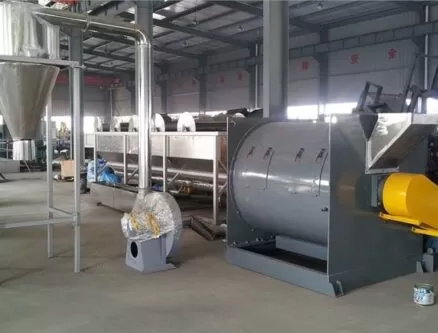
How should LDPE film be shredded?
Loose film, compacted bundles, and dense bales do not feed the same way. A plastic shredder is useful for bulky or baled film because it pulls material into a slow-speed cutting chamber. A crusher or wet granulator may follow to create smaller, more consistent pieces for washing.
Knife geometry, screen size, rotor design, feeding method, and contamination protection determine output quality and energy use. Metal detection or magnetic separation should be planned before vulnerable cutting equipment.
What washing stages does LDPE film need?
A film washing line may combine pre-washing, wet size reduction, friction washing, float-sink separation, rinsing, and water treatment. Heavily contaminated agricultural film needs stronger removal of sand and soil than clean commercial stretch film.
Water quality must be controlled. Reusing water without adequate screening, settling, filtration, and sludge removal can redeposit contamination. Review the complete plastic washing line, including wastewater handling, rather than comparing only the washer price.
How are washed films dried and densified?
Thin film retains water and has low bulk density. Mechanical squeezing, centrifugal dewatering, thermal drying, or a combination may be required. The correct route depends on the film, incoming moisture, capacity, and the downstream extruder.
Densifying or agglomeration can improve feeding stability by converting loose film into heavier, more free-flowing pieces. Some pelletizing systems use integrated cutting and compaction before extrusion.
How does LDPE pelletizing work?
The prepared film is fed into an extruder, melted, homogenized, filtered, and degassed when needed. The melt is then cut into pellets and cooled. Printed, wet, or contaminated film generally requires more demanding filtration and degassing than clean edge trim.
Match the plastic pelletizer to the required melt quality, filtration fineness, odor target, pellet form, and end application. Do not promise film-to-film quality without trials and a written material specification.
What determines LDPE recycling line capacity?
- Bale density, feed consistency, and film bulk density.
- Moisture, sand, labels, paper, organics, and foreign polymers.
- Shredder, crusher, washer, dryer, and extruder balance.
- Water-treatment capacity and sludge-removal frequency.
- Required finished-product quality and filtration.
- Changeovers, cleaning, wear parts, and real operating hours.
Use saleable dry output rather than wet input as the acceptance basis. Our recycling line capacity comparison explains why the smallest process stage controls the line.
What should buyers send for an LDPE recycling machine quotation?
- Film source, polymer, photos, samples, and bale dimensions.
- Contamination, moisture, printing, labels, and foreign-polymer content.
- Required output: washed film, dry film, agglomerate, or pellets.
- Target saleable capacity and operating hours.
- Product specification, including moisture, filtration, color, and application.
- Voltage, water, drainage, heat source, factory drawing, and destination.
Request an LDPE film recycling configuration
Send AMIGE your film samples, contamination, target output, capacity, utilities, and site drawing. We can map the shredding, washing, drying, and pelletizing stages through our LDPE recycling project form.
Frequently asked questions
Can LDPE film be recycled?
Yes. Sorted LDPE film can be cleaned and converted into flakes, agglomerate, or recycled pellets. The required process depends on contamination and end-use specifications.
What machines are needed to recycle LDPE film?
A post-consumer line may need sorting, metal removal, shredding, crushing, washing, separation, dewatering, drying, densifying, extrusion, filtration, degassing, and pellet cutting.
Does clean factory LDPE need washing?
Not always. Clean, known production scrap may go directly to size reduction and pelletizing. Confirm oil, dust, labels, mixed polymers, and moisture before removing washing stages.
Why is LDPE film difficult to feed into an extruder?
Thin film has low and variable bulk density and may retain moisture. Cutting, drying, compacting, or agglomeration can improve feeding stability.
What affects the price of an LDPE recycling machine?
Feed form, contamination, capacity, washing intensity, drying target, filtration, degassing, automation, water treatment, installation, and delivery scope all affect price.
Conclusion
An effective LDPE recycling process starts with a defined waste stream and finished-product specification. Configure size reduction, washing, drying, and pelletizing as one balanced line, then validate it with representative material.