

An industrial waste shredder reduces approved bulky material by applying controlled torque through a single rotor or two counter-rotating shafts. Cutters grip, shear and tear the feed into smaller pieces for sorting, transport, recycling, fuel preparation or secondary size reduction.
“Industrial waste” is not one material. Plastic lumps, drums, film bales, textiles, wood, light metal and mixed commercial waste create very different loads and hazards. The machine and line must be specified around an accepted feed envelope.
I’m Jacky, CEO of AMIGE. I ask buyers to show the largest, hardest and most contaminated items expected in the feed. The average bag of waste rarely causes the expensive surprise—the exceptional item does.
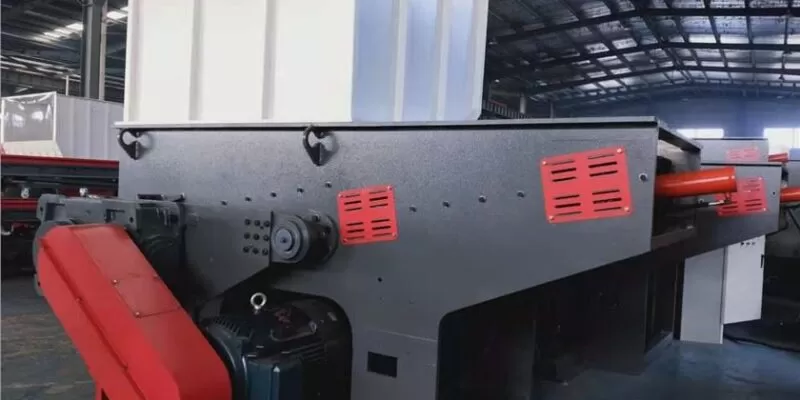
How does an industrial waste shredder work?
Material is loaded into a hopper by conveyor, loader, grab or another controlled method. A hydraulic pusher may present material to a single rotor, or two shafts may grip and pull it between intermeshing cutters. The drive supplies torque while the control system monitors load and manages overload response.
Output is influenced by cutter profile and spacing, screen opening where fitted, rotor or shaft speed, material behavior and the downstream process. Shredding usually produces coarse pieces; a crusher or granulator may follow when smaller, screen-controlled flakes are required.
Single-shaft or double-shaft waste shredder?
| Design | Typical role | Buyer question |
|---|---|---|
| Single-shaft shredder | Ram-fed size reduction with a screen for more controlled output | Can the pusher, rotor and screen handle the feed form and required particle range? |
| Double-shaft shredder | High-torque coarse reduction of bulky, irregular or difficult material | Will cutter width and spacing create output suitable for sorting or the next machine? |
| Shredder plus crusher | Coarse reduction followed by smaller screened flakes | Does the product value justify the extra equipment, energy and maintenance? |
| Complete sorting line | Shredding combined with conveyors, metal separation and classification | How will contamination be removed before and after shredding? |
Neither shaft count is universally better. Material geometry, required reduction ratio, contamination, capacity and downstream separation determine the correct route.
Define the accepted waste stream before choosing a machine
- List intended materials and approximate composition.
- Record maximum dimensions, wall thickness and individual piece weight.
- Describe loose, nested, bundled, baled or compacted condition.
- Identify metal, stones, glass, liquids and other contaminants.
- Separate batteries, sealed cylinders, pressurized containers and hazardous residues.
- State moisture, temperature and dust or fire concerns.
- Define prohibited items and the upstream inspection method.
A shredder should not be used as a substitute for waste characterization. Unknown containers, batteries and hazardous materials require dedicated site procedures and equipment review before entering any size-reduction line.
What determines waste-shredder capacity?
Real throughput depends on bulk density, part size, toughness, moisture, feeding consistency, cutter condition, required output and downstream removal. A light film bale and a dense plastic lump can occupy similar hopper space but create completely different cutting loads.
Ask suppliers to state the test material, preparation, cutter arrangement, screen or spacing, feed method, test duration and accepted output. Capacity without these conditions is not a comparable guarantee.
Feeding, discharge and separation are part of the system
A well-sized shredder can still stop if the hopper bridges, the conveyor overfeeds or the discharge backs up. Plan the loading equipment, buffer volume, feed control, discharge conveyor and access around the machine as one system.
Metal separation, air classification, screening or manual sorting may be needed before or after shredding. The correct order depends on contamination size, exposure after liberation and the value of the recovered fractions.
Safety, overload recovery and maintenance
- Use guarded loading and prevent access to moving cutters.
- Coordinate emergency stops and interlocks across the line.
- Define overload, stop, reverse, retry and lockout logic.
- Provide safe access and lifting methods for cutter service.
- Inspect shafts or rotor, cutters, fasteners, bearings and seals.
- Control dust, noise, ejected material and fire risk for the site.
- Investigate foreign-object events before restarting.
How to compare industrial waste shredder quotations
Compare proposals using one written feed specification. Review the cutting principle, drive, gearbox, shafts or rotor, cutters, frame, bearings, pusher, controls, guarding, discharge, separation interfaces and maintenance access. Include tooling, spares, drawings, manuals, commissioning and after-sales scope.
Browse the AMIGE industrial shredder range, then validate the configuration with representative waste. The purchase decision should compare usable output and lifecycle cost, not only motor size and headline throughput.
Information needed for an industrial shredder proposal
Send photos or video, material composition, maximum dimensions and weight, contamination, bulk density, hourly input, operating hours, target output, next process, loading method, utilities and layout. Clearly identify prohibited or hazardous items.
Frequently asked questions
What materials can an industrial waste shredder process?
Depending on its design, it may process approved plastic, wood, textile, packaging, light metal or mixed commercial-waste streams. Every material requires a defined feed envelope and test.
Is a single-shaft or double-shaft shredder better for waste?
Neither is universally better. Single-shaft designs can provide screen-controlled sizing; double-shaft designs are often used for high-torque coarse reduction of bulky feed.
Can an industrial shredder handle metal contamination?
Only within the approved specification. Metal can damage cutters, shafts and screens, so upstream inspection or separation and a defined foreign-object procedure are important.
How is industrial shredder output size controlled?
It depends on cutter width and profile, shaft arrangement, screen opening where used, recirculation and material behavior. Define the size needed by the next process.
What should I send for an industrial waste shredder quotation?
Provide material composition, photos, maximum dimensions, contamination, feed condition, hourly input, target output, operating hours, downstream process, utilities and layout.
