
Scrap metal shredders are selected by the material, feed geometry, required output and downstream separation—not by the word “metal” alone. Empty drums, aluminum profiles, appliance shells, cable, turnings and dense steel pieces create very different cutting loads.
The main machine families include single-shaft, double-shaft and multi-shaft shredders, plus shears, crushers and hammermills for specific duties. A complete recycling line may use more than one stage to expose, size and separate valuable fractions.
I’m Jacky, CEO of AMIGE. Before discussing a scrap shredder, I ask for the largest, thickest and most dangerous item in the feed. A machine that handles empty sheet-metal drums is not automatically suitable for solid steel or sealed containers.
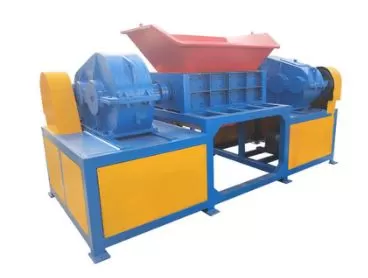
What are the main types of scrap metal shredders?
| Machine type | Typical role | Buyer check |
|---|---|---|
| Single-shaft shredder | Screen-controlled reduction of selected light or prepared metal streams | Confirm ram force, rotor protection, screen strength and contamination limit |
| Double-shaft shredder | High-torque coarse reduction of drums, housings and bulky light scrap | Match cutter profile, shaft spacing and gearbox to the actual feed |
| Four-shaft or multi-shaft shredder | Repeated cutting with more controlled sizing in one chamber | Review wear, maintenance access and sensitivity to hard foreign objects |
| Hydraulic shear or cutter | Pre-cutting long, thick or awkward sections | Define maximum section, thickness and handling method |
| Hammermill or metal crusher | High-energy breakage and liberation for selected prepared scrap | Plan dust, noise, foundations, wear and downstream separation |
These names do not guarantee capability. Ask for the cutting principle, permitted material envelope and representative test evidence behind each proposal.
Ferrous and non-ferrous scrap require different planning
Ferrous scrap contains iron and can often be recovered with magnetic separation after size reduction. Non-ferrous streams such as aluminum or copper require different separation methods and careful control of mixed attachments.
The classification is only a starting point. Wall thickness, alloy, shape, density, coatings, inserts and contamination still determine whether the material can enter the proposed shredder.
When is a double-shaft metal shredder suitable?
A double-shaft shredder uses counter-rotating cutters to grip and tear bulky material at relatively low speed and high torque. It is commonly considered for approved empty drums, light sheet-metal housings, selected aluminum profiles and pre-processed appliances.
Review the AMIGE double-shaft metal drum shredder as an application reference. Final suitability depends on depollution, dimensions, thickness, attachments and required output.
Define hazardous and prohibited feed first
- Drain, clean and verify containers before feeding.
- Remove batteries, gas cylinders and pressurized components.
- Control fuel, oil, refrigerant and chemical residues.
- Identify hardened steel, solid bars and oversized castings.
- Separate explosive, radioactive or otherwise regulated material.
- Document who inspects and accepts every incoming load.
Shredding does not make unknown material safe. The supplier must receive a realistic feed description, while the plant must maintain inspection, depollution and rejection procedures.
What determines metal shredder capacity?
- Material type, thickness, hardness and shape
- Largest dimensions and individual piece weight
- Loose, nested, bundled or compacted condition
- Cutter width, hook profile, clearance and wear
- Shaft speed, torque and drive protection
- Required reduction ratio and acceptable oversize
- Feeding consistency and discharge capacity
- Contamination and separation requirements
Capacity must be stated with test conditions. A mixed scrap pile cannot support a reliable throughput promise unless the feed envelope and acceptance method are defined.
Plan downstream metal separation
After shredding, conveyors may pass material through magnetic separation, screening, air classification or non-ferrous separation. The sequence depends on particle size, liberation and the value of each recovered fraction.
Our metal shredder working-principle guide explains the cutting and discharge stages. For a project, define the desired saleable fractions before deciding how small to shred.
Maintenance, wear and total cost
Metal duties can create impact, abrasion and unpredictable peak loads. Compare cutter material and rebuild method, shaft protection, bearings, seals, frame, gearbox, access, lifting provisions and spare-part lead time.
Calculate cost per accepted tonne using energy, labor, cutter service, planned downtime, rejected feed and the recovery value of separated metals. Purchase price alone can hide expensive wear and handling work.
Information needed for a scrap shredder proposal
Send material photos or video, metal types, maximum dimensions and thickness, piece weight, attachments, contamination, hourly input, operating hours, target output, separation plan, loading method, utilities and layout.
Frequently asked questions
Which shredder is best for scrap metal?
There is no universal best type. The feed, thickness, dimensions, contamination, output and separation process determine whether a shear, single-shaft, double-shaft, multi-shaft or crushing stage is appropriate.
Can one shredder process ferrous and non-ferrous metal?
Some approved campaigns may share equipment, but load, wear and separation change. Each material and attachment combination must be reviewed and tested.
Can sealed metal drums enter a shredder?
They should not enter by assumption. Containers require site-approved identification, draining, cleaning and verification before size reduction.
What controls the output size of a metal shredder?
Cutter width and profile, shaft arrangement, screen or classifier, repeated passes and material behavior all influence the output distribution.
What should I send a scrap metal shredder manufacturer?
Provide representative material details, dimensions, thickness, weight, contamination, input rate, target output, separation plan, operating hours, utilities and layout.