

A shredder can process thousands of tons of plastic waste, but two small systems often determine whether the machine runs smoothly or stops unexpectedly: the bearings and the hydraulic station. I have seen customers invest heavily in high-capacity shredders and then ignore these critical components. The result is familiar. Overheated bearings. Hydraulic failures. Expensive downtime. Lost production. The good news is that most of these problems are not caused by poor equipment. They are caused by poor maintenance habits.
Proper bearing lubrication and hydraulic station maintenance are among the most effective ways to improve shredder reliability and extend equipment lifespan. Routine inspections, correct lubricant selection, timely oil replacement, and preventive maintenance procedures can significantly reduce failures and lower operating costs. At AMIGE, we often tell customers that a few minutes of maintenance can save a few weeks of repair work.
A shredder is like an athlete.
The motor may be the muscles.
But bearings and hydraulics are the joints and blood vessels.
Ignore them, and performance quickly suffers.
Why Are Bearings So Important in a Shredder?
Bearings do not attract much attention.
They rarely appear in marketing brochures.
Yet they carry enormous loads every day.
The rotor depends on them.
The cutting system depends on them.
The entire machine depends on them.
When bearings fail, operators often experience:
- Excessive vibration
- Increased temperature
- Reduced efficiency
- Unexpected shutdowns
- Rotor damage
According to the Industrial Bearing Reliability Center, inadequate lubrication remains one of the leading causes of bearing failures in heavy machinery.
Bearings ask for very little.
Mostly grease.
And a little respect.
What Causes Bearing Failures?
Most bearing failures are surprisingly predictable.
Common causes include:
- Insufficient lubrication
- Excessive lubrication
- Contaminated grease
- Misalignment
- Overloading
- Water ingress
- Poor maintenance schedules
Many operators believe that more grease is always better.
Unfortunately, bearings disagree.
Too much grease can create excessive heat and pressure.
Too little grease causes friction.
The correct amount matters.
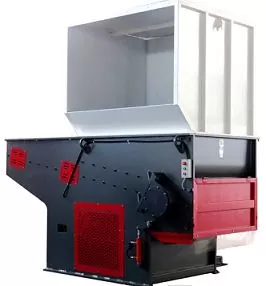
Maintenance is often a game of balance. Single Shaft Shredder Machine For LDPE Film
How Should Bearings Be Lubricated Properly?
Proper lubrication begins with selecting the correct grease.
Not all lubricants are created equal.
Factors to consider include:
- Operating temperature
- Rotational speed
- Load conditions
- Environmental contamination
- Moisture exposure
The Global Machinery Lubrication Institute recommends matching lubricant properties to actual operating conditions rather than relying on generic products.
I often compare grease selection to choosing shoes.
Running shoes are excellent.
Unless you are climbing a mountain.
Application always matters.
How Often Should Bearings Be Inspected?
Inspection frequency depends on operating conditions.
For heavy-duty shredders processing abrasive materials, I generally recommend:
Daily Inspection
- Listen for unusual noise.
- Monitor temperature.
- Check vibration.
Weekly Inspection
- Inspect grease condition.
- Verify lubrication points.
Monthly Inspection
- Review operating records.
- Check for contamination.
Annual Inspection
- Conduct complete bearing evaluation.
The Advanced Eqipment Maintenance Association reports that routine inspections significantly reduce catastrophic failures.
Machines usually whisper before they scream.
Good operators listen carefully.
Why Is the Hydraulic Station Equally Important?
For many single-shaft shredders, the hydraulic station performs critical tasks.
It powers:
- Hydraulic rams
- Material feeding systems
- Pressure control mechanisms
Without a healthy hydraulic system, productivity suffers immediately.
A hydraulic station must provide:
- Stable pressure
- Smooth movement
- Reliable response
- Continuous operation
Hydraulic failures often lead to:
- Reduced throughput
- Material feeding issues
- Increased downtime
- Higher maintenance costs
The Industrial Hydraulic Technology Center highlights hydraulic contamination as one of the primary causes of equipment failure.
Hydraulic systems are surprisingly sensitive.
Oil cleanliness matters more than many people realize.
What Are the Most Common Hydraulic Problems?
Several issues appear repeatedly in the field.
Contaminated Hydraulic Oil
Particles damage pumps and valves.
Oil Overheating
High temperatures accelerate oil degradation.
Leaks
Small leaks often become large repairs.
Blocked Filters
Restricted flow reduces system performance.
Improper Oil Levels
Too little oil creates instability.
Too much oil creates foaming.
Hydraulic systems are excellent teachers.
They punish shortcuts immediately.
How Often Should Hydraulic Oil Be Replaced?
There is no universal answer.
Operating conditions vary.
However, most manufacturers recommend evaluating:
- Operating hours
- Oil condition
- Contamination levels
- Temperature history
The Global Fluid Management Institute recommends routine oil analysis programs for industrial equipment.
Oil analysis often reveals problems before failures occur.
It is one of the most cost-effective predictive maintenance tools available.
Changing oil is inexpensive.
Replacing hydraulic pumps is not.
Why Are Hydraulic Filters So Important?
Filters are the guardians of the hydraulic system.
Their job is simple.
Keep contaminants away from critical components.
Dirty filters can cause:
- Reduced flow
- Pressure instability
- Increased energy consumption
- Premature component wear
I often tell customers something simple.
Hydraulic oil should stay cleaner than your office coffee.
At least if you want the system to survive.
Regular filter inspections help ensure:
- Stable pressure
- Longer component life
- Better system efficiency
How Does Temperature Affect Both Systems?
Temperature is a silent enemy.
Bearings dislike excessive heat.
Hydraulic oil dislikes it even more.
High temperatures can lead to:
- Grease degradation
- Oil oxidation
- Seal damage
- Increased wear
- Reduced equipment lifespan
According to the Industrial Thermal Management Institute, controlling operating temperature significantly improves machinery reliability.
Heat never sleeps.
Maintenance teams should not ignore it either.
Can Predictive Maintenance Improve Reliability?
Absolutely.
Modern shredders increasingly incorporate:
- Temperature sensors
- Oil condition monitoring
- Vibration monitoring
- Pressure sensors
- Remote diagnostics
Predictive maintenance allows operators to:
- Identify problems early
- Schedule maintenance efficiently
- Reduce downtime
- Lower repair costs
The Smart Equipment Reliability Observatory reports growing adoption of predictive technologies throughout industrial manufacturing.
The future of maintenance is not reacting.
It is predicting.
What Daily Maintenance Practices Do I Recommend?
After years in the recycling machinery industry, my checklist remains surprisingly simple:
For Bearings
- Check temperature.
- Inspect vibration.
- Verify lubrication schedules.
- Use correct grease.
For Hydraulic Stations
- Monitor oil levels.
- Inspect for leaks.
- Check filter conditions.
- Review operating temperatures.
- Keep oil clean.
Maintenance is not glamorous.
Nobody takes selfies beside a grease gun.
But preventive maintenance keeps factories running.
And running factories generate profits.
Why Do Small Maintenance Tasks Deliver Big Returns?
Because small failures rarely stay small.
A neglected bearing can damage a rotor.
Contaminated oil can destroy a hydraulic pump.
Minor problems often become major expenses.
The most profitable machines are not necessarily the newest.
They are the best maintained.
That lesson has remained true throughout my entire career.
Conclusion
Proper bearing lubrication and hydraulic station maintenance are essential for maximizing shredder reliability and lifespan. Regular inspections, correct lubrication practices, clean hydraulic oil, and preventive maintenance routines reduce downtime and operating costs. In industrial recycling, the health of small components often determines the success of very large machines.
#PlasticShredder #IndustrialShredder #ShredderMaintenance #BearingLubrication
#HydraulicSystem #PlasticRecycling #RecyclingEquipment #IndustrialMaintenance #PlasticMachinery #AMIGE