
Plastic waste does not fail suddenly.
It fails slowly.
Piles grow.
Costs rise.
Regulations tighten.
I have watched many companies chase fashionable solutions.
Chemical recycling.
Pyrolysis.
Gasification.
They promise miracles.
They deliver PowerPoint.
The real problem is not technology scarcity.
It is industrial reality.
Most waste must be handled today, at scale, at a price the market can absorb.
That is where mechanical recycling keeps winning.
Mechanical recycling remains the backbone of plastic waste treatment because it is proven, scalable, energy-efficient, and economically grounded. It works with today’s infrastructure, today’s waste streams, and today’s market demand. While new technologies mature, mechanical recycling continues to carry the load.
If this sounds conservative, good.
Recycling is not a lab experiment.
It is an industrial discipline.
I have been in this industry long enough to see cycles repeat.
Every ten years, someone announces a “revolution.”
Five years later, mechanical recycling is still doing the heavy lifting.
Let me explain why.
What Do We Really Mean by Mechanical Recycling?
Mechanical recycling is not glamorous.
It does not break molecules.
It breaks material.
Sorting.
Shredding.
Washing.
Drying.
Re-granulating.
That is it.
And that simplicity is its strength.
According to global recycling capacity data, over 70% of recycled plastics worldwide still rely on mechanical processes.
No extreme temperatures.
No exotic catalysts.
No complex chemistry.
Just machines.
Steel.
Motors.
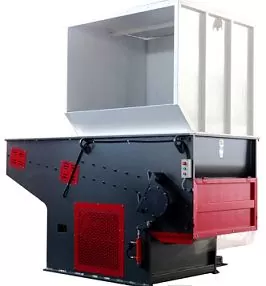
Experience. Single Shaft Shredder Machine
Why Has Mechanical Recycling Survived Every “Next Big Thing”?
Because factories do not run on hope.
Mechanical recycling offers predictable CAPEX.
Predictable OPEX.
Predictable output.
Chemical recycling plants often cost three to five times more per installed ton.
And they still need pre-processing.
Guess what that is?
Mechanical recycling.
Even the most advanced chemical systems depend on shredders, washers, and separators upstream.
The foundation never disappeared.
Is Mechanical Recycling Outdated Technology?
I hear this question often.
Usually from people selling something expensive.
Mechanical recycling has evolved quietly.
Better sorting optics.
Smarter washing systems.
More efficient shredders.
Energy consumption per ton has dropped steadily.
Outdated tools do not improve year after year.
Industrial systems do.
Mechanical recycling is not old.
It is refined. Plastic shredder with plastic crusher line for lump recycling
What Types of Plastic Does Mechanical Recycling Handle Best?
This is where realism matters.
PET bottles?
Excellent.
HDPE containers?
Very good.
PP crates and industrial scrap?
No problem.
Flexible films?
Challenging, but manageable with proper line design.
Highly contaminated mixed waste?
That is where limits appear.
But here is the truth:
No technology handles dirty waste cheaply.
Mechanical recycling does not pretend otherwise.
Cost Structure: Why Numbers Still Favor Mechanical Recycling
Let us talk like business people.
Mechanical recycling margins are thin.
But they are real.
Chemical recycling margins look attractive on paper.
Until energy bills arrive.
According to lifecycle cost comparisons, mechanical recycling typically consumes 60–80% less energy per ton than thermal conversion routes.
Energy is not a footnote.
It is the balance sheet.
Factories survive on cents per kilo.
Mechanical recycling understands that.
How Policy and Regulation Quietly Favor Mechanical Recycling
Governments love buzzwords.
But regulators love compliance.
Mechanical recycling already fits existing waste directives, EPR schemes, and recycled content mandates..
It produces tangible output.
Measurable tonnage.
Auditable flows.
Chemical recycling still struggles with classification.
Is it recycling or recovery?
Different countries give different answers.
Uncertainty scares investors.
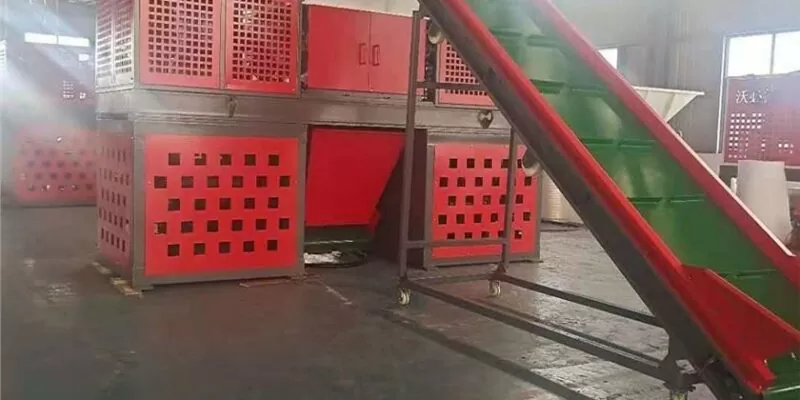
Mechanical recycling offers certainty. Double Single Shaft Shredder
Does Mechanical Recycling Limit Material Quality?
Yes.
And no.
Polymer chains shorten.
Properties degrade.
But blending, additives, and smarter processing mitigate this.
Not every application needs virgin-grade plastic.
Pallets.
Pipes.
Crates.
Automotive parts.
Mechanical recyclate feeds all of them today.
Perfect is not required.
Consistent is.
Why Developing Markets Rely Almost Entirely on Mechanical Recycling?
Because infrastructure matters.
In Asia, Africa, and Latin America, mechanical recycling dominates because it can be localized, modular, and maintained with standard skills.
Chemical plants demand stable feedstock, stable energy, and stable regulation.
Mechanical plants adapt.
Adaptability is survival.
The Role of Equipment Manufacturers Like Us
This is where I speak plainly.
Machines shape outcomes.
Poor shredding ruins washing.
Poor washing ruins extrusion.
At Amige, we focus on boring reliability.
Strong shafts.
Predictable torque.
Serviceable designs.
Mechanical recycling succeeds when machines disappear into the background.
Drama is expensive. Double single shaft shredder machine
Can Mechanical Recycling and Chemical Recycling Coexist?
They already do.
Mechanical recycling handles what it can.
Chemical recycling handles what it cannot.
But the volume split is not equal.
Mechanical recycling will always process the majority of waste by mass.
New technologies expand options.
They do not erase foundations.
Why Experience Still Beats Innovation Alone
I trust machines that have run ten years.
Not slides that ran ten minutes.
Mechanical recycling is built on accumulated mistakes.
And corrections.
That institutional memory matters more than novelty.
Factories do not reward clever ideas.
They reward uptime.
Conclusion
Mechanical recycling remains the cornerstone because it works.
At scale.
At cost.
Under pressure.
New technologies will grow.
But the backbone stays mechanical.
Industry is built on what survives reality, not headlines.